

Marinate the Beef (20 minutes active, 12–24 hours resting)
01Prepare the marinade
Combine wine, red wine vinegar, sliced onion, sliced carrots, garlic, cloves, cinnamon stick (if using), salt, and pepper in a non-reactive bowl. Time: 5 minutes.
Dalmatinska Pašticada is a slow-braised Croatian beef dish from the Dalmatian coast, known for its sweet-sour sauce and celebration-day status. A lean beef roast spends the night in red wine and vinegar with onions, carrots, garlic, and whole spices. The next day, the meat is browned, then simmered with cured pork, tomato paste, prunes, and stock until sliceably tender. The sauce gains both body and character from the long cooking time, the gentle sweetness of dried fruit, and the bright lift of wine and vinegar. A quick blend at the end creates a glossy, spoon-coating texture. Traditionally served with pillowy potato gnocchi, it suits wide egg noodles or mashed potatoes just as well, making it a practical yet special main course for weekends and holidays.
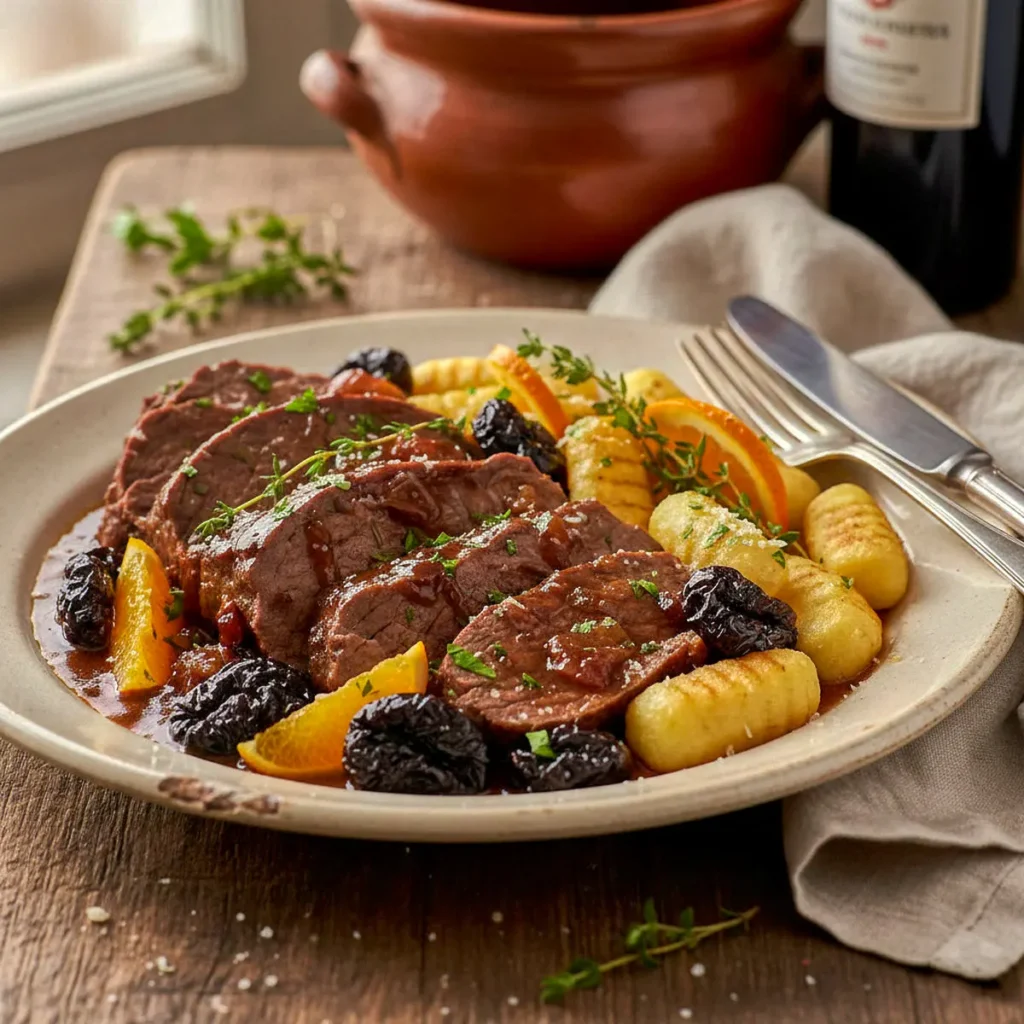
Dalmatinska Pašticada sits at the heart of Dalmatian cooking, a long-simmered beef roast steeped in wine, vinegar, dried fruit, and warm spices. The dish appears on family tables for feast days, weddings, and major holidays along the Adriatic coast, where cooks guard their versions with quiet pride. Each household tweaks the balance of sweet and sour, the choice of wine, and the finishing touch that brings the sauce together. What remains constant is its deep, mahogany color and the way the meat slices into tender, sauce-soaked medallions.
At its core, Pašticada is a study in patience and layering. The beef, often a lean cut such as top round or eye of round, spends a night in a marinade of red wine, vinegar, aromatics, and whole spices. That long rest seasons the interior and lays down the first chord of flavor. The next day, the cook dries and sears the roast, browning it on all sides before nestling it into a pot with onions, root vegetables, cured pork, tomato paste, and the strained marinade. From that point, the dish shifts into a low, steady braise, somewhere near a gentle simmer, until the fibers surrender and the roast yields easily to a knife.
What sets Dalmatian Pašticada apart from many other European braises is its characteristic sweet-sour note. Prunes and sometimes raisins melt into the sauce, echoing the dark fruit tones of the wine. A measured spoonful of sugar softens the edges of the vinegar. Cloves, pepper, and occasionally a piece of cinnamon lend warmth without pulling focus from the meat. When prepared with care, the sauce tastes rounded rather than sugary, with a slow-building tang that keeps each bite lively.
Traditionally, Pašticada meets a bed of homemade potato gnocchi or broad egg noodles, though simple mashed potatoes or even soft polenta work in home kitchens where time runs short. The sauce clings to every ridge and fold of the starch, which explains why portions tend to run generous. In Dalmatia, leftovers rarely pose a problem; Pašticada is one of those stews that seem even more harmonious the following day, when flavors have had time to settle.
Home cooks outside Croatia often approach Pašticada with a mixture of curiosity and hesitation. The ingredient list looks longer than a midweek dinner, and the schedule spans two days. Yet the techniques remain familiar: marinate, sear, sauté, braise, and blend. Once the pot moves to the oven or the back burner, the dish mostly looks after itself. The reward is a centerpiece that feels festive without demanding last-minute juggling.
This version respects traditional Dalmatian structure while guiding a modern cook through each decision. Lean but flavorful beef, an approachable red wine, pantry-friendly prunes, and a few well-chosen spices create a sauce with depth and clarity. A brief blending step at the end yields the signature velvety texture, while keeping visible slices of carrot and fragments of cured pork optional, according to taste. Served with gnocchi, noodles, or potatoes, Pašticada brings a corner of the Adriatic coast to the table, carried by the quiet authority of slow cooking and careful seasoning.
Combine wine, red wine vinegar, sliced onion, sliced carrots, garlic, cloves, cinnamon stick (if using), salt, and pepper in a non-reactive bowl. Time: 5 minutes.
Place the tied beef roast in a snug glass or ceramic dish and pour the marinade over, turning to coat all sides. Cover and refrigerate 12–24 hours, turning once halfway through if possible. Time: 15 minutes active, 12–24 hours resting.
Remove the beef from the marinade, pat very dry with paper towels, and strain the marinade, reserving liquid and solids separately. Heat 2 tablespoons oil or lard in a heavy Dutch oven over medium-high heat, then brown the roast on all sides until deep golden. Time: 10–12 minutes.
Transfer the browned beef to a plate. Add pancetta to the pot and cook over medium heat until some fat renders and edges start to crisp. Time: 4–5 minutes.
Add reserved onions, carrots, celery, parsley root, and remaining 1 tablespoon oil if the pot looks dry. Cook, stirring, until softened and lightly colored. Time: 6–8 minutes.
Stir in tomato paste and cook until the color darkens slightly and the paste smells sweet rather than sharp. Add bay leaf and lemon peel strip. Time: 2–3 minutes.
Return the seared beef to the pot. Pour in reserved marinade liquid and beef stock, then add prunes and raisins (if using); the liquid should come about halfway up the sides of the meat. Time: 3–5 minutes.
Bring the pot just to a simmer on the stovetop, then cover tightly and transfer to a 325°F (160°C) oven. Time: 10 minutes to reach simmer.
Braise, turning the roast once or twice, until a knife slides in with little resistance and the meat feels very tender. This usually takes 2–2½ hours, depending on thickness. Time: 2–2½ hours.
Lift the beef onto a cutting board, tent loosely with foil, and let rest 15–20 minutes. Remove bay leaf, cinnamon stick, cloves, and lemon peel from the pot; for a smoother sauce, scoop out prunes and any hard vegetable bits to blend, leaving pancetta pieces if small. Time: 5–10 minutes.
Use an immersion blender directly in the pot to blend the vegetables, prunes, and braising liquid until smooth and velvety, or transfer to a blender in batches. Time: 5–7 minutes.
If the sauce seems thin, simmer gently; whisk flour or cornstarch with a little cold water, then whisk into the simmering sauce in small amounts until it lightly coats a spoon. Add 1 tablespoon sugar, taste, and add more sugar, salt, or vinegar (a splash from the bottle) until the sweet-sour balance feels rounded and lively. Time: 8–10 minutes.
Slice the rested beef into ½-inch (1.25 cm) thick slices and return them to the warm sauce, or arrange on a heated platter and ladle sauce over. Serve over gnocchi, wide noodles, or mashed potatoes, garnished with chopped parsley. Time: 8–10 minutes.
| Calories | 570 kcal |
|---|