Pirão (Cassava Porridge)
Course: Side dishCuisine: AngolanDifficulty: Easy4
servings2
minutes8
minutes164
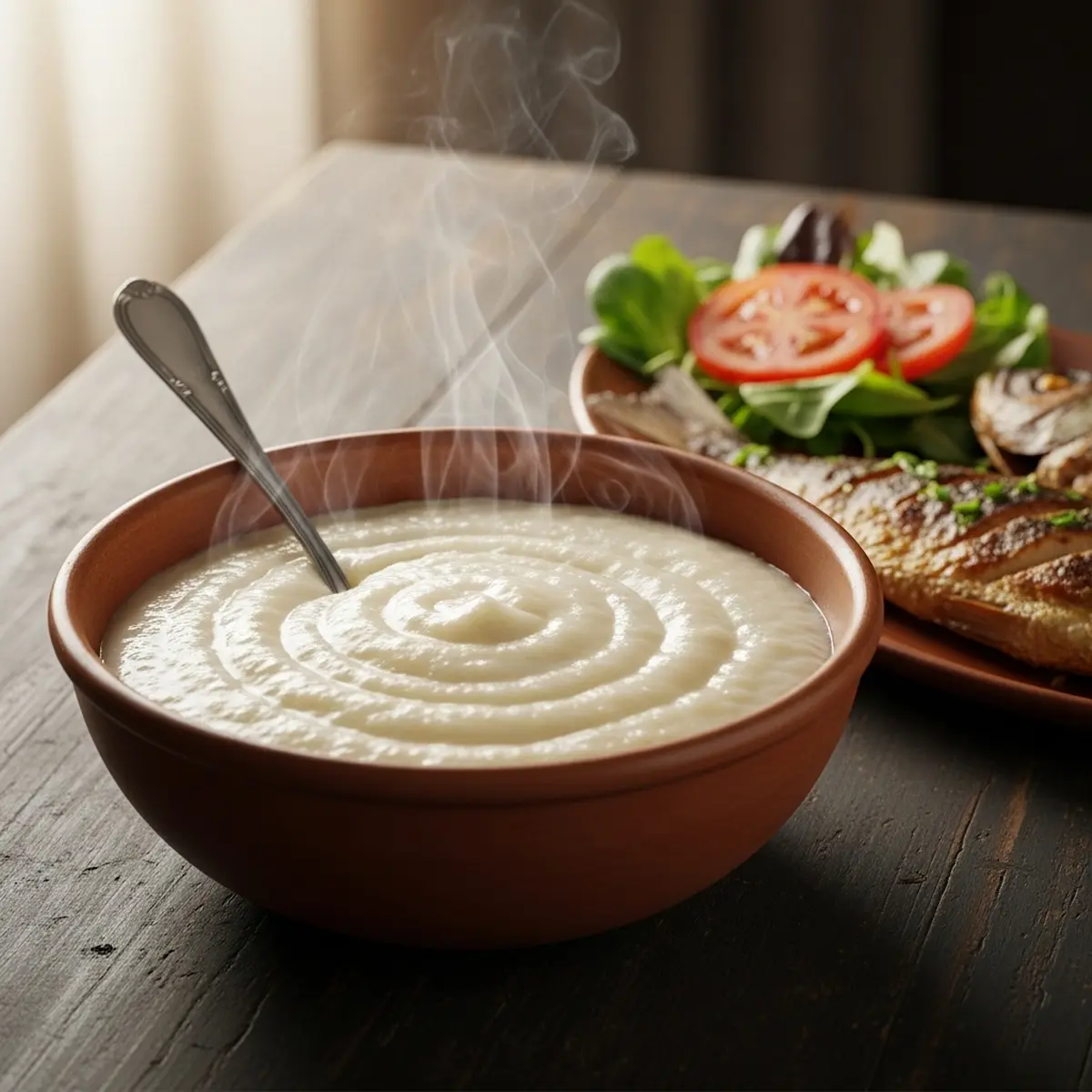
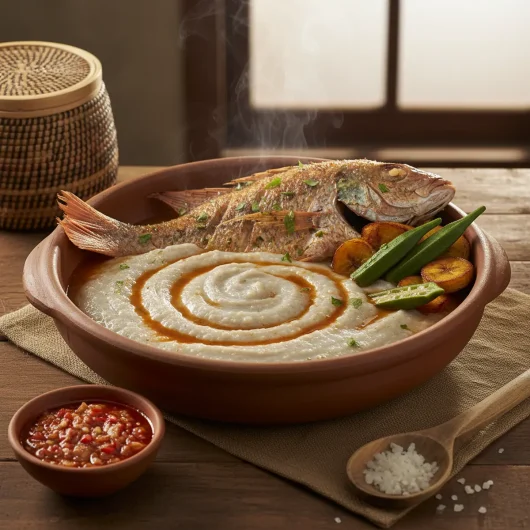
kcalPirão is an Angolan side dish of cassava (manioc) flour stirred into hot broth to create a smooth, thick gravy. It begins by boiling chicken or fish stock, then gradually whisking in the flour. The mixture quickly thickens into a porridge-like consistency. Unlike polenta or grits which are coarser, Pirão is very smooth and often just thick enough to coat a spoon. It has a mild, earthy taste and velvety texture, making it ideal for soaking up saucy stews and meats. Ready in about 10 minutes from start to finish, it’s a quick and easy complement to spicy mains or grilled dishes, and naturally gluten-free when made with cassava.
Ingredients
Cassava flour (fuba de mandioca): 1 cup (about 150 g). The traditional base for authentic flavor. Alternatively, use yellow cornmeal (fubá) for a maize version.
Broth (or water): 4 cups (960 ml). Rich broth (chicken, fish, or vegetable) yields the best taste. Water will work but results are blander.
Salt: 1 teaspoon (adjust to taste). Even though the flour itself is bland, salt is essential to bring out flavor from the broth.
Butter or palm oil (optional): 1 tbsp. Stir in at the end for extra richness and smoothness. Butter is common in many families; red palm oil (or even a knob of margarine) is traditional.
Optional add-ins: A pinch of black pepper, chili flakes, or grated nutmeg can be added while cooking for a twist. For a heartier version, minced herbs or a swirl of coconut milk may be used.
Directions
Heat the liquid: Pour the water or stock into a medium saucepan. Season with salt and bring it to a gentle boil over medium-high heat.
Whisk in the flour: Reduce heat to medium. Gradually sprinkle in the cassava flour while whisking continuously. This prevents lumps from forming.
Thicken the mixture: Continue whisking as the mixture begins to thicken, about 1–2 minutes. Keep moving the whisk in steady, circular motions to ensure a smooth texture.
Simmer briefly: Lower heat to low. Let the Pirão simmer for another 1–2 minutes, stirring constantly, until it pulls away slightly from the sides of the pan and is very thick and silky.
Finish with fat: Remove the saucepan from heat and stir in the butter or oil until melted and combined. This gives a glossy finish and richer taste.
Serve: Transfer the Pirão to a serving dish or bowl. It should have a thick yet pourable consistency. If it’s too stiff, whisk in a little hot water or broth until desired texture is reached. Serve hot alongside your main dishes.
Tips, Variations & Pairings
- Serving Suggestions: Pirão is most often enjoyed with hearty Angolan mains. Spoon it next to Muamba stews, grilled fish or chicken, or a saucy cassava leaf dish. A sprinkle of chopped cilantro or a squeeze of fresh lime can add a bright accent. For a touch of indulgence, top with a drizzle of olive oil, a pat of butter, or a shred of cheese. In Angola, a light, refreshing drink like ginger lemonade or a cold beer often accompanies the meal to balance Pirão’s warmth.
- Storage & Reheating: Pirão is best eaten fresh, when its texture is perfect. It can be refrigerated in a covered container for 1–2 days. Reheating will cause it to thicken, so gently warm it on the stove or microwave while stirring and add a little water or stock to restore creaminess. Freezing is not recommended as the texture changes significantly on thawing.
- Variations: Besides cassava flour, you can use fine cornmeal for a yellow version often called funje de milho. Make it spicy by stirring in a pinch of chili powder or a spoonful of spicy tomato sauce. For a creamy take, replace part of the broth with coconut milk or stir in cream at the end. If short on time, instant polenta can stand in (though it cooks differently). Pirão is naturally gluten-free when made with cassava. To make it vegetarian/vegan, use vegetable stock and omit any animal fats.
- Chef’s Tips: Use a whisk for best results; a fork or spoon may not prevent lumps. Stir vigorously in a figure-eight motion as you add the flour. If lumps do form, press them against the side of the pan with the whisk until smooth. Taste the broth before adding flour—it should be well-seasoned, since the flour itself adds little flavor. Cook the Pirão on medium-low heat; too high heat can cause splattering or burning. When done, the Pirão should have a shiny surface and barely settle after stirring.
- Optional Add-Ons: Measure out all ingredients before cooking, as this dish comes together very quickly. Keep a whisk handy at all times. You might prepare extra broth in advance if making a large batch. Consider garnishing with extra butter or a sprinkle of cinnamon for a homemade touch. A quick shopping note: good-quality cassava flour labeled for cooking (not tapioca) gives the best result.
- Equipment Needed: A medium saucepan (with room to whisk) and a sturdy whisk are essential. You’ll also need measuring cups/spoons and a sturdy spatula or spoon for serving. A bowl and spoon for tasting during cooking will help adjust seasoning. Serve in bowls or on plates with forks or spoons.