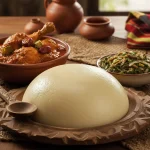
Muamba de Galinha Chicken Stew – Authentic Angolan Recipe
Course: Main CourseCuisine: Angolan, AfricanDifficulty: Medium4
servings20
minutes55
minutes520
kcalThis easy Muamba de Galinha recipe yields a warming Angolan-style chicken stew. Chicken pieces are seasoned and sautéed in fragrant red palm oil, then simmered with tomatoes, garlic, chili, and vegetables like squash and okra. The stew turns a deep, inviting color and fills the kitchen with tropical spice aromas. After about an hour of simmering, the chicken is tender and infused with bold flavors. Serve Muamba hot, ladled over funje (cassava porridge) or white rice, and garnish with cilantro. This dish makes a satisfying main course for 4–6 people.
Ingredients
Chicken: 1 whole chicken (about 4 lbs), cut into pieces or use bone-in chicken thighs – provides juicy protein.
Leisure Juice (Lemon): 3 tbsp fresh lemon juice – brightens flavors (optional).
Spice Mix: 1 tsp ground ginger, ½ tsp paprika, ½ tsp chili powder – boosts warmth.
Salt & Pepper: For seasoning.
Red Palm Oil: 3 tbsp (dendê oil) – key to color and aroma; can substitute 2½ tbsp peanut oil mixed with 1 tsp smoked paprika if needed.
Onions: 2 medium onions, chopped – forms the savory base.
Garlic: 4 cloves garlic, minced – adds pungency.
Bell Pepper: 1 red or yellow bell pepper, chopped (optional, for sweetness and color).
Hot Chile Pepper: 1 scotch bonnet or habanero, finely chopped (optional, for heat).
Tomatoes: 3 large tomatoes, chopped (or one 15-oz can diced tomatoes) – provides acidity and body.
Tomato Paste: 2 tbsp – deepens tomato flavor.
Winter Squash: 1 lb butternut or pumpkin, peeled and cubed – adds sweetness and thickens the stew.
Okra: ½–1 cup sliced fresh or frozen okra – traditional thickener (optional but recommended for authenticity and texture).
Chicken Broth/Water: 2 cups – stews the chicken; use broth for more flavor.
Cilantro (Coriander) or Parsley: chopped, for garnish.
Directions
Season and Marinate: In a bowl, combine chicken pieces with salt, pepper, ginger, paprika, chili powder, and lemon juice. Rub thoroughly and let rest for 10–15 minutes. (This step deepens flavor.)
Brown the Chicken (5–7 minutes): Heat the red palm oil in a large heavy pot or Dutch oven over medium heat. When hot, add chicken pieces and sear until golden on all sides. Transfer the browned chicken to a plate and set aside.
Sauté Aromatics (3 minutes): In the same pot, add chopped onion and garlic to the remaining oil. Sauté until the onions are soft and translucent, stirring constantly. Add the chopped bell pepper and cook for another 2 minutes.
Add Tomatoes and Paste (5 minutes): Stir in the chopped tomatoes, tomato paste, and chopped chili pepper (if using). Cook until the tomatoes break down and the mixture is fragrant, about 5 minutes.
Build the Stew (Simmer 20 minutes): Return the chicken pieces to the pot. Pour in the chicken broth (or water), scraping any browned bits off the bottom. Bring to a gentle boil, then reduce heat to low. Cover and simmer for about 20 minutes, until the chicken is nearly cooked through.
Add Vegetables (15–20 minutes): Stir in the cubed squash (pumpkin) and sliced okra. Cover again and continue to simmer for another 15–20 minutes, until the squash is tender and the chicken is fully cooked. The okra should thicken the sauce.
Finish and Season: Uncover and check seasoning. Add salt and pepper to taste. If the stew is too thick, add a splash of water. Simmer uncovered 5 minutes more to meld flavors.
Serve: Remove from heat. Garnish with chopped cilantro or parsley. Serve Muamba de Galinha hot, ladled over bowls of funje (cassava porridge) or rice, with any extra sauce spooned on top.
Tips, Troubleshooting & Variations
- Serving Suggestions & Pairings: Plate Muamba in a deep bowl alongside a scoop of smooth funje or fluffy white rice to soak up the sauce. It also goes well with fried plantains or a simple green salad to balance the richness. Cold African-style sorrel drink, tamarind juice, or a light red wine complement the stew’s spice. For festive meals, present the stew in a wide bowl and surround it with molded funje or cornmeal porridge on each plate.
- Storage & Reheating: Let leftovers cool, then refrigerate in an airtight container for up to 3 days. The flavors mature overnight. Reheat gently on the stovetop, adding a bit of water or broth to loosen the gravy. Okra Note: Okra can become very soft or slimy when stored. For leftovers, stir in fresh okra after reheating to restore texture. You can freeze the cooled stew (without rice or funje) for up to 2 months. Thaw in the fridge before reheating.
- Variations & Substitutions: (1) Peanut-Version: For “Moamba de Ginguba,” blend ¼ cup roasted peanuts into a paste and add it to the stew in place of part of the palm oil, making a creamy peanut stew. (2) Vegetarian: Use chicken-style seitan strips or firm tofu, and vegetable stock. Omit chicken and add extra vegetables like diced sweet potatoes or squash. (3) Quick: Substitute precut butternut squash and canned crushed tomatoes. (4) Spice Level: Adjust heat by using more or fewer chilis; remove seeds for milder or include habanero for a fiery kick.
- Chef’s Tips: (•) Brown Thoroughly: Don’t skip searing the chicken. Well-browned chicken adds depth through caramelized bits and richer flavor. (•) Stir Often: When adding flour or paste, stir continuously to avoid lumps. In this recipe, constant stirring ensures the tomato paste and okra blend smoothly. (•) Balance Flavors: If the stew tastes flat at the end, a squeeze of lemon or a pinch of sugar can brighten and balance the flavors. (•) Quality Oil: Authentic red palm oil gives the true taste. If substituting, use peanut or sunflower oil mixed with a little smoked paprika for color.
- Make-Ahead & Prep: You can chop the vegetables and marinate the chicken up to 1 day in advance and refrigerate. The stew itself can be made a day ahead; it will reheat well and tastes even better the next day.
- Equipment Needed Heavy pot or Dutch oven: For even heat and simmering the stew. Sharp knife and cutting board: To chop vegetables and chicken. Measuring spoons and cups: For accurate seasoning. Wooden spoon or spatula: For stirring the stew. Ladle: For serving the hot stew.