

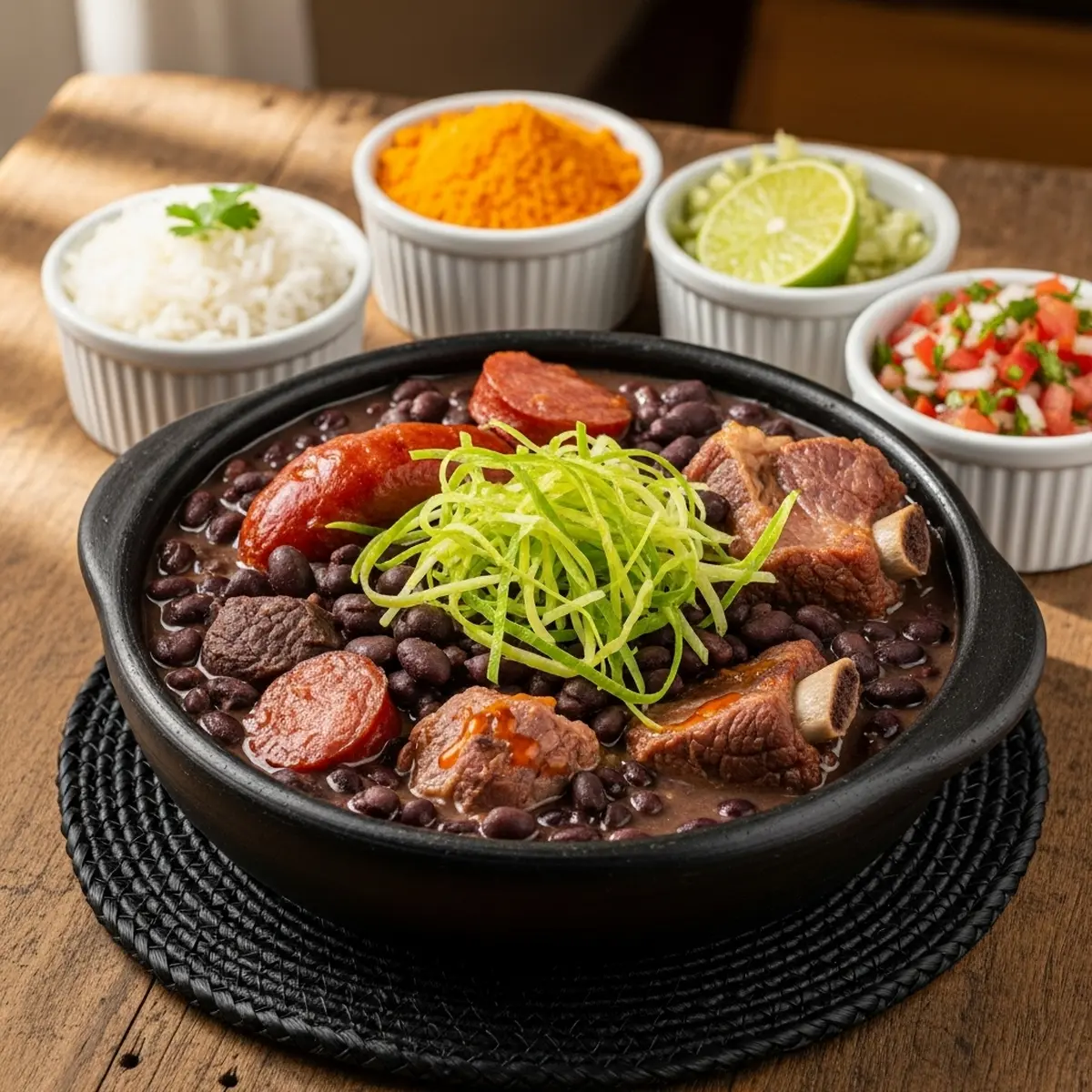
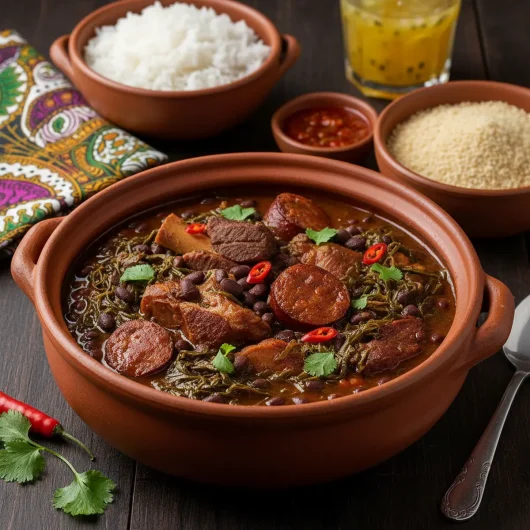
Feijoada Angolana
Course: MainCuisine: AngolanDifficulty: Moderate6
servings10
minutes300
minutes600
kcalThis Feijoada recipe layers flavors with beans, chicken, and spices, finished with greens and palm oil. Begin by soaking 1–2 cups of dry beans overnight (or use canned beans). Drain and set them aside. In a large pot, heat a bit of palm oil and sauté chopped onion, minced garlic, and sliced hot chili. Add bite-size chicken pieces and cook until lightly browned. Next, stir in sliced spicy sausage and any smoked meats. Add drained beans and enough water or broth to cover. Toss in bay leaf and quartered tomatoes. Bring to a boil, then reduce to a simmer. Let cook gently for about 1–1.5 hours, until beans are creamy and chicken is tender. In the final 10 minutes, stir in 2 cups shredded cassava leaves (or spinach) and cook until wilted. Season with salt and pepper. Remove bay leaf. Serve the thick, rich stew over rice. The dish is deeply flavored with garlic, tomatoes, and smoky notes from the sausage, with the greens giving a fresh finish.
Ingredients
Beans: 2 cups (dry butter beans or white kidney beans; about 400 g) or 4 cups cooked/canned, rinsed.
Chicken:5 kg (3–4 bone-in pieces, e.g. thighs or drumsticks) – clean and pat dry.
Spicy sausage: 200 g (Angolan chouriço, Portuguese linguiça, or andouille), sliced.
Smoked meat (optional): 100 g (salted pork, bacon, or smoked ham), diced.
Red palm oil: 3 Tbsp (traditional) or olive oil.
Onion: 1 large, chopped.
Garlic: 4 cloves, minced.
Tomatoes: 3 medium, chopped (or 1 can diced tomatoes).
Carrots: 2 medium, sliced (adds sweetness and color).
Cabbage or collard greens: 2 cups chopped or 2 cups packed shredded cassava leaves (fumbwa).
- Bay leaves
Stock or water: ~6 cups (or enough to cover all ingredients).
Salt and black pepper: to taste.
Chili pepper: 1–2 fresh chilies (optional, for heat).
Parsley or cilantro: chopped, for garnish.
Directions
Soak (or rinse) the beans: If using dried beans, soak them in water overnight (or for 6–8 hours). Drain and rinse before cooking. (If using canned, simply rinse and drain.)
Sauté aromatics: In a large heavy pot, heat 2 Tbsp palm oil over medium heat. Add the chopped onion, garlic, and sliced chili. Cook until the onion is soft and translucent, about 3–4 minutes.
Brown the meats: Add chicken pieces to the pot. Season lightly with salt and pepper. Brown the chicken on all sides (5 minutes). Then add sliced sausage and smoked meat; cook another 2–3 minutes, stirring.
Add beans and liquids: Stir in the drained beans, chopped tomatoes, carrot slices, bay leaves, and 4 cups of stock or water. The liquid should just cover the ingredients. Bring to a boil, then reduce heat. Cover and simmer gently.
Simmer stew: Let the mixture cook for about 1–1.5 hours, stirring occasionally. If it looks too dry, add more water as needed. The stew should bubble gently. When beans are nearly soft, remove the lid and continue cooking until they are fully tender and the stew thickens.
Add greens: With about 10 minutes left, stir in the chopped cabbage or cassava leaves. Pour in the remaining 1 Tbsp palm oil. Simmer uncovered until the greens wilt and become tender.
Finish and serve: Taste and adjust salt and pepper. Discard bay leaves. Remove chicken from bones, shred the meat, and return it to the pot. Spoon the hot feijoada over rice or serve in bowls. Garnish with chopped parsley.
Equipment Needed
- Large pot or Dutch oven (heavy-bottomed) – to cook the stew.
- Sauté pan (optional) – to brown meats before adding to stew.
- Wooden spoon or heatproof ladle – for stirring.
- Colander – to drain soaked beans.
- Knife and cutting board – for chopping produce.
- Bowls – for rinsing ingredients and mixing.









