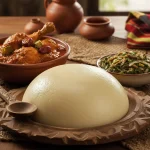
Angolan Calulu Stew – Fish, Okra & Greens
Course: MainCuisine: Angolan, AfricanDifficulty: Medium4
servings25
minutes70
minutes480
kcalThis Calulu recipe yields a hearty Angolan-style fish and vegetable stew. First, soaked salted fish (bacalhau or tilapia) is layered with fresh fish fillets, onions, chopped tomatoes, minced garlic, and sliced okra in a deep pot. Red palm oil is added for richness, and the mixture is gently cooked for 30–40 minutes until the flavors meld. In the last minutes, fresh greens (spinach or kale) are stirred in to wilt. The final stew is savory and warmly spiced. Serve Calulu hot, spooned over white rice or alongside funje, garnished with green onions or parsley.
Ingredients
Dried Salted Fish: ½ cup (about 4 oz), such as dried cod or salted tilapia – provides a savory, fishy base.
Fresh Fish: 1–2 lbs (tilapia, croaker, sea bream, or snapper), cleaned and cut into chunks – adds fresh flavor and protein.
Palm Oil: 3 tbsp – traditional cooking fat; imparts color and aroma.
Onions: 1 large onion, sliced or chopped – sweetens the stew.
Garlic: 3 cloves, minced – pungent depth.
Bell Peppers: 1 green and 1 red pepper, chopped – adds sweetness and color.
Tomatoes: 2 large tomatoes, chopped (or one 14-oz can diced tomatoes) – for acidity and body.
Okra: 1 cup sliced okra – classic thickener and textural element.
Leafy Greens: 2 cups chopped cassava leaves (kizaca) or fresh spinach/kale – the signature Calulu greens.
Hot Pepper: 1 Scotch bonnet or chili, minced – provides heat (optional, adjust to taste).
Salt & Pepper: To taste.
Water: 2 cups (or as needed) – to simmer the stew.
Directions
Prepare the Dried Fish (30 minutes +): Rinse the dried fish thoroughly and soak it in water for at least 30 minutes (or boil briefly) to remove excess salt. Drain and flake or cut into bite-sized pieces.
Layer Ingredients in Pot: In a large pot, heat 2 tablespoons palm oil over medium heat. Add the drained dried fish and fresh fish pieces, layering them evenly. Top with sliced onion, bell peppers, garlic, and tomatoes.
Add Seasonings: Scatter the minced hot pepper (if using) and pour in the remaining 1 tablespoon palm oil over the top. Do not stir yet; instead, cover the pot and let the ingredients cook in their own steam for about 5 minutes.
Add Okra and Water: Uncover and gently mix, being careful with the fish pieces. Add the sliced okra and pour in 2 cups water (or enough to just submerge the ingredients). Season lightly with pepper (the dried fish should provide some salt).
Simmer the Stew (30 minutes): Bring to a gentle boil, then reduce heat to low. Cover and simmer for 20–30 minutes, until the vegetables are tender and fish flakes easily. Stir occasionally, adding more water if the stew looks too thick.
Wilt the Greens (10 minutes): Uncover and stir in the chopped greens (cassava leaves or spinach). Cover again and cook for another 10 minutes, until the greens are wilted and tender. The stew should be richly colored by the oil and slightly thickened by the okra.
Finish and Serve: Remove the pot from heat. Taste and adjust salt and pepper as needed. Serve Calulu hot, ladled over rice or funje, with the fish and vegetables spooned generously. Garnish with extra green onions or parsley if desired.
Tips, Troubleshooting & Variations
- Serving Suggestions & Pairings: Calulu is typically served family-style with white rice or funje on the side. The rice soaks up the savory sauce. A side of pickled vegetables or a fresh tomato-onion salad can brighten the meal. In coastal Angola, cold beer or sweet palm wine is often enjoyed with Calulu. For a complete feast, serve it with fried plantains and feijão de óleo de palma (beans in palm oil).
- Storage & Reheating: Leftover Calulu will thicken in the fridge. Reheat gently on the stove with a splash of water, stirring occasionally to re-incorporate the ingredients. It makes a convenient, tasty leftover – the flavors often deepen after a night in the fridge. Store in an airtight container for up to 3 days.
- Variations & Substitutions: (1) Meat Calulu: Replace fish entirely with chunks of smoked or fresh pork, chicken, or beef (pre-boil tougher meats). Cook slightly longer until the meat is tender. (2) Vegetarian/Vegan: Omit fish; use extra vegetables and add coconut milk or peanut butter for richness, making a “calulu de legumes.” (3) Greens: Aside from cassava leaves, try collard greens, Swiss chard, or malabar spinach (basella) as a substitute. (4) Spiciness: Scale the heat by using more or fewer hot peppers; to mellow out, remove the seeds or omit them.
- Chef’s Tips: (•) Don’t Overcrowd the Pot: Layering without stirring at first helps the fish and veggies cook evenly in the palm oil. Only stir after a few minutes. (•) Watch Water Levels: If the stew reduces too much, add hot water gradually. Calulu should be saucy, not dry. (•) Soak Well: Properly soaking or rinsing the dried fish removes excess saltiness. Taste the stew before adding salt at the end. (•) Use Fresh Greens: Fresh, young cassava leaves have less grit. Remove any tough stems before chopping.
- Make-Ahead: You can soak the dried fish and chop the vegetables a day ahead. Assemble and cook the stew up to 8 hours before serving; then reheat to serve. Flavor often improves after resting.