





Top 10 – Europe Party Cities
Discover the vibrant nightlife scenes of Europe's most fascinating cities and travel to remember-able destinations! From the vibrant beauty of London to the thrilling energy…


Table of Contents
4
servings15
minutes30
minutes300
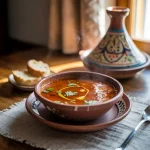
kcalZviti, also known as Slata Mahras, is a quintessential dish of Algeria’s M’Sila province, where culinary tradition meets communal ritual. Originating in Bou Saâda, this fiery mortar-and-pestle salad transforms humble staples into a bold, celebratory feast. At its core lies kesra, a coarse semolina flatbread, which is torn into pieces and pounded with roasted tomatoes, hot chilies, and garlic inside a tall wooden mortar (mehraş). The mixture is then enriched with olive oil, toasted cumin, and fresh coriander, resulting in a rustic, chunky blend of smoky, tangy, and intensely spicy flavors.
Algerian flatbread (Kesra or Reqass bread) – 1 round (about 200–250 g). Tear or cut into bite-sized pieces. (This coarse, unleavened bread soaks up the spicy sauce.)
Roma tomatoes – 3–4 medium, charred or roasted until skins blister. (Adds smoky sweetness.)
Hot chili peppers – 2–3 (e.g. green jalapeño or red chili), roasted and seeded. (Provides the characteristic heat; adjust amount for desired spice level.)
Garlic – 3 cloves, roughly chopped. (For pungency.)
Olive oil – 2 tablespoons. (To smooth and enrich the mixture.)
Cumin seeds – 1 teaspoon, toasted. (Crushed last into the mortar for a warm, earthy note.)
Fresh coriander (cilantro) – handful, chopped (for garnish).
Salt – to taste.
Toast the bread and peppers. Break the flatbread into large pieces. Grill or pan-toast the bread lightly until crisp. Char the tomatoes and chili peppers over a flame or under the broiler, turning occasionally, until blackened on the outside. Remove skins, seeds and stems.
Crush garlic and spices. Place the garlic cloves, toasted cumin seeds and a little salt in a large wooden mortar (mehraş). Mash together with the pestle until it becomes a rough paste.
Add chili and tomatoes. Add the roasted chili peppers to the mortar and crush with the garlic paste. Then add the peeled, chopped tomatoes. Continue pounding and mixing until the ingredients form a chunky sauce.
Incorporate bread. Gradually add the torn bread pieces to the mortar. Using the pestle, crush and mix the bread into the spicy tomato-chili mixture. Work in batches if necessary, so the bread evenly absorbs the sauce.
Season and finish. Drizzle in the olive oil, continuing to mix until the mixture binds together. Adjust salt. The final Zviti should be spicy, slightly moist and very fragrant. Transfer the salad into the original wooden mortar or a serving bowl.
Garnish and serve. Sprinkle chopped coriander over the top. Serve Zviti hot, surrounded by diners sharing from the mortar with spoons or flatbread pieces. Often accompanied by a jug of cold lben or water to counter the heat.
Discover the vibrant nightlife scenes of Europe's most fascinating cities and travel to remember-able destinations! From the vibrant beauty of London to the thrilling energy…
From Alexander the Great's inception to its modern form, the city has stayed a lighthouse of knowledge, variety, and beauty. Its ageless appeal stems from…

From Rio's samba spectacle to Venice's masked elegance, explore 10 unique festivals that showcase human creativity, cultural diversity, and the universal spirit of celebration. Uncover…

In a world full of well-known travel destinations, some incredible sites stay secret and unreachable to most people. For those who are adventurous enough to…

While many of Europe's magnificent cities remain eclipsed by their more well-known counterparts, it is a treasure store of enchanted towns. From the artistic appeal…
