Exploring the Secrets of Ancient Alexandria
From Alexander the Great's inception to its modern form, the city has stayed a lighthouse of knowledge, variety, and beauty. Its ageless appeal stems from…
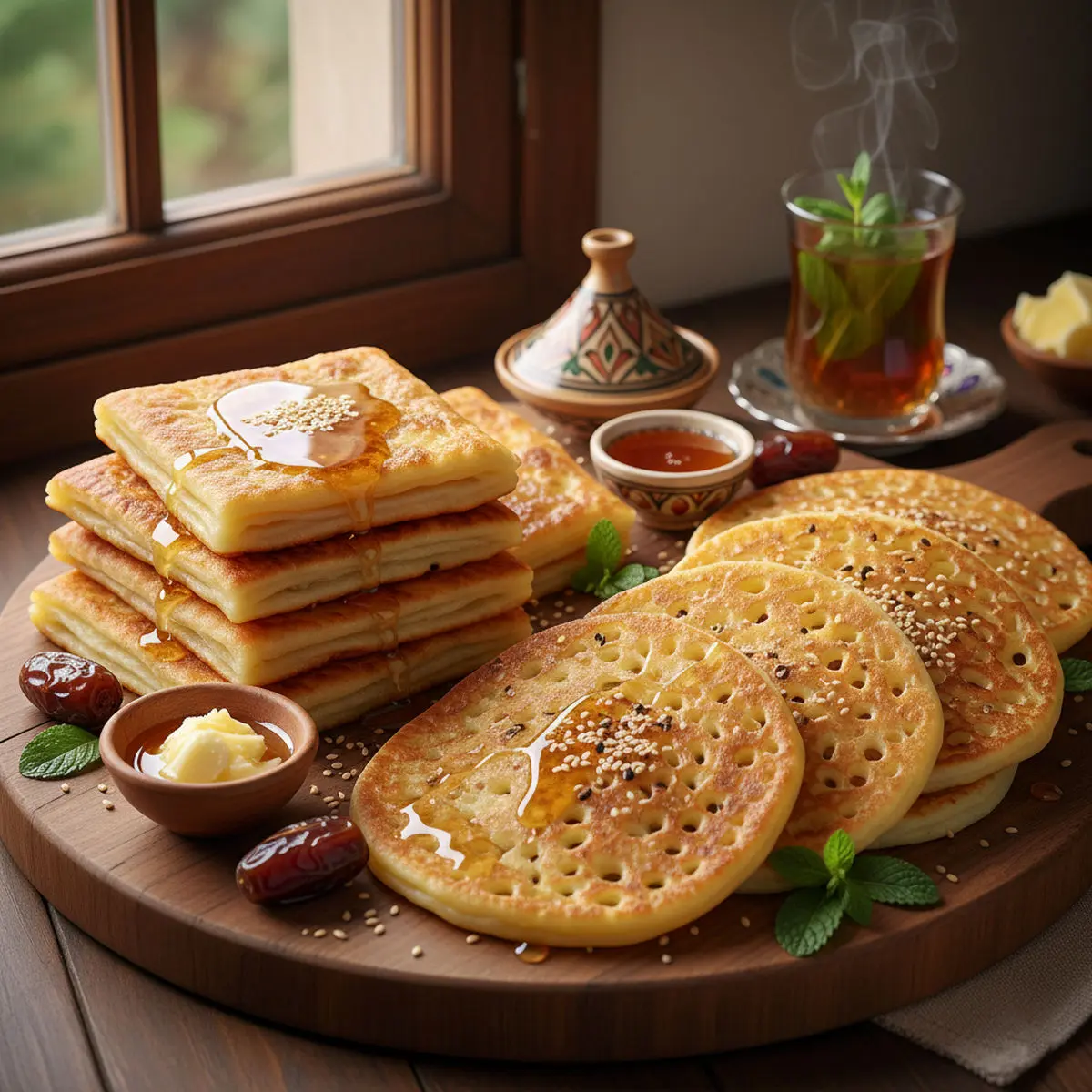
Msemen (sometimes called Msammen or Rghaif) is a layered square pancake beloved across Algeria and North Africa. This flatbread is made by repeatedly flattening and folding a soft dough of semolina and flour, buttering each layer, and then pan-frying it to a golden-brown crisp. The outcome is a thin, flaky square with dozens of delicate layers. Each bite offers a satisfying contrast of textures: a flaky, crispy exterior and a soft, tender interior. Msemen is often enjoyed with leisurely breakfasts or with tea, making it an iconic comfort food.
In Algeria, msemmen is typically served warm, either plain or with accompaniments. It pairs beautifully with sweet toppings like honey, jam, or date syrup spread, which melt into the layers. It is equally at home in savory company: tear it to scoop up olives, soft cheeses, or curried eggs. The bread’s rich, buttery notes complement a cup of mint tea or strong coffee. Vendors and home cooks form the squares by hand on a well-oiled surface. Those thin layers are key: shaping the dough with folds builds an internal “pillowy” structure, similar to a very light pastry. After cooking, the final pancake may be brushed with a little more oil or butter, adding shine and flavor.
The process of making msemmen takes practice. The dough (semolina, flour, and a pinch of salt) must be kneaded until perfectly smooth. After dividing it into balls, each ball is gently flattened and oiled. Then the cook sprinkles a light dusting of flour or semolina on the surface and oil on the dough before folding one side over, then the opposite side, building many layers. Finally, the dough is folded again into a tight square packet. The folding order can vary by family (some fold twice in each direction). The final square is then pressed and cooked on a hot griddle. The result, however, is well worth it: a golden, butter-laminated square that fills the kitchen with the comforting aroma of frying dough.
Msemen is often made as a festive or weekend treat, reflecting the time it requires. Making a batch can involve several family members, especially during Ramadan or family gatherings. Its popularity means many non-Algerians have encountered it: it resembles layers of crisp pastry like an Indian paratha or a Turkish gözleme, yet unique in its semolina-rich taste and square shape. Some variations include folding in onions and herbs for a savory twist, or adding a pinch of sugar for sweetness. In any case, each golden square exemplifies hospitality and skill.
Whether enjoyed at dawn or dusk, Msemen exemplifies comfort through simplicity. It needs no oven and uses few ingredients – mostly pantry staples – yet rewards the cook’s touch and patience. The bread’s golden squares grace many tables – from modest homes to tea stalls – always inviting friends and family to share. In its rich layers and buttery flavor, one can taste the devotion of generations who rolled and fried this cherished Maghrebi delicacy.
4
servings20
minutes30
minutes20
minutes350
kcalMsemmen are Algerian layered pan-fried squares, similar to flaky pancakes. A dough of semolina and flour is kneaded until smooth, then rested. It is divided into small balls, each brushed with butter and oil, and rolled or stretched out. A layer of butter or clarified butter is spread on the surface before folding it multiple times into a square packet. These squares are cooked on a hot skillet until golden on both sides (about 2–3 minutes per side). The process yields 6 crispy, buttery squares in about 1 hour. Serve them hot with honey, jam, or cheese to enjoy their delicate layers.
Fine semolina flour: 150g (1 cup) – gives a slightly chewy texture and golden color. Use medium-ground semolina if fine is unavailable (dough will be slightly grainier).
Bread or all-purpose flour: 150g (1 cup) – provides gluten for elasticity. You may use equal amounts of white flour or a mix of white and whole wheat for a more rustic bread.
Warm water: about 200ml – to form the dough. The amount may vary; add gradually to achieve a soft, sticky dough.
Salt: ½ teaspoon – for the dough.
Clarified butter or ghee: 3 tablespoons (divided) – for layering and richness. If not available, use unsalted butter melted, or neutral oil.
Olive oil: 2–3 tablespoons – for cooking and handling. Extra virgin olive oil adds nice flavor; vegetable oil is fine too.
Optional flavorings: You can add a pinch of sugar to the dough for a hint of sweetness, or a splash of orange blossom water for aroma.
Knead the dough: In a bowl, mix semolina, flour, and salt. Gradually add warm water, stirring to combine, until a soft, elastic dough forms. Knead on a clean surface for 5–7 minutes until smooth. Cover and let rest for 30 minutes (this relaxes the gluten).
Portion and oil: Divide the rested dough into 6 equal balls. Brush each ball with a little melted butter or oil, then cover and let them rest another 10 minutes (this makes them easier to stretch).
Stretch and layer: On a well-oiled work surface, take one dough ball and press or palm-flatten it into a very thin layer (a large circle or square). Drizzle or brush with melted butter/ghee and a little olive oil. Starting from one side, fold the dough over itself (like folding a letter), then fold the other side in. You should have a stack of layers about the size of your hand. Next, fold the top edge down and the bottom edge up, creating a square packet with many layers inside. Gently press down to flatten slightly.
Cook: Heat a skillet or griddle over medium heat and brush it with oil. Place the folded square on the hot pan. Cook for 2–3 minutes until golden spots appear on the underside, then flip and cook the other side for 2–3 minutes more. The aim is a golden-brown exterior on both sides. (You may see butter sizzling out, which is fine.) Repeat with the remaining dough balls, adding more oil to the pan as needed.
Serve: Remove each msemmen to a plate as it finishes. Serve them warm. You can fold each square in half or stack them. They’re best enjoyed fresh.
Nutrient | Per Serving (1 square) |
Calories | 350 |
Carbohydrates | 45g |
Protein | 6g |
Fat | 15g |
Allergens | Contains gluten (wheat), dairy (if butter used) |
From Alexander the Great's inception to its modern form, the city has stayed a lighthouse of knowledge, variety, and beauty. Its ageless appeal stems from…
Greece is a popular destination for those seeking a more liberated beach vacation, thanks to its abundance of coastal treasures and world-famous historical sites, fascinating…
Precisely built to be the last line of protection for historic cities and their people, massive stone walls are silent sentinels from a bygone age.…
Discover the vibrant nightlife scenes of Europe's most fascinating cities and travel to remember-able destinations! From the vibrant beauty of London to the thrilling energy…
From Rio's samba spectacle to Venice's masked elegance, explore 10 unique festivals that showcase human creativity, cultural diversity, and the universal spirit of celebration. Uncover…




