

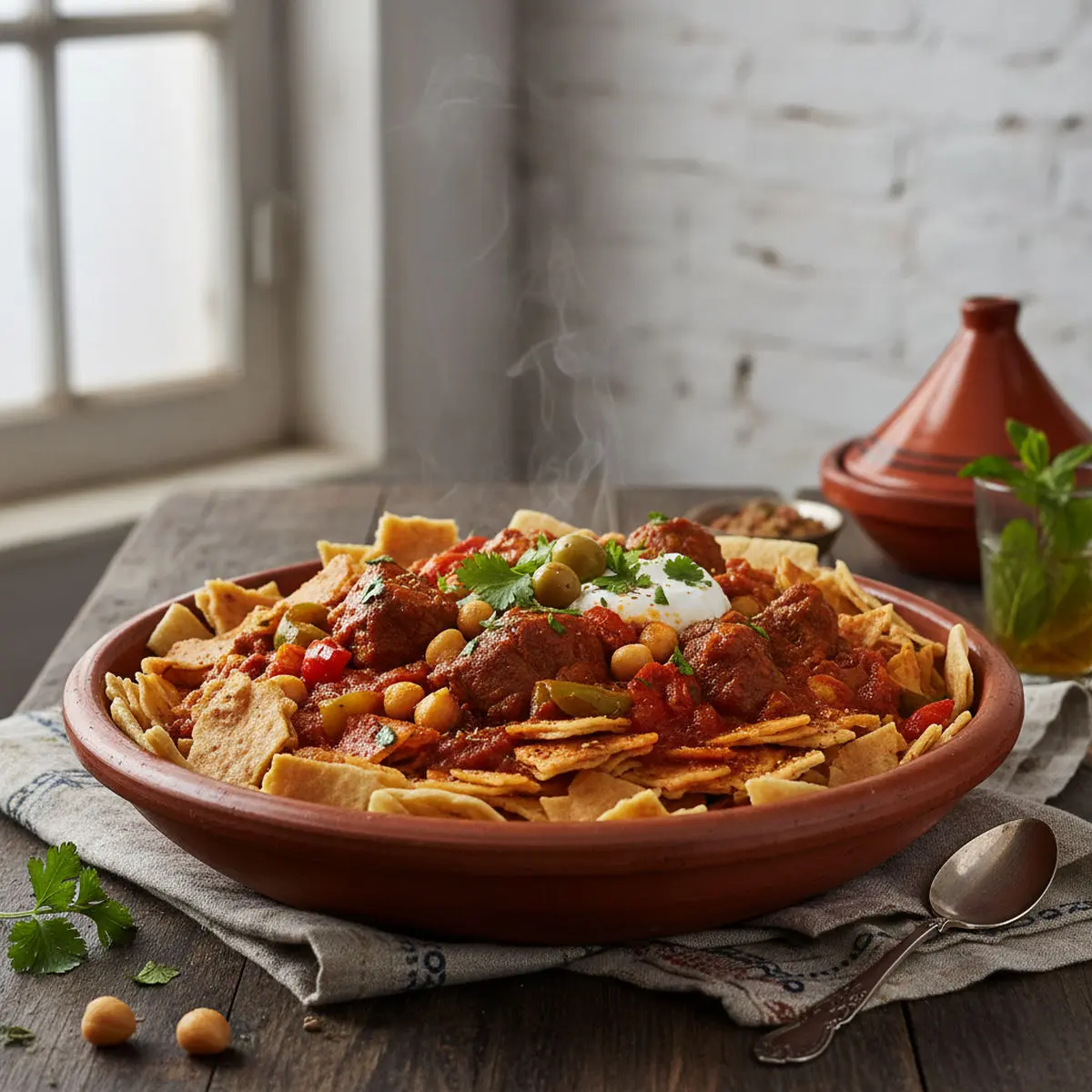

Chakhchoukha (Torn Semolina Flatbread in Tomato-Lamb Stew)
Course: Main CourseCuisine: AlgerianDifficulty: Moderate4
servings45
minutes60
minutes550
kcalChakhchoukha combines torn flatbread with a lamb and tomato-based stew. In this version, homemade semolina flatbread is baked, torn into pieces, and then layered with a rich stew of lamb (with onions and spices) and chickpeas. A warm seasoning blend of cumin, paprika, and a pinch of cinnamon infuses the stew. The dish is assembled by placing bread in bowls and pouring the stew on top, allowing it to soak in. The result is a filling, textured meal where the bread and broth meld into one.
Ingredients
- Flatbread (Rougag/Kesra)
2 cups fine semolina (or all-purpose flour)
¼ tsp salt
~½ cup warm water (approx., for dough)
Oil for greasing
- Stew
2 tbsp olive oil
1 onion, chopped
2 garlic cloves, minced
1 cinnamon stick (optional, for warmth)
1 tsp ground cumin
1 tsp paprika
Pinch of ground coriander (optional)
Pinch of dried chili flakes or 1 tsp harissa paste
300 g lamb (or beef) pieces
2 tomatoes, chopped or blended
Salt and pepper to taste
1 carrot, cut into chunks
1 turnip, cubed (optional)
½ cup cooked chickpeas (about 100 g)
1 cup water (more if needed)
Fresh cilantro or parsley for garnish
Directions
Make the flatbread: In a bowl, mix semolina (or flour) and salt. Gradually add warm water, stirring until a soft dough forms. Knead briefly until smooth, then let it rest under a cloth for 15 minutes. Divide into 4 balls and roll each into a very thin round flatbread (like a pancake). Heat a dry skillet over medium. Cook each flatbread about 1–2 minutes per side until lightly browned. Keep the breads warm and pliable (you can wrap them in a cloth).
Tear the bread: When cool enough to handle, tear each flatbread into bite-sized pieces or strips. Set aside.
Prepare the stew: In a large pot, heat the olive oil over medium. Add the chopped onion and cinnamon stick; sauté until onions soften. Stir in garlic, cumin, paprika, and coriander, cooking until fragrant. Season the lamb pieces with salt and add them to the pot. Brown the meat on all sides.
Simmer with vegetables: Add the chopped tomatoes and stir, cooking for a few minutes. Then add the carrot and turnip. Pour in enough water to cover the meat and vegetables. Bring to a simmer and cook for 30–40 minutes, or until the meat is tender. Stir occasionally and add more water if needed. About 5 minutes before the end, stir in the chickpeas.
Assemble: To serve, place portions of torn flatbread in deep plates or bowls. Ladle the hot stew, meat, and vegetables over the bread, making sure each serving gets plenty of broth. Garnish with chopped cilantro or parsley. The bread will absorb the flavorful sauce as it soaks.
If preferred, the bread pieces can be added directly into the pot of stew and allowed to soak for a minute before serving (this is closer to the d’fer style). Adjust the spice level with additional harissa if desired.
Notes
- Flatbread substitute: If making bread is too time-consuming, very thin pita or lavash can be torn into pieces and used. However, homemade semolina flatbread gives an authentic texture.
- Meat options: Lamb is traditional, but beef or chicken can substitute. Bone-in pieces tend to add extra flavor.
- Occasions: Chakhchoukha is often served at winter festivals and religious celebrations. The cinnamon stick nods to the sweet-spice flavors favored in eastern Algeria.
- Serving: Traditionally eaten with a spoon, beginning with bread and sauce. A simple salad or pickles on the side adds a refreshing contrast.









