


Berkoukes / Aïch
Winter in northern Algeria brings a call for warm, nourishing dishes, and berkoukes answers it. Known by names like aïch or avazine, berkoukes consists of large, pearled semolina pasta slowly stewed with vegetables and meat. Often called “big couscous,” each hand-rolled grain is about the size of a chickpea. The dish likely traces back to medieval times, when North African…

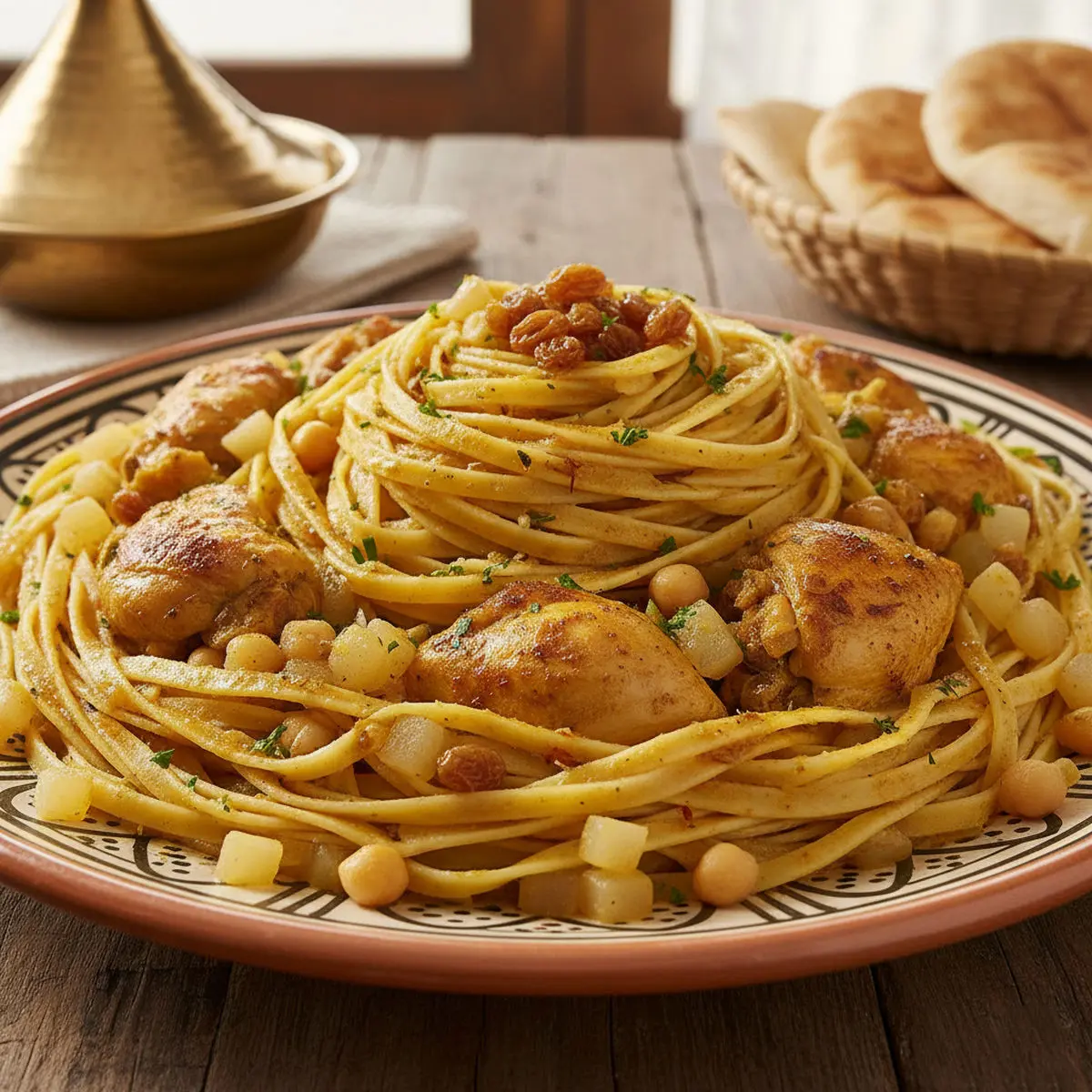
Rechta
Rechta (from Arabic reeshta, meaning “thread”) is a signature dish of Algiers and Blida, though it is enjoyed throughout Algeria with regional twists. Legend attributes rechta’s origin to medieval Persia and Andalusian Spain, where noodle and pasta dishes were common; Algerians adapted the concept into hand-rolled durum semolina noodles. In keeping with tradition, the pasta is made fresh at home:…
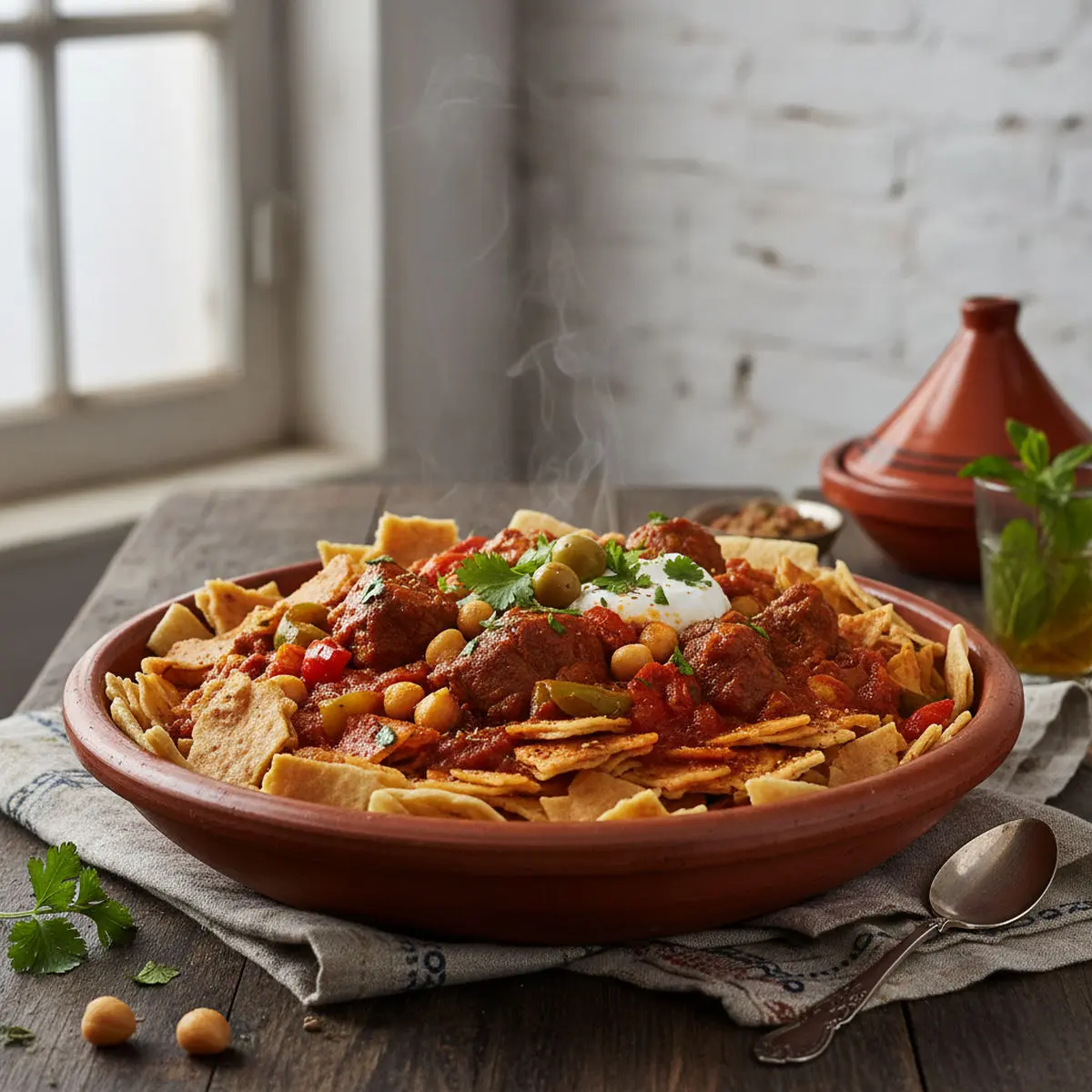
Chakhchoukha
In the Aurès mountains and the deserts beyond, chakhchoukha is a favored festive meal. This hearty stew layers torn flatbread with a rich tomato-based sauce and tender meat. Historically from the Chaoui people of eastern Algeria, chakhchoukha (sometimes spelled shakhshoukha) has spread widely, especially in regions like Batna, Constantine, and Biskra. The name comes from the Chaoui word for “crumbing”…
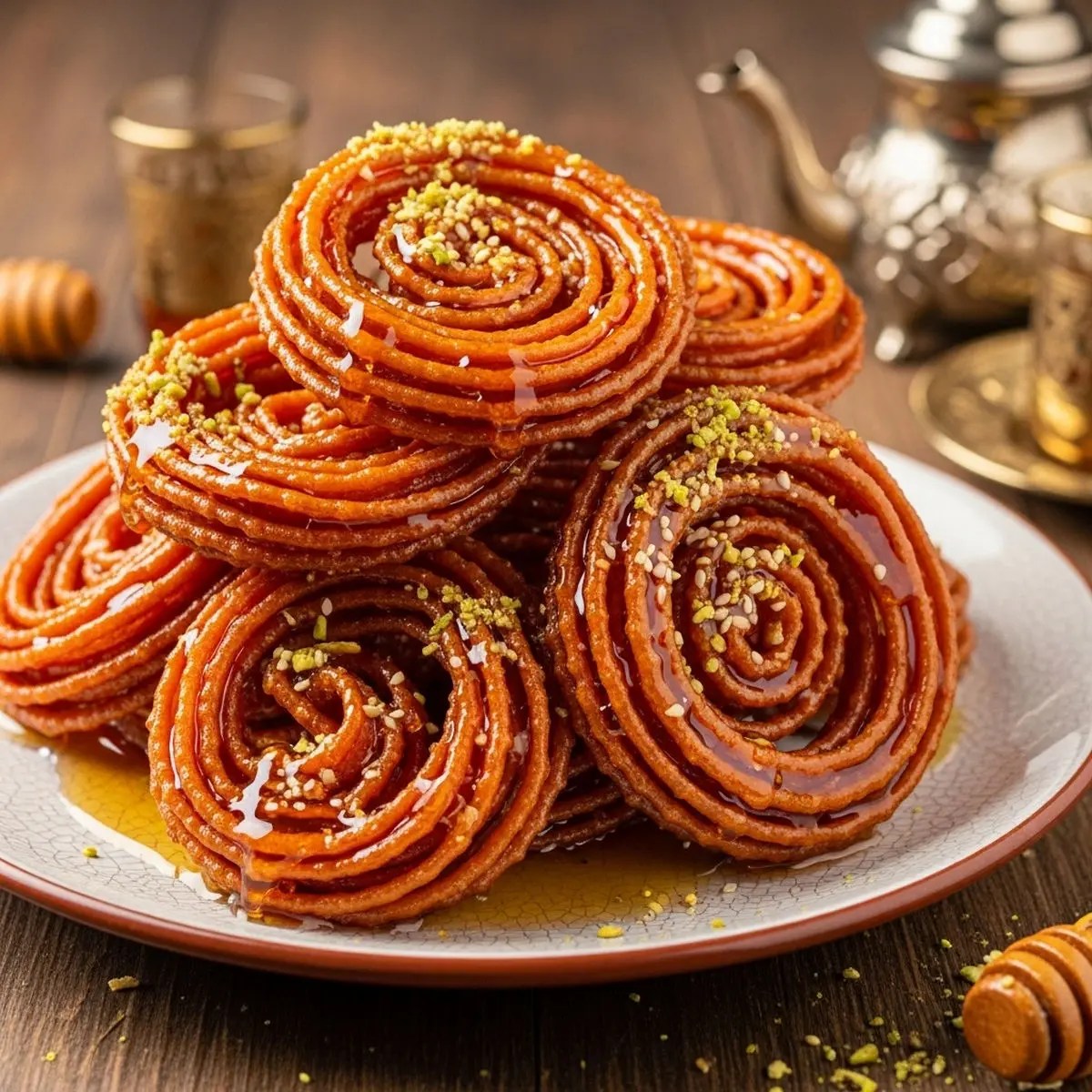
Zlabia
Zlabia (also called zouzbia or zalabia) are beloved honey-soaked fritters in Algeria and across the Maghreb during Ramadan and festive occasions. Each zlabia is an intricate spiral of batter, fried to a deep golden crisp and immediately plunged into warm honey scented with orange blossom water. The exterior is lacy and crunchy, while the interior remains light and tender. With…

Ghribia (Montecaos)
Ghribia (commonly known as Montecaos) are classic Algerian almond shortbread cookies celebrated for their melt-in-the-mouth texture and subtle sweetness. Each buttery biscuit carries a gentle nutty flavor, a whisper of vanilla, and a delicate crunch before dissolving on the tongue. These small rounds are traditionally served at tea time or family gatherings, offering a quiet moment of comfort. With origins…

Tcharek el Aarian
Tcharek el Aarian (often shortened to tcharek) are traditional Algerian crescent cookies filled with spiced almond paste. Each cookie starts as a triangle of tender dough scented with orange blossom water; it is then wrapped around a core of sweet, moist almond filling. The shape is a gentle curve or horn, evocative of the crescent moon, and it turns lightly…

Makrout el Louz
Makrout el Louz (sometimes spelled “Maqroud el Louz”) is a refined Algerian specialty distinct from its semolina namesake. Rather than using wheat or semolina, this delicate cake is built almost entirely on almonds. The dough is a simple almond paste, subtly flavored with lemon zest and orange blossom water. After baking to a pale gold, the cakes are softened with…

Makroudh
Makroudh are a cherished specialty of the Maghreb, particularly in Algeria and Tunisia. These diamond-shaped semolina cakes capture the goodness of the land: wheat, olive oil, and dates, coming together in one perfect bite. Soft yet slightly chewy, each makroudh is traditionally filled with a paste of dates (or sometimes a nut paste), fried until golden, and then bathed in…

Algerian Baklawa
Beneath a cloak of golden layers, Algerian baklawa holds centuries of tradition in each delicate bite. This aromatic almond-and-walnut pastry is sweetened with honey and perfumed with orange blossom water, capturing the very essence of Algeria’s culinary heritage. It often graces festive occasions—from wedding banquets and Eid feasts to cozy Ramadan evenings—taking center stage on the dessert table. Unlike its…

Kalb el Louz (Chamia)
Kalb el Louz, also known as Qalb el Louz or Chamia, is a hallmark of Algerian pastry. Translating to “heart of almond,” it is a rich, deeply sweet treat often served during Ramadan or special occasions. Despite its name, the classic recipe doesn’t actually contain almond fillings; rather, the cake itself is made of semolina and often ground almonds. It…
