French Recipes

Panisse

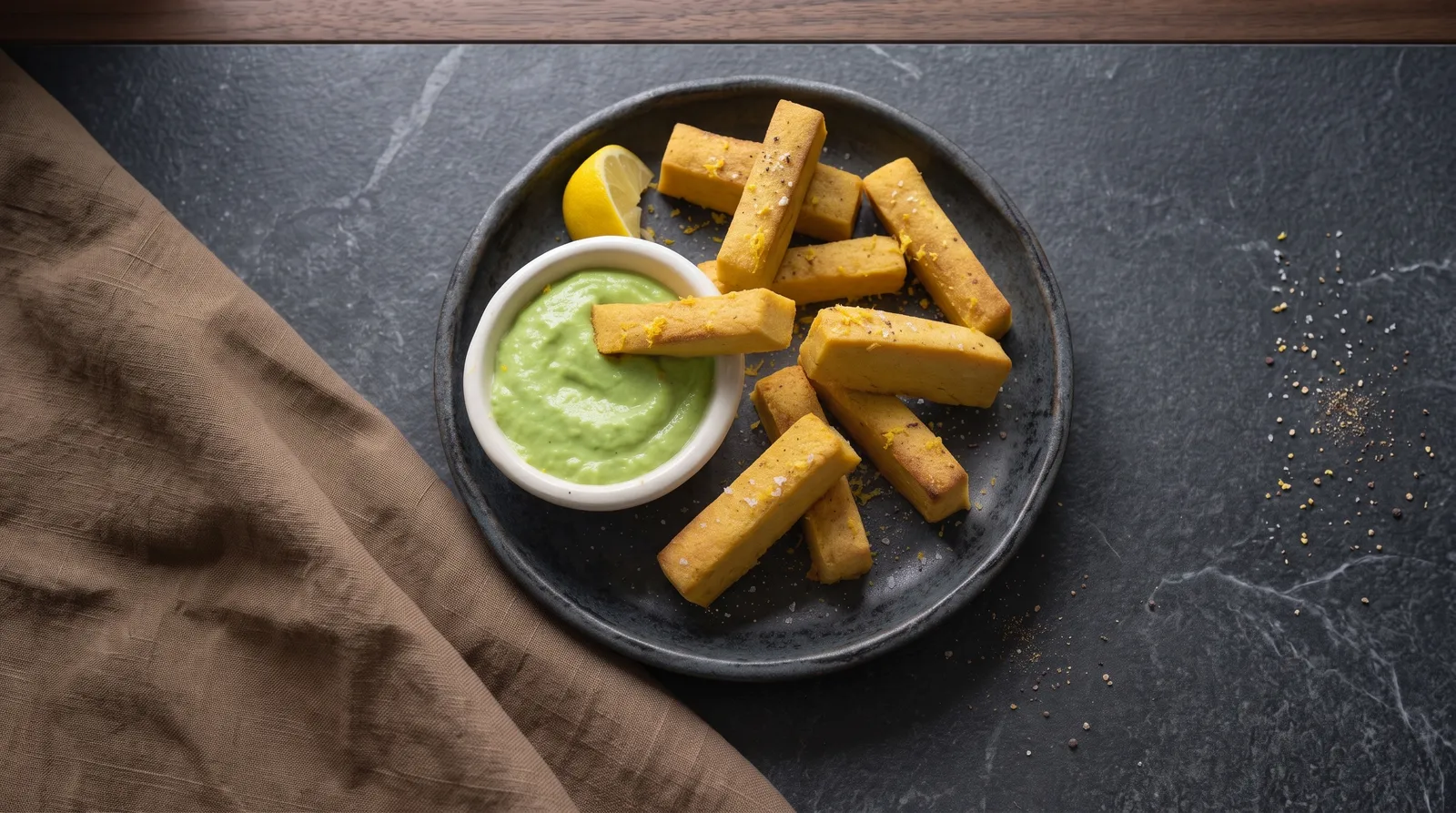
Chickpea flour is cooked into a thick paste, spread 2 cm deep, chilled until firm, cut into 18 pieces and fried in controlled batches for a crisp Marseille-style snack.

French Recipes
Share
Panisse — served on a plate
Prep 20 minutes
Cook 38 minutes
Total 178 minutes
Yield 18 pieces
Introduction and overview

Marseille panisse with crisp fried chickpea pieces

Panisse belongs to the chickpea-flour tradition of Marseille and is especially associated with L’Estaque. It may be sold in a log for slicing, but the local fried form is the useful model here: a cooked chickpea paste is set until firm, cut into substantial pieces and fried until the outside is deeply golden while the centre remains tender. Cornmeal does not belong in the formula, so the finished pieces should not be described as polenta fries.

The first critical step happens before any frying. Chickpea flour is whisked into cold water, then cooked with olive oil and salt until the mixture becomes a very thick paste that visibly releases from the saucepan. Spreading it to a measured 2 cm thickness and chilling it for a full two hours gives a slab that can be cut cleanly and handled without smearing or breaking apart in the oil.

Frying is done in three small batches at 180 °C. The pieces are dried before they enter the pot, both for a better crust and to reduce splatter, and the oil is allowed to return to temperature between loads. Nutrition counts an estimated 90 g of oil absorbed by the whole batch rather than treating the full litre in the frying pot as eaten.
Success points

Success points

  • A properly cooked paste should leave the pan in one mass, and a properly chilled slab should cut with clean edges. Stable 180 °C oil then gives a crisp surface without loading the panisse with excess fat.
Ingredients

Ingredients

Panisse paste

  • 250 g chickpea flour, sifted
  • 750 ml water, cold
  • 30 ml olive oil, for the paste
  • 5 g fine salt

For frying

  • 1000 ml neutral high-heat frying oil, fryer charge; estimated 90 g retained by the finished batch
Method

Method

Directions

  1. Whisk the batter. Whisk the chickpea flour into 750 ml cold water until smooth, then whisk in the olive oil and salt. The batter is smooth with no visible dry flour pockets. Chickpea flour is raw at this point; avoid tasting.

  2. Cook the chickpea paste. Cook over medium-low heat, stirring firmly and continuously for 20 minutes. The paste is very thick, pulls cleanly from the sides of the pan and a spatula leaves a track that closes only slowly. Working temperature: 95 °C. Protect hands from steam and splashing paste.

  3. Chill the slab. Spread immediately into a lightly oiled 20 × 30 cm tray to an even 2 cm thickness. Smooth the surface and refrigerate until firm. The slab is cold, firm and can be lifted or cut without smearing. Working temperature: 4 °C. Refrigerate within 2 hours of cooking.

  4. Cut and dry. Turn out the slab, cut it into 18 equal rectangles and blot all cut surfaces dry. The pieces have dry surfaces and sharp enough edges to handle without breaking. Keep water away from hot frying oil.

  5. Fry in three batches. Heat the frying oil to 180 °C. Fry 6 pieces at a time for about 6 minutes per batch, repeating with the remaining two batches and allowing the oil to recover to 180 °C between loads. Each piece is deep golden with a crisp exterior and a hot, tender centre. Use a thermometer, lower pieces away from the body and never leave hot oil unattended.

  6. Drain consistently. Drain each batch on a rack or absorbent paper for 2 minutes before serving. Excess surface oil has drained and the crust remains crisp. Move the hot oil pot only after it has cooled completely.

Serving and planning

Practical

Serving and planning

Serve hot, traditionally as a snack or aperitif; salt already in the paste means extra finishing salt is unnecessary.

Serving and planning

Cook and chill the slab up to 24 hours ahead, covered in the refrigerator; cut shortly before frying.

Storage and reheating

Refrigerate the cooked slab for up to 24 hours. Fried panisse is best immediately; leftovers may be reheated on a rack in a 200 °C oven for about 8 minutes until hot and crisp.

Substitutions

Baking with a measured coating of oil is a documented alternative, but it gives a drier crust than deep-frying and would require a separate nutrition calculation.

Nutrition per serving

Nutrition per serving

  • Serving size3 pieces
  • Calories338 kcal
  • Carbohydrate24.2 g
  • Protein9.2 g
  • Fat22.8 g
  • Fibre4.6 g
  • Sodium551 mg
Allergens and food safety

Allergens and food safety

Hot chickpea paste can spit; stir with a long heatproof spatula.

Dry cut surfaces before frying and control oil at 180 °C.

Cool and refrigerate the cooked slab within 2 hours.

Allergens: chickpea.

FAQ

FAQ

Is panisse the same as polenta?

No. Panisse is made from chickpea flour; polenta is made from corn.

Can the slab be prepared ahead?

Yes. Cook and chill it up to a day ahead, then cut and fry shortly before serving.

Closing

Closing

  • Result: Chickpea flour is cooked into a thick paste, spread 2 cm deep, chilled until firm, cut into 18 pieces and fried in controlled batches for a crisp Marseille-style snack.
  • Decisive technique: A properly cooked paste should leave the pan in one mass, and a properly chilled slab should cut with clean edges. Stable 180 °C oil then gives a crisp surface without loading the panisse with excess fat.