French National Dishes

Pastis gascon

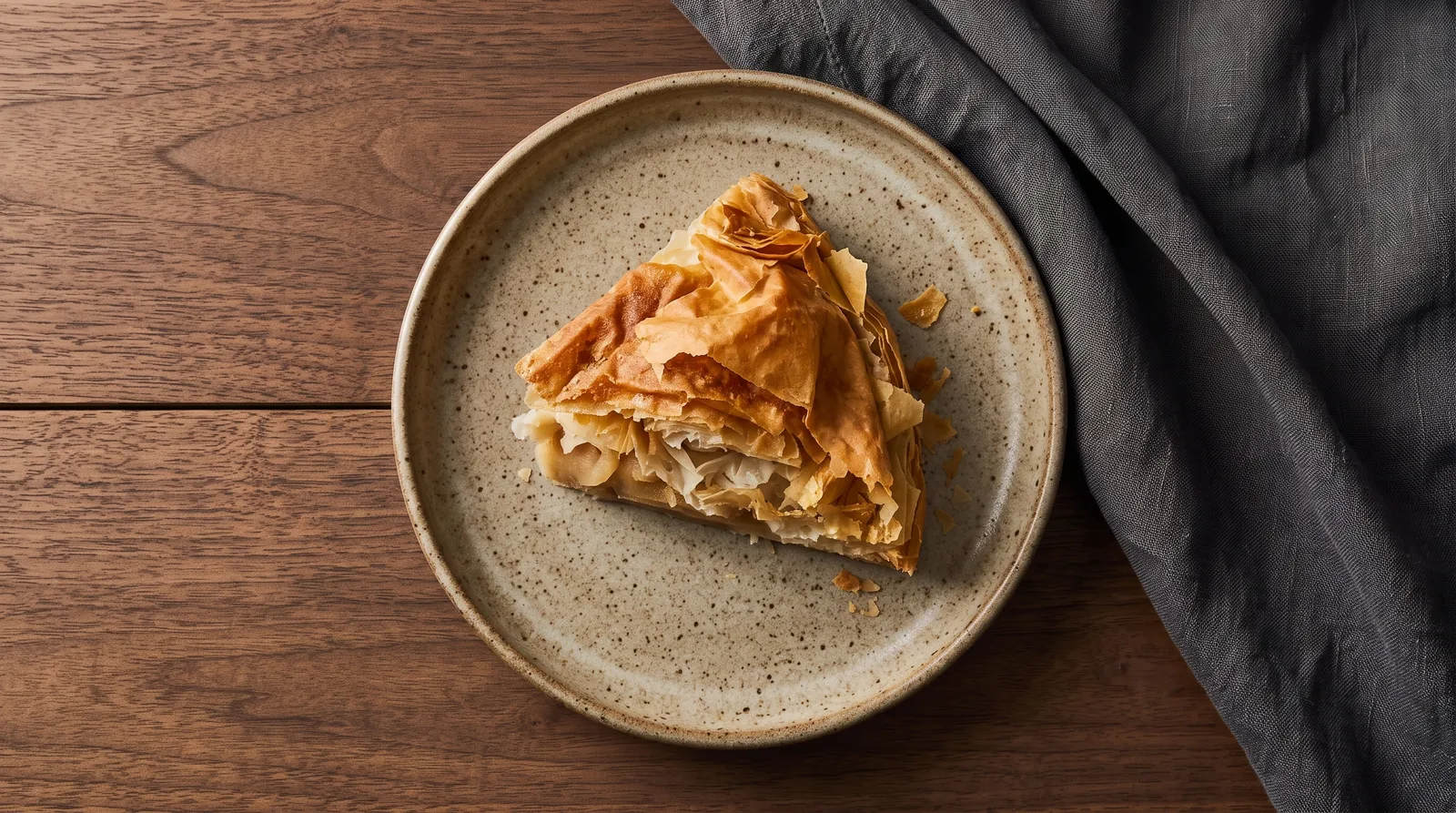
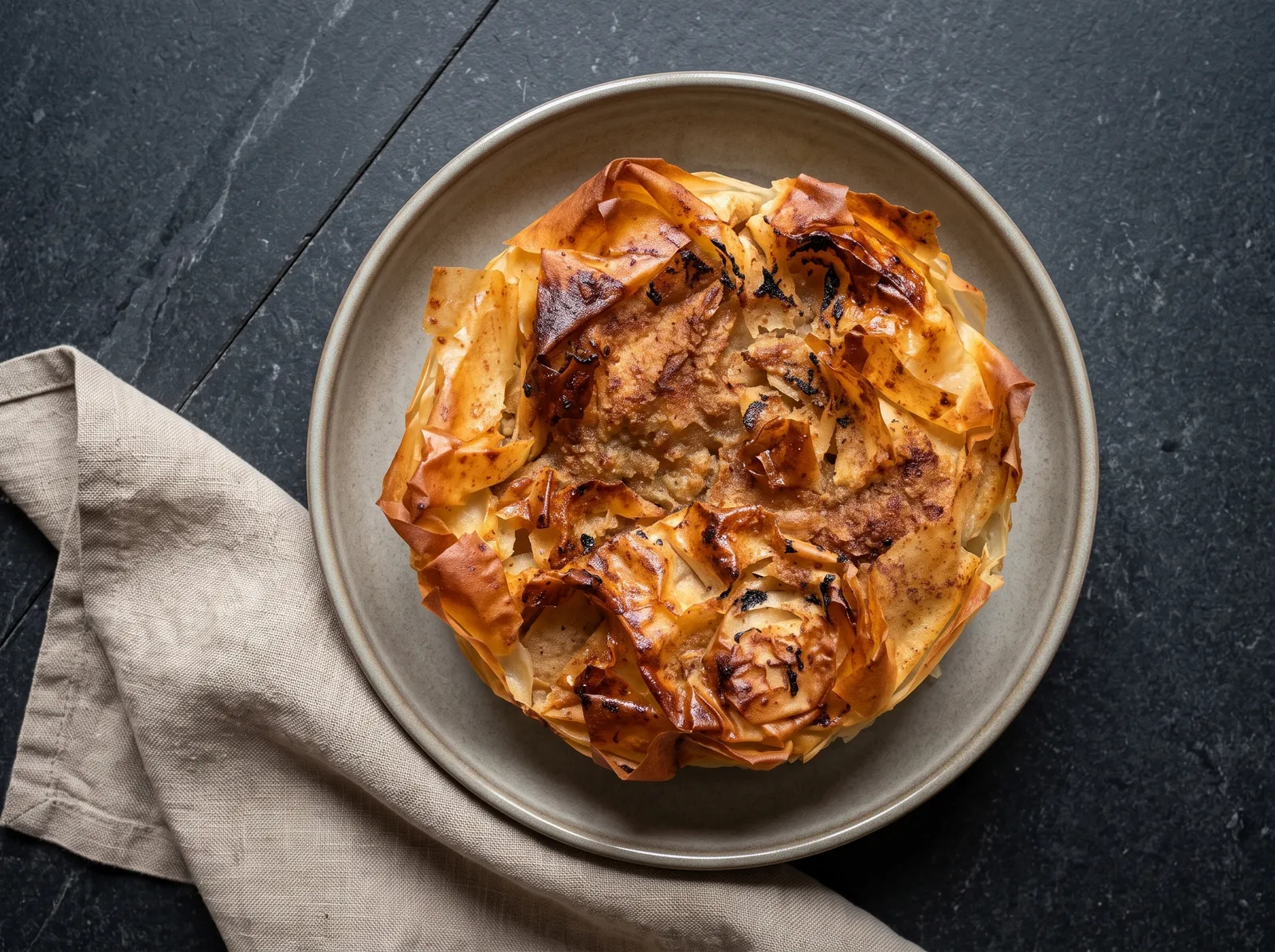
A Gers apple dessert made from a supple dough stretched almost translucent, gathered into loose ruffled layers with butter, sugar and Armagnac, then baked crisp and amber.

French National Dishes
Share
Pastis gascon — served on a plate
Prep 100 minutes
Cook 45 minutes
Total 235 minutes
Yield 1 round 28 cm pastis, 8 wedges
Introduction and overview

Pastis gascon with hand-stretched pastry, apples and Armagnac

Pastis gascon is a pastry, not the anise-flavoured drink that shares the word pastis. In the Gers it is also known as a croustade, and its defining feature is a hand-stretched dough taken almost to translucency before it is gathered into crisp, irregular layers around apples. The sheet should be thin enough for the cloth beneath to show through over most of its area.

The stretch is easier and safer with two people working opposite sides of a large, stable table. The dough is kneaded until elastic, rested for a full hour and then pulled from underneath with flat hands rather than pinched with fingertips. Small tears can be patched, but forcing an under-rested sheet only creates larger breaks. The apples are sliced thinly and the stretched dough is layered loosely so steam can escape and the edges can dry.

Armagnac is measured rather than splashed freely, and the nutrition estimate does not assume that all of its alcohol disappears in the oven. The dessert bakes until the upper sheets are amber and crisp and the apples are tender, then rests for 30 minutes so the fruit juices settle. Ready-made filo can reproduce some layering but not the hand-stretched texture, so it belongs only in a clearly labelled adaptation.
Success points

Success points

  • The dough must be elastic before stretching, nearly translucent after stretching and loosely layered in the tin. Compression is the enemy of the crisp ruffled finish.
Ingredients

Ingredients

Hand-stretched dough

  • 300 g plain wheat flour, plus only the measured amount used for dusting
  • 50 g whole egg, 1 large egg, without shell
  • 150 ml water, lukewarm
  • 30 ml sunflower oil, for dough
  • 3 g fine salt

Apple filling and layering

  • 900 g tart-sweet apples, peeled, cored edible weight; thinly sliced
  • 120 g unsalted butter, melted
  • 110 g caster sugar
  • 10 g vanilla sugar
  • 60 ml Armagnac, measured
Method

Method

Directions

  1. Knead the dough. Mix the flour, egg, water, sunflower oil and salt to a supple dough, then knead for about 10 minutes until smooth and elastic. The dough is smooth, elastic and springs back slowly after a fingertip press. Keep the work surface dry and stable.

  2. Rest for elasticity. Oil the dough lightly from its own surface, cover and leave to rest for 60 minutes. The dough relaxes and stretches without strongly snapping back. Keep the dough covered so the surface does not crust.

  3. Stretch with two people. Cover a sturdy large table with a clean cloth and dust it lightly with flour. With two people working opposite sides, lift and stretch from beneath with the backs of the hands, moving around the perimeter until the sheet is almost translucent; stop and patch small tears rather than pulling sharply. Most of the sheet is thin enough that the cloth pattern is visible through it, with only a slightly thicker rim. Keep fingers flat, jewellery removed and the table clear; do not use knives during the stretching operation.

  4. Layer apples and dough. Trim only the thick rolled edge. Sprinkle the sheet with melted butter, then gather and layer portions loosely into a buttered 28 cm round tin, interleaving the sliced apples with the caster sugar, vanilla sugar and Armagnac. The apples are enclosed by loose, ruffled thin sheets rather than compressed into a dense block. Armagnac is alcoholic; avoid open flames and keep the bottle away from the oven.

  5. Bake until crisp. Bake at 180 °C for 45 minutes, rotating once only if the oven browns unevenly. The upper sheets are crisp amber-gold and the apples are tender when pierced through an opening without resistance. Use oven gloves; melted sugar and butter are extremely hot.

  6. Cool before cutting. Cool in the tin for 30 minutes before lifting or cutting. The juices have stopped bubbling and the layers hold when a wedge is cut. Alcohol is not assumed to evaporate completely during baking; serve accordingly.

Serving and planning

Practical

Serving and planning

Serve warm or at room temperature, cut into 8 wedges; no added garnish is needed for the layered apple and Armagnac profile.

Serving and planning

The dough may be mixed a few hours ahead and rested covered in the refrigerator, then brought back toward room temperature before stretching. The assembled unbaked pastis is best baked promptly.

Storage and reheating

Keep covered in the refrigerator for up to 2 days once completely cool. Re-crisp individual wedges at 160 °C for about 8 minutes; avoid microwave reheating if crispness matters.

Substitutions

Commercial filo can be used only as a clearly labelled convenience adaptation; it changes the hand-stretched texture and does not reproduce the regional dough technique.

Substitutions

A non-Armagnac brandy would change the regional product identity; do not describe such a substitution as equivalent to Armagnac.

Nutrition per serving

Nutrition per serving

  • Serving size1 of 8 wedges
  • Calories381 kcal
  • Carbohydrate53.1 g
  • Protein4.4 g
  • Fat17.1 g
  • Fibre3.5 g
  • Sodium208 mg
Allergens and food safety

Allergens and food safety

Handle the broad sheet on a stable table with two people to reduce uncontrolled tearing and reaching.

Use care around hot butter, fruit syrup and oven steam.

Alcohol can remain after baking; do not state that it cooks off completely.

Allergens: egg, milk, gluten, sulphites if present in the Armagnac product.

FAQ

FAQ

Is this the anise drink pastis?

No. Pastis gascon here is a Gers apple pastry made with an extremely thin stretched dough.

Can ready-made filo be used?

It can make a useful convenience adaptation, but it does not reproduce the hand-stretched regional dough and should be described as an adaptation.

Closing

Closing

  • Result: A Gers apple dessert made from a supple dough stretched almost translucent, gathered into loose ruffled layers with butter, sugar and Armagnac, then baked crisp and amber.
  • Decisive technique: The dough must be elastic before stretching, nearly translucent after stretching and loosely layered in the tin. Compression is the enemy of the crisp ruffled finish.