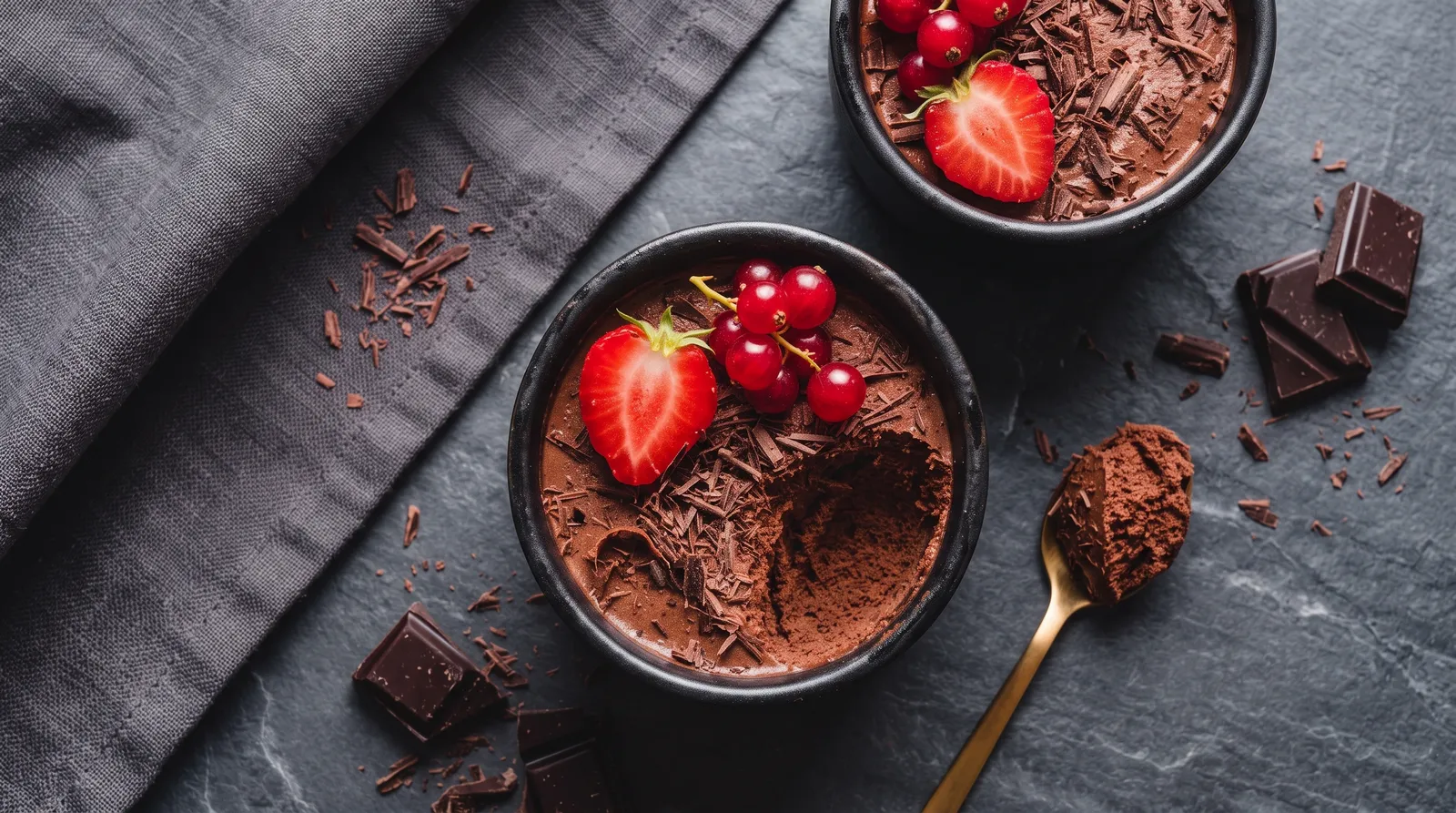
French dark-chocolate mousse with pasteurised eggs
Chocolate mousse is at its most direct when chocolate and eggs do most of the work. This preparation uses 70% dark chocolate, pasteurised shell eggs, a little caster sugar and butter, without cream or gelatine. The chocolate gives structure as it cools; the whipped whites provide the air. Because the eggs are not cooked after mixing, pasteurisation is a food-safety requirement rather than an optional refinement.
Temperature control prevents the common failures. Melt the chocolate and butter gently and keep the mixture no hotter than 45 °C, then let it cool to 40 °C before the yolks are whisked in. Water droplets can seize chocolate, while chocolate that is too hot can thicken the yolks abruptly and make the base grainy. The whites should reach a glossy soft-to-medium peak after the sugar is added: stable enough to hold air, but not dry or clumpy.
Folding happens in stages. One quarter of the whites loosens the chocolate base; the rest goes in two additions with broad strokes that preserve as much air as possible. Stop when the colour is even and no white streaks remain. Divide the mousse into six cups and give it the full four-hour chill at 5 °C or below. The finished texture should hold a spoon mark while still feeling light rather than dense or ganache-like.