French National Dishes

Navarin d’agneau

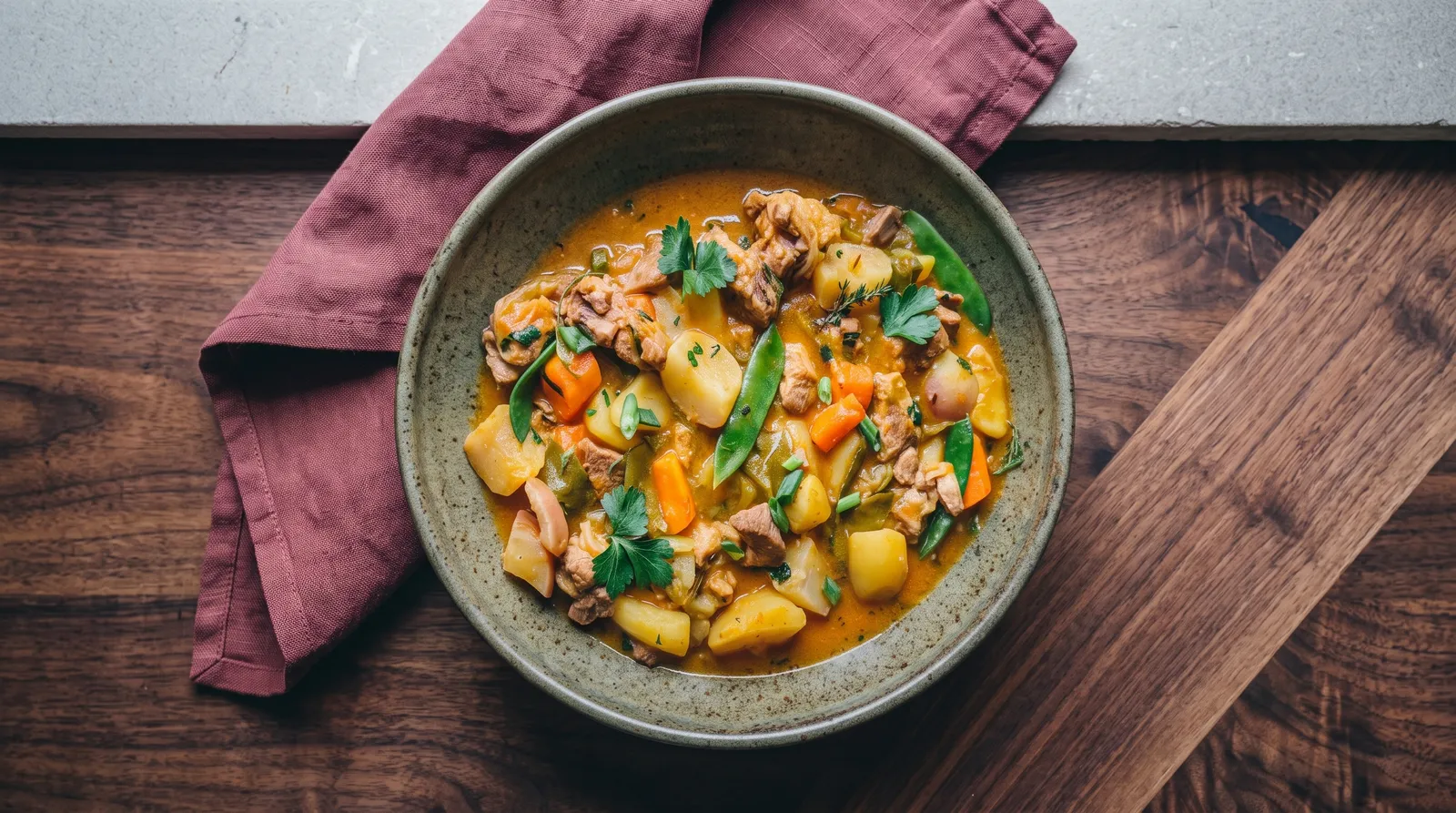
Browned lamb shoulder and collar braise in a light tomato-enriched sauce with root vegetables added in stages so they remain distinct.

French National Dishes
Share
Navarin d’agneau — arranged on a serving platter
Prep 35 minutes
Cook 125 minutes
Total 163 minutes
Yield 6 main-course portions
Introduction and overview

Navarin d’agneau with turnips, carrots and potatoes

Navarin d’agneau is a French lamb braise, not a generic lamb stew. The sauce is light rather than gravy-heavy: browned lamb provides the foundation, a small amount of flour gives gentle body, tomato paste brings colour and acidity, and stock carries the braise. Turnips, carrots and potatoes are the defining vegetables in this household form. Because peas and other specifically spring vegetables are not used, it is not labelled navarin printanier.

The lamb is bone-in shoulder and collar, cuts that reward slow cooking. Browning happens in uncrowded batches so the meat develops a real crust rather than steaming. The onions and celery soften in the same casserole, flour and tomato paste cook briefly, and hot stock dissolves the browned fond. The lamb then gets a 55-minute head start in a 170 °C oven before the roots are introduced. That staged timing is what keeps the vegetables from dissolving into the sauce.

Safety and tenderness are separate checks. The thickest intact piece of lamb must reach at least 63 °C and then rest for a mandatory three minutes, but a braised cut also needs to feel fork-tender before serving. Add carrots and turnips before the potatoes, then finish only when the meat is tender and the potatoes hold their shape. Remove the bouquet garni and bones and skim visible free fat so the final sauce tastes concentrated rather than greasy.
Success points

Success points

  • Brown lamb in batches so it develops fond instead of steaming.
  • Cook flour and tomato paste briefly before adding stock.
  • Give lamb a head start, then add carrots and turnips before potatoes.
  • Verify at least 63 °C and rest the lamb for three minutes.
  • Remove bones and skim visible fat before serving.
Ingredients

Ingredients

Navarin

  • 1400 g bone-in lamb shoulder and collar — cut into large stew pieces; about 820 g cooked edible meat after bones and trimming
  • 30 g plain wheat flour
  • 25 g tomato paste
  • 500 ml low-salt lamb or beef stock — hot
  • 250 g carrots — cut into large pieces
  • 250 g turnips — cut into large pieces
  • 500 g potatoes — peeled and cut into large pieces
  • 150 g onions — chopped
  • 80 g celery — diced
  • 15 g garlic — chopped
  • 30 g olive oil — about 20 g retained after browning and skimming
  • 1 bouquet garni — thyme, bay and parsley stems; remove before serving
Method

Method

Braise

  1. Brown the lamb. Pat the lamb dry and brown it in the 30 g olive oil in several uncrowded batches, transferring browned pieces to a tray. Cook for about 12 minutes. The lamb has a deep brown crust on several sides without blackened flour or burnt fond. Browning develops the stew's savoury base. Hot oil can spit; lower dry meat away from your body.

  2. Soften the aromatics. Reduce the heat and soften the onions and celery, then add the garlic for the final minute. Cook for about 4 minutes. The onions and celery are softened and the garlic is fragrant without scorching.

  3. Cook the flour and tomato. Return the lamb, dust with 30 g flour, stir for one minute, then add 25 g tomato paste and cook for one further minute. The flour has disappeared into the fat and the tomato paste has darkened slightly without sticking. Brief cooking removes raw flour taste and develops the tomato paste.

  4. Add the stock. Add the 500 ml hot stock and bouquet garni, scrape up the browned fond and bring to a gentle simmer. Cook for about 3 minutes. The liquid is gently simmering and the browned fond has dissolved into the sauce.

  5. Braise the lamb first. Cover and braise the lamb at 170 °C until it is beginning to tenderise. Cook for about 55 minutes. A fork enters the lamb with some resistance but the pieces still hold their shape. The lamb needs a head start before the vegetables are added.

  6. Add carrots and turnips. Add the carrots and turnips, cover again and continue braising. Cook for about 20 minutes. Target temperature: 170 °C. The carrots and turnips are partly tender but still firm enough to survive the final potato stage.

  7. Add potatoes and finish. Add the potatoes and braise until the meat is tender and the vegetables hold their shape; verify the thickest intact lamb piece has reached at least 63 °C. Cook for about 25 minutes. Target temperature: 170 °C. The lamb is fork-tender, the potatoes are cooked through without collapsing and the sauce lightly coats the vegetables. Staged addition prevents the roots from disintegrating. Measure the thickest intact lamb piece at 63 °C or above.

  8. Rest and remove bones. Remove the bouquet garni and bones, skim visible free fat, then let the lamb rest before serving. Allow 3 minutes resting. Target temperature: 63 °C. The sauce settles around the meat and vegetables and no loose bones remain in the serving portions. The mandatory rest follows the verified lamb temperature. Rest the intact lamb for at least three minutes after reaching 63 °C.

Serving and planning

Practical

Serving

Ladle lamb, turnips, carrots, potatoes and sauce together so each plate contains the full balance of the braise. Do not serve loose bones.

Make-ahead

The navarin can be cooked a day ahead. Cool promptly, refrigerate, then reheat slowly so the potatoes stay intact. The flavour settles well overnight.

Storage and reheating

Refrigerate within two hours at 5 °C or below and use within three days. Reheat to steaming throughout with gentle stirring. Freeze only if needed; potatoes soften somewhat after thawing.

Substitutions

Boneless shoulder can replace the bone-in mix if the raw edible amount is kept near 1.05 kg. It simplifies serving, but the cooking time should be guided by tenderness rather than copied minute for minute because boneless pieces expose more surface area.

Troubleshooting

Tough lamb after the first braise is normal; it still has the root-vegetable stages to become tender. Do not raise the oven aggressively.

Troubleshooting

Broken potatoes result from adding them too early or stirring hard; add them only for the final stage and turn gently.

Troubleshooting

A greasy stew carries too much free fat; skim the surface after braising rather than thickening it with extra flour.

Nutrition per serving

Nutrition per serving

  • Serving size1 of 6 portions with about 135 g cooked edible lamb, vegetables and sauce
  • Calories547 kcal
  • Carbohydrate30 g
  • Protein38 g
  • Fat31 g
  • Fibre4.7 g
  • Sodium253 mg
Allergens and food safety

Allergens and food safety

Allergens: Gluten, Celery

Safety: Use a food thermometer: intact lamb must reach at least 63 °C and then rest for at least three minutes before serving.

Safety: Bones are a physical hazard; remove visible bones and check serving portions.

Safety: Refrigerate leftovers within two hours.

Safety: Celery is present in the sauce and wheat flour supplies gluten.

FAQ

FAQ

Is 63 °C enough to make braising lamb tender?

It is the minimum safety threshold for an intact cut, not a tenderness endpoint. Shoulder and collar normally continue well beyond that during braising until connective tissue softens.

Why are the potatoes added last?

They need less time than the lamb and root vegetables. Adding them late keeps their edges intact and prevents the sauce becoming starchy and broken.

Closing

Closing

  • Result: Browned lamb shoulder and collar braise in a light tomato-enriched sauce with root vegetables added in stages so they remain distinct.
  • Decisive technique: Brown lamb in batches so it develops fond instead of steaming.