French National Dishes

Navettes de Marseille

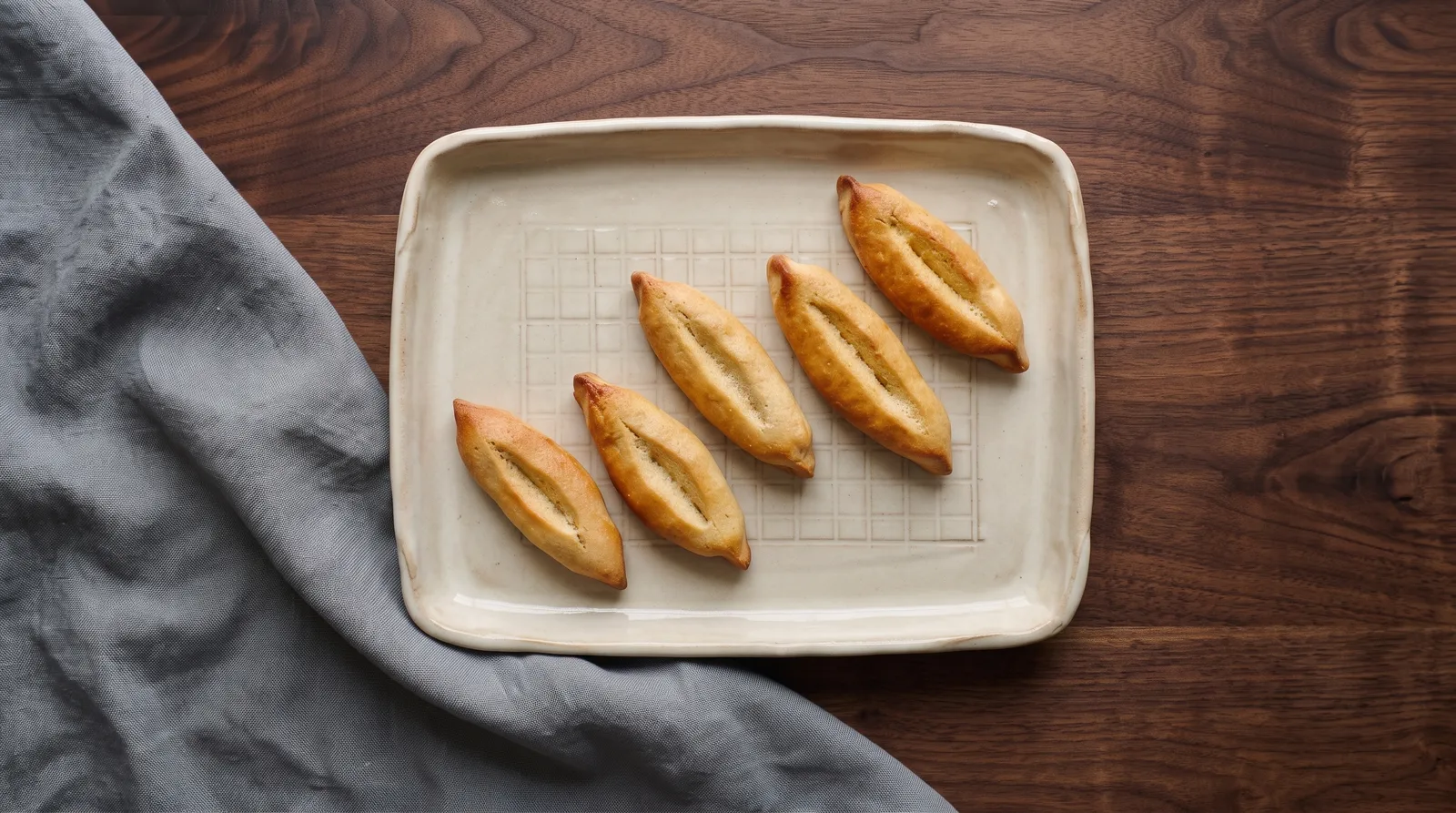
Firm boat-shaped Marseille biscuits are scented with orange-blossom water, rested before shaping and baked only to pale gold.

French National Dishes
Share
Navettes de Marseille — resting on a cooling rack
Prep 30 minutes
Cook 15 minutes
Total 195 minutes
Yield 20 biscuits
Introduction and overview

Navettes de Marseille with orange-blossom water

Navettes de Marseille are firm, dry biscuits, not soft sweet rolls. Their identity is visual as well as aromatic: each piece is shaped like a small boat with tapered ends and a deep lengthwise slit, and orange-blossom water gives the characteristic perfume. In Marseille they are associated with Candlemas, but the practical recipe is simple enough for an ordinary home kitchen and does not claim to reproduce any proprietary bakery formula.

The dough is intentionally firmer than brioche or milk-bread dough. Flour and sugar are mixed with eggs, mild olive oil and orange-blossom water until smooth, then left to rest for two hours. That rest gives the flour time to hydrate and makes the dough easier to shape without forcing in extra liquid. Each piece is weighed to about 45 grams, rolled to roughly 8–9 centimetres and tapered at both ends before the central slit is cut.

Bake the shaped biscuits at 180 °C for about 15 minutes. The colour should remain pale gold; dark tips mean the tapered ends have gone too far. The centre must be fully baked and dry enough that a biscuit lifts without bending. After 30 minutes on a rack, the navettes should be completely cool, firm and dry to the touch. That final cooling period matters because trapping warm steam in a container would soften the very texture that defines them.
Success points

Success points

  • Keep the dough firm and smooth rather than soft and bready.
  • Rest for the full two hours before shaping.
  • Weigh the pieces so they bake evenly.
  • Cut a clear central lengthwise slit without cutting through the base.
  • Stop at pale gold and cool completely before storage.
Ingredients

Ingredients

Navettes

  • 500 g plain wheat flour
  • 200 g caster sugar
  • 100 g whole egg — 2 large eggs by weight
  • 20 g egg yolk — for a light surface wash
  • 46 g mild olive oil — about 50 ml
  • 50 ml orange-blossom water
Method

Method

Dough and bake

  1. Mix a firm dough. Mix the 500 g flour and 200 g sugar, add the 100 g whole egg, 46 g olive oil and 50 ml orange-blossom water, and work only until a smooth firm dough forms. Allow about 15 minutes. The dough is smooth and firm, not sticky or soft like enriched bread dough. Minimal mixing keeps the biscuit structure firm rather than bready.

  2. Rest the dough. Cover the dough and let it rest at cool room temperature. Allow 120 minutes resting. The rested dough feels relaxed enough to shape without cracking at every fold, yet remains firm. Rest allows even hydration and makes shaping cleaner.

  3. Shape the boats. Divide into 20 pieces of about 45 g, roll each into an 8–9 cm tapered boat shape and cut a deep central lengthwise slit without cutting through the base. Allow about 15 minutes. Each piece has pointed ends and a clear central slit that opens slightly without splitting the biscuit in two. The characteristic boat shape distinguishes navettes from ordinary round biscuits. Cut away from your supporting hand.

  4. Bake to pale gold. Brush very lightly with the 20 g yolk and bake at 180 °C until pale gold and dry-set. Cook for about 15 minutes. The navettes are pale gold, firm on the outside and dry enough to lift without bending, with tips that are not burnt. A restrained bake preserves the dry biscuit character without scorching the ends. The flour and egg must be fully baked through.

  5. Cool completely. Transfer to a rack and cool completely before storing. Allow 30 minutes cooling. The biscuits are completely cool, firm and dry to the touch before they enter an airtight container. Packing warm biscuits would trap steam and soften them.

Serving and planning

Practical

Serving

Serve at room temperature as a dry biscuit. Coffee or tea can accompany them, but beverages are not included in the recipe or nutrition.

Make-ahead

The dough needs its full two-hour rest before shaping, and the baked biscuits need complete cooling. Once cool, they can be made several days ahead without special reheating.

Storage and reheating

Store fully cooled navettes in an airtight container at cool room temperature for up to one week. If they soften from humidity, leave the container open briefly in a dry room rather than reheating aggressively.

Substitutions

Use a mild or neutral-tasting olive oil if a peppery oil would dominate the orange blossom. Do not replace orange-blossom water with orange essential oil; they are not interchangeable.

Troubleshooting

Soft, bread-like navettes usually come from too much liquid or underbaking; keep the dough firm and bake until dry-set.

Troubleshooting

Cracked shaping points to insufficient rest or overly dry dough; complete the two-hour rest before deciding the dough needs adjustment.

Troubleshooting

Dark tips mean the tapered ends were too thin or the tray baked too long; keep tips substantial and stop at pale gold.

Nutrition per serving

Nutrition per serving

  • Serving size1 of 20 biscuits, about 40 g baked
  • Calories159 kcal
  • Carbohydrate29 g
  • Protein3.3 g
  • Fat3.1 g
  • Fibre0.7 g
  • Sodium9 mg
Allergens and food safety

Allergens and food safety

Allergens: Gluten, Egg

Safety: Bake the egg-containing dough fully at 180 °C until dry-set.

Safety: Cool completely before airtight storage to avoid trapped moisture.

Safety: Use the knife on a stable board and cut the central slit away from fingers.

FAQ

FAQ

Why are navettes not soft inside?

The traditional biscuit character is firm and dry. A soft milk-roll texture points to excess liquid, underbaking or a different product.

What makes the shape recognisable?

Tapered boat-like ends and a central lengthwise slit. The slit should open slightly in the oven without separating the biscuit.

Closing

Closing

  • Result: Firm boat-shaped Marseille biscuits are scented with orange-blossom water, rested before shaping and baked only to pale gold.
  • Decisive technique: Keep the dough firm and smooth rather than soft and bready.