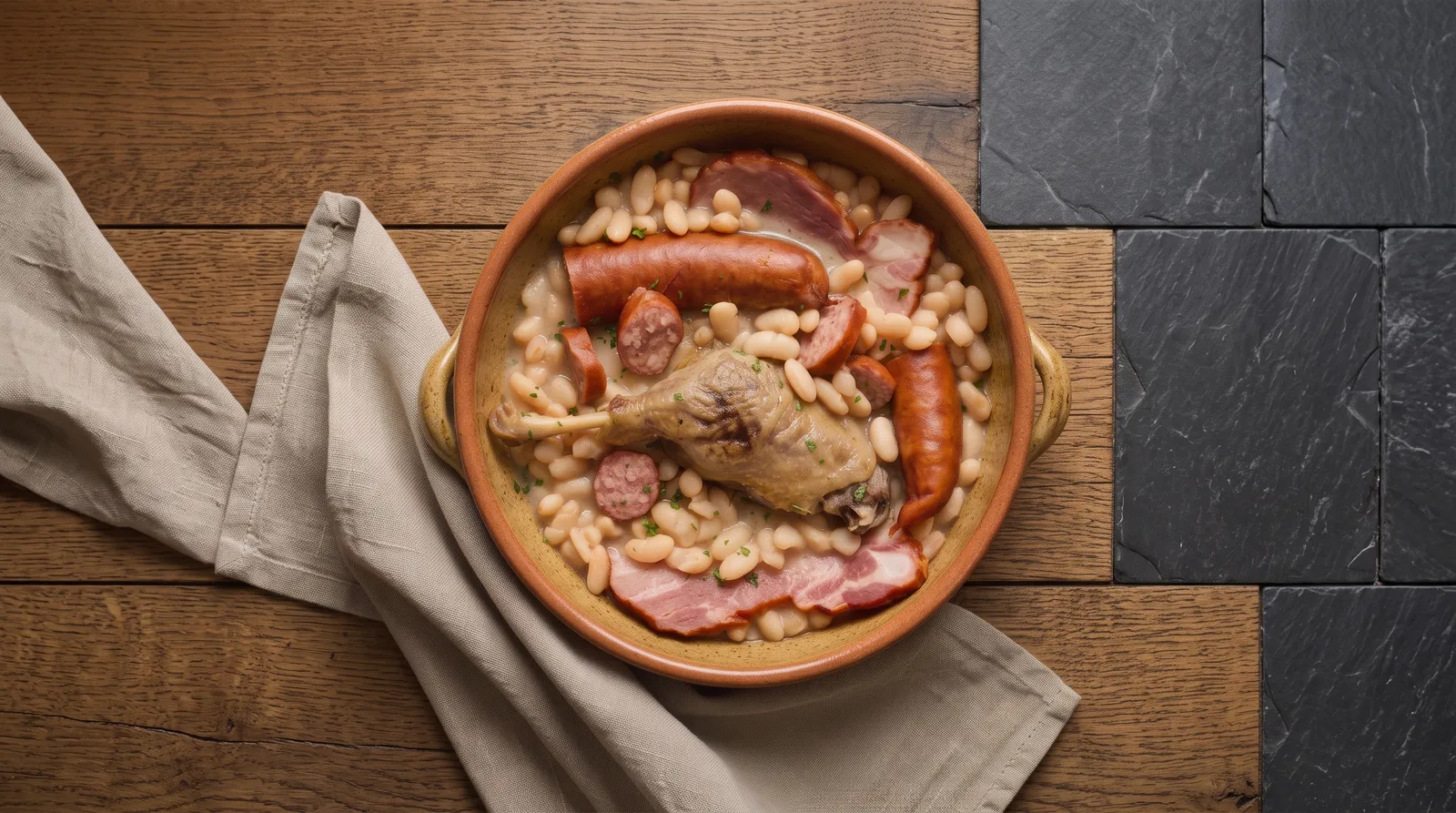
Ariège mounjetado with Coco de Pamiers, duck confit and Toulouse sausage
Mounjetado, also known as estouffat de mounjes, belongs to Ariège and should not be reduced to the label of generic cassoulet. The bean identity matters: Coco de Pamiers is the reference point here, cooked with pork rind, cured ham, duck confit and Toulouse sausage. The household method is deliberately manageable, but it keeps the dish's logic intact: soaked white beans, separately controlled meats, a generous but not greasy stock, and a long oven cook that leaves the beans creamy inside while still recognisably whole.
The work starts the night before. Soak the dried beans under refrigeration at 5 °C or below, then discard that water and cook the beans in fresh water. They need to be nearly tender before entering the casserole, because acid, salt and fat from the meat can slow further softening. The target after the preliminary simmer is about 1.2 kilograms of drained beans from 500 grams dry. Salt is intentionally not added early; cured ham, confit and sausage already bring substantial seasoning.
Meat control is as important as the beans. Render and brown the pork and duck in measured fat, drain away free grease, and cook the raw Toulouse sausage to 71 °C before cutting it. The assembled casserole then bakes slowly at 150 °C, covered for two hours and uncovered for the last 30 minutes. Avoid vigorous stirring. By the end, the sauce should cling between intact beans and tender meat rather than become a mashed, fatty paste.