French National Dishes

Mousse au chocolat

A classic chocolate-and-egg mousse uses 70% dark chocolate, pasteurised eggs, a little sugar and butter, then chills for four hours to set.

French National Dishes
Share
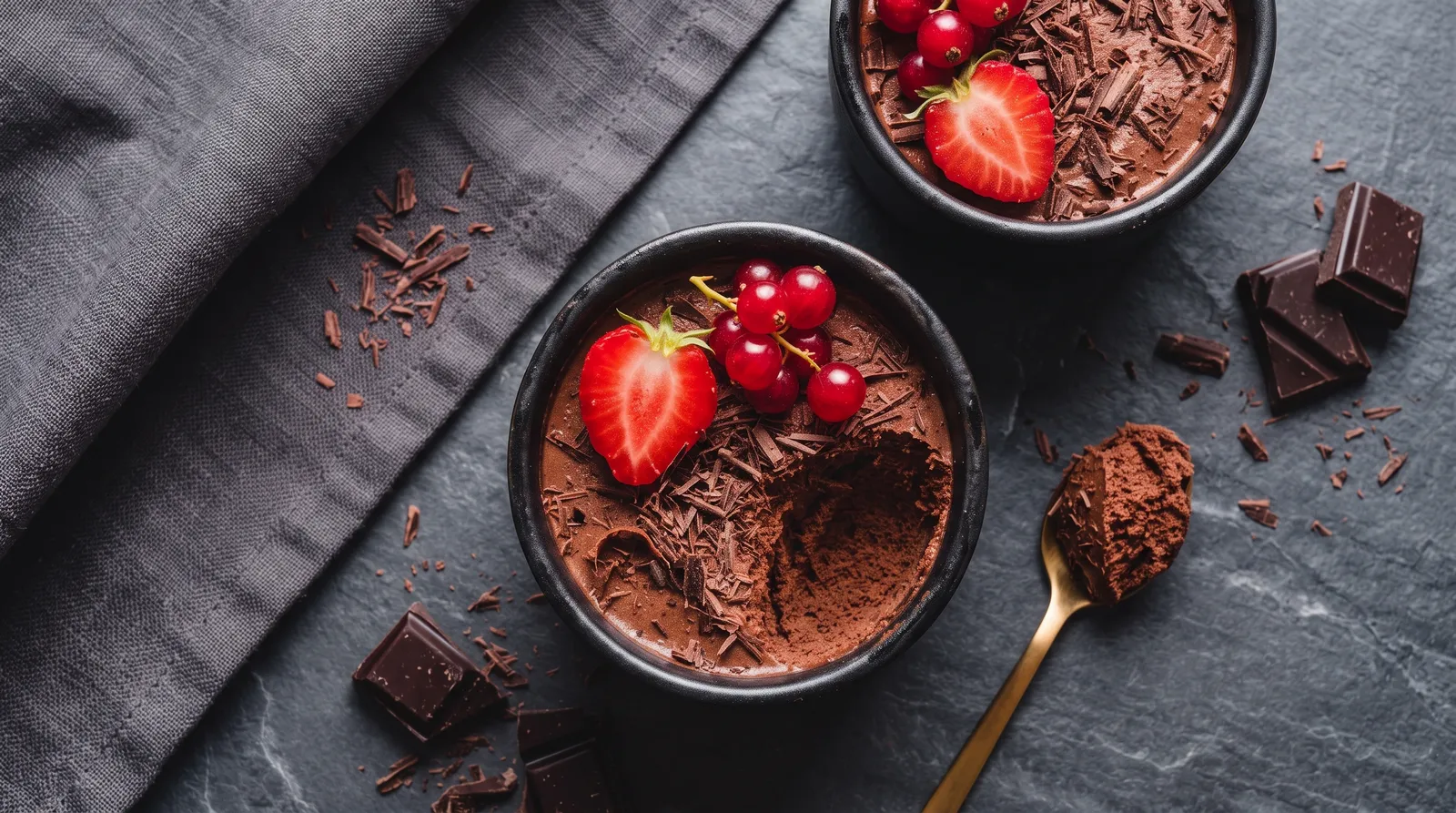
Mousse au chocolat — served in clear glassware
Prep 25 minutes
Cook 5 minutes
Total 280 minutes
Yield 6 individual cups
Introduction and overview

French dark-chocolate mousse with pasteurised eggs

Chocolate mousse is at its most direct when chocolate and eggs do most of the work. This preparation uses 70% dark chocolate, pasteurised shell eggs, a little caster sugar and butter, without cream or gelatine. The chocolate gives structure as it cools; the whipped whites provide the air. Because the eggs are not cooked after mixing, pasteurisation is a food-safety requirement rather than an optional refinement.

Temperature control prevents the common failures. Melt the chocolate and butter gently and keep the mixture no hotter than 45 °C, then let it cool to 40 °C before the yolks are whisked in. Water droplets can seize chocolate, while chocolate that is too hot can thicken the yolks abruptly and make the base grainy. The whites should reach a glossy soft-to-medium peak after the sugar is added: stable enough to hold air, but not dry or clumpy.

Folding happens in stages. One quarter of the whites loosens the chocolate base; the rest goes in two additions with broad strokes that preserve as much air as possible. Stop when the colour is even and no white streaks remain. Divide the mousse into six cups and give it the full four-hour chill at 5 °C or below. The finished texture should hold a spoon mark while still feeling light rather than dense or ganache-like.

Success points

Success points

  • Use pasteurised eggs because the mousse receives no later cooking step.
  • Keep water and steam out of the chocolate.
  • Cool the chocolate base to 40 °C before adding yolks.
  • Whip whites to glossy peaks, not a dry foam.
  • Chill for the full four hours at 5 °C or below.
Ingredients

Ingredients

Mousse

  • 200 g 70% dark chocolate — finely chopped; choose a bar containing soy lecithin for the declared soy allergen
  • 200 g pasteurized shell eggs — separated; about 4 large eggs by weight
  • 40 g caster sugar
  • 30 g unsalted butter — diced
Method

Method

Mousse

  1. Melt the chocolate gently. Melt the 200 g chocolate and 30 g butter together gently over barely simmering water, stirring only until smooth. Cook for about 5 minutes. Target temperature: 45 °C. The chocolate-butter mixture is completely smooth, glossy and no hotter than 45 °C. Low heat limits seizing and protects flavour. Keep steam and water droplets out of the chocolate.

  2. Cool the chocolate base. Remove the bowl from heat and cool the chocolate mixture before adding the yolks. Allow 10 minutes cooling. Target temperature: 40 °C. The chocolate mixture has cooled to 40 °C and remains fluid enough to fold. Hotter chocolate risks thickening the yolks abruptly.

  3. Prepare the egg foam. Separate the pasteurized eggs, whisk the yolks into the 40 °C chocolate, then whip the whites until foamy and add the 40 g sugar gradually to form a stable soft-to-medium peak foam. Allow about 15 minutes. The sweetened whites hold a curved peak that is stable but still glossy, not dry or clumpy. A supple foam folds in with less air loss. Use pasteurized eggs because the mousse receives no later egg-cooking step.

  4. Fold without deflating. Fold one quarter of the whites into the chocolate to lighten it, then fold in the remainder in two additions with broad strokes. Allow about 10 minutes. The mousse is an even chocolate colour with no white streaks and still looks aerated rather than runny. Gradual folding keeps the foam from collapsing.

  5. Chill until set. Divide into six cups, cover and refrigerate until fully set. Allow 240 minutes chilling. Target temperature: 5 °C. The mousse is set enough to hold a spoon mark while remaining light and creamy. A full four-hour chill stabilises the air-and-chocolate structure. Keep the mousse at 5 °C or below.

Serving and planning

Practical

Serving

Serve straight from the refrigerator or after only a few minutes at cool room temperature. One cup is one portion. The mousse needs no additional cream to soften it.

Make-ahead

Prepare up to one day in advance, cover the cups and keep them refrigerated. The set improves during the first four hours and remains stable overnight.

Storage and reheating

Keep at 5 °C or below and use within two days. Do not leave the cups at room temperature for extended service. Freezing is not recommended because thawing can make the foam weep and feel grainy.

Substitutions

A dark chocolate between about 65% and 72% cocoa can replace the 70% bar if its cocoa-butter content is similar. Much sweeter chocolate makes a softer mousse and changes the sugar balance. The chocolate specified here contains soy lecithin, so soy remains an allergen.

Troubleshooting

Grainy chocolate usually means water contamination or overheating; start again rather than forcing seized chocolate into the egg foam.

Troubleshooting

Dense mousse comes from dry whites or aggressive folding; stop whipping at a glossy peak and fold with broad strokes.

Troubleshooting

A loose mousse that never sets can result from chocolate that is too low in cocoa solids or an incomplete chill; use the specified range and give it the full four hours.

Nutrition per serving

Nutrition per serving

  • Serving size1 of 6 cups, about 78 g
  • Calories309 kcal
  • Carbohydrate22 g
  • Protein7 g
  • Fat21 g
  • Fibre3.6 g
  • Sodium55 mg
Allergens and food safety

Allergens and food safety

Allergens: Egg, Milk, Soy

Safety: Use pasteurized shell eggs or pasteurized separated egg products only; raw unpasteurized egg is not acceptable here.

Safety: Keep mousse at 5 °C or below and refrigerate within two hours of preparation or serving.

Safety: Use clean bowls and utensils to avoid contaminating the uncooked egg foam.

FAQ

FAQ

Can ordinary raw shell eggs be used?

No. Because the egg remains uncooked in this method, use pasteurised shell eggs or pasteurised separated egg products.

Why cool the chocolate to 40 °C?

It needs to remain fluid for folding while being cool enough not to shock the yolks or collapse the egg foam.

Closing

Closing

  • Result: A classic chocolate-and-egg mousse uses 70% dark chocolate, pasteurised eggs, a little sugar and butter, then chills for four hours to set.
  • Decisive technique: Use pasteurised eggs because the mousse receives no later cooking step.