French National Dishes

Suisse de Valence

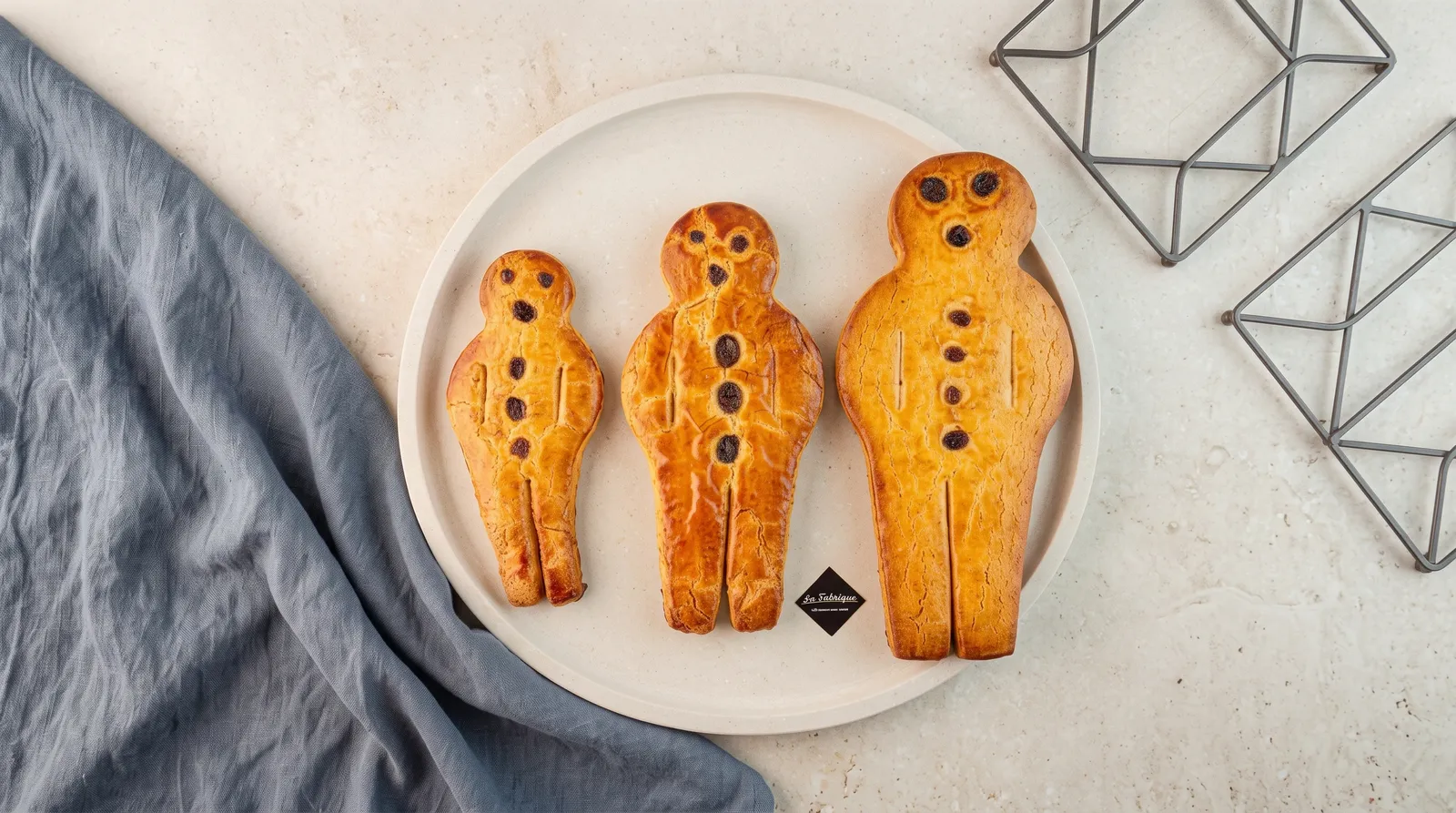
The Valentinois Suisse is a thick, orange-scented short biscuit shaped as a Swiss Guard, with candied orange peel, orange-blossom water and a glossy egg wash.

French National Dishes
Share
Suisse de Valence — served on a plate
Prep 50 minutes
Cook 30 minutes
Total 170 minutes
Yield 6 large biscuit figures
Introduction and overview

Suisse de Valence — orange-scented Swiss-Guard biscuit

Suisse de Valence is a local biscuit of Valence in the Drôme, not a pastry imported from Switzerland. Its name refers to the figure it depicts: a stylised Swiss Guard. The dough is closer to a substantial sablé than to brioche, so the target is a firm, short bite with orange perfume rather than an airy crumb or a soft bread texture.

Candied orange peel and orange-blossom water supply two different kinds of citrus character. The peel contributes sweet, chewy fragments; the floral water perfumes the dough without adding zest. Butter is softened rather than melted, and the flour goes in last so the dough can be mixed just enough to become cohesive without developing the elasticity wanted in bread.

Shaping is part of the identity, not decoration added after the fact. Standardising six figures at about 16 cm tall, 7 cm wide and 1 cm thick gives the home baker a repeatable target. Hats, moustaches, buttons and limbs should be built from the same dough and kept thick enough to bake at the same rate as the body.
Keys to success

Keys to success

  • Keep the butter soft but not greasy or melted.
  • Rest the dough before shaping so the figures do not shrink or twist.
  • Use a thin egg wash; puddles make the bases dark and sticky.
Ingredients

Ingredients

Biscuit dough

  • 500 g plain wheat flour
  • 150 g unsalted butter, softened
  • 200 g granulated sugar
  • 100 g whole egg, beaten — about 2 large eggs without shell
  • 50 g candied orange peel, finely chopped — use a product whose label declares sulphites if present
  • 60 ml orange-blossom water
  • 5 g bicarbonate of soda

Finish

  • 50 g whole egg, beaten — for egg wash; about 1 large egg without shell
Method

Method

Directions

  1. Cream the butter and orange. Beat the soft butter, sugar and bicarbonate until creamy, then mix in the chopped candied orange peel. The butter-sugar mixture is creamy and the orange peel is evenly dispersed. Even distribution keeps the figures tender and evenly scented. Keep eggs refrigerated until needed.

  2. Bring the short dough together. Add the measured egg and orange-blossom water, then work in the flour only until the dough comes together. No dry flour remains and the dough holds together without looking elastic. Minimal mixing after flour limits gluten development in a short biscuit dough. Use pasteurized egg if available for handling safety; the dough will be fully baked.

  3. Rest the dough. Cover the dough and leave it undisturbed for 1 hour before shaping. The dough is relaxed and can be rolled without springing back. Resting relaxes the dough before detailed shaping. Do not leave egg-rich dough at room temperature beyond the stated rest.

  4. Shape six guards. Divide the dough evenly and form six recognisable guard figures, keeping the bodies about 1 cm thick and the small decorations substantial enough to survive baking. All six figures are close to 1 cm thick, with attached decorations that are not thinner than about 5 mm. Consistent thickness prevents small details burning before the body is baked. Use a small blunt knife or bench scraper carefully when defining shapes.

  5. Apply the egg wash. Brush every figure lightly with the reserved beaten egg, avoiding pools around the edges. The exposed dough has a thin, even egg coating with no puddles around the figures. A thin wash gives an even golden finish. Discard leftover raw egg wash after brushing.

  6. Bake until firm and golden. Bake the shaped figures in the preheated oven, rotating the tray once if your oven colours unevenly. The figures are evenly golden, firm at the edges and no longer soft in the centre. A moderate oven sets the thick biscuit without scorching the decorations. Use oven gloves and keep the tray level when removing it. Keep the oven at 180 °C.

  7. Cool completely. Transfer the figures carefully to a rack and leave them until completely cool. The biscuits are completely cool and firm enough to lift without bending. Cooling finishes the crisp-short texture before storage. Cool before packing so trapped steam does not soften the biscuits.

Serving

Practical

Serving

Let the figures cool fully before serving. Their flavour is clearer once the butter has reset and the orange perfume is no longer masked by oven heat.

Storage and reheating

Once cool, keep the biscuits in an airtight tin at cool room temperature for up to 5 days. They do not need reheating, and refrigeration tends to dull the short texture.

Make-ahead and substitutions

The dough can be mixed and rested earlier the same day, while the baked figures can be made several days ahead. Fresh zest gives orange aroma if candied peel cannot be found, but it removes the characteristic pieces of candied fruit; omitting orange-blossom water also makes the result less recognisable.

Troubleshooting

Troubleshooting

  • Dough springs back while shapingThe rest was too short. Cover it and give it more time before trying to refine the outlines.
  • Buttons or moustaches burn firstThose details were too thin. Use thicker pieces and press them firmly onto the body before washing with egg.
Nutrition per serving

Nutrition per serving

  • Serving size1 of 6 large figures
  • Calories674 kcal
  • Carbohydrate104.0 g
  • Protein12.0 g
  • Fat23.5 g
  • Fibre2.4 g
  • Sodium269 mg
Allergens and food safety

Allergens and food safety

Allergens: egg, milk, gluten, sulphites if declared on the candied orange peel label.

Keep raw eggs refrigerated until use and discard unused egg wash.

Bake the egg-containing dough fully before serving.

FAQ

FAQ

Is Suisse de Valence a Swiss pastry?

No. It is a speciality of Valence whose human figure represents a Swiss Guard.

Can one giant figure be made instead?

Large single figures exist, but this household batch is standardised as six equal pieces so baking and nutrition remain predictable.

Closing

Closing

  • Result: Firm golden guard-shaped biscuits with a short buttery crumb, floral orange aroma and small pieces of candied peel.
  • Decisive technique: Rest the short dough and keep body and decorations close enough in thickness to bake evenly.