French National Dishes

Tapenade noire

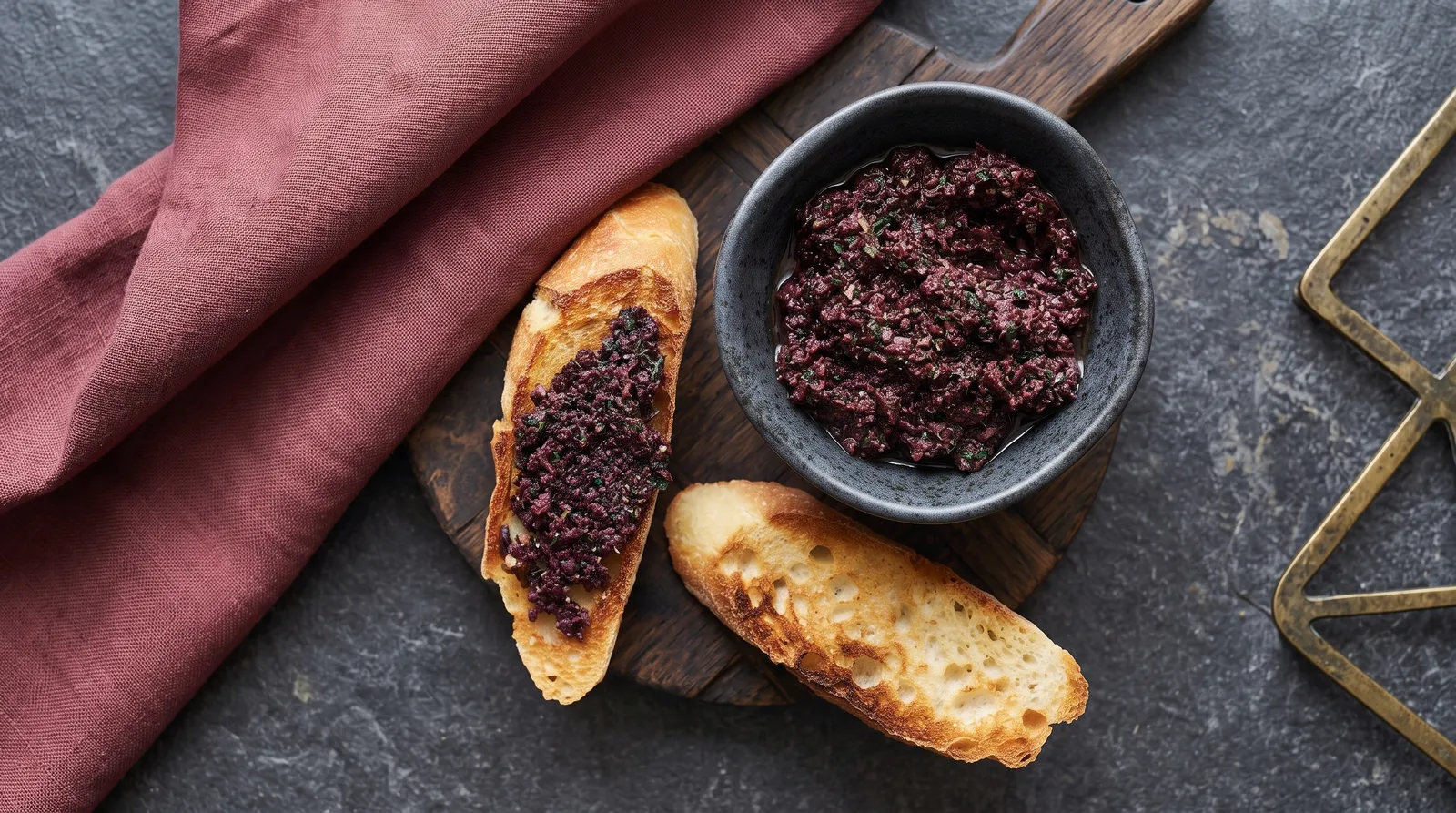
A cold Provençal spread of black olives, capers, anchovies and olive oil, pulsed just enough to stay textured and chilled before serving.

French National Dishes
Share
Tapenade noire — arranged on a board
Prep 15 minutes
Cook 0 minutes
Total 45 minutes
Yield about 315 g tapenade
Introduction and overview

Tapenade noire — Provençal black-olive, caper and anchovy paste

Tapenade noire is a Provençal olive paste in which black olives share the stage with capers and anchovies. The caper matters to the identity as much as the olive: the name itself is associated with the Provençal word for caper. That makes this a different preparation from a generic black-olive dip and certainly from hummus, which depends on chickpeas and tahini.

There is no cooking step. Success comes from managing water, salt and texture. Olives and capers are weighed after draining, anchovies are checked for stray bones, and the oil is measured because it stays in the finished paste. Running a processor continuously can turn the mixture slick and homogeneous; short pulses leave enough tiny olive pieces to give the spread character.

Salt is deliberately not added. Anchovies, olives and capers already carry substantial sodium, and the correct moment to judge seasoning is after all three are combined. A small amount of lemon brightens the paste without making it citrus-led. Once mixed, the fish-containing spread goes straight into a clean covered container and the refrigerator.
Keys to success

Keys to success

  • Drain brined ingredients until they no longer drip.
  • Keep the processor on short pulses and stop before the paste becomes fluid.
  • Add no salt until the full mixture has been tasted; this formula needs none.
Ingredients

Ingredients

  • 200 g pitted black olives in brine, drained weight — all drained olive flesh counted
  • 15 g capers in wine vinegar, drained weight — use a labelled product containing sulphites for allergen transparency
  • 30 g anchovy fillets, drained edible weight and checked for bones — traceable commercial product
  • 55 g extra-virgin olive oil — all supplied oil is retained
  • 5 g garlic, peeled — about 1 small clove
  • 10 ml fresh lemon juice
Method

Method

Directions

  1. Drain and inspect the ingredients. Drain the olives and capers well, check each anchovy fillet for stray bones and prepare the garlic. The olives and capers are no longer dripping and the anchovy fillets contain no detectable bones. Removing excess brine keeps the final paste from becoming watery. Use clean utensils and keep the anchovies chilled until processing.

  2. Build the olive paste. Pulse the olives, capers, anchovies and garlic in short bursts, scraping the bowl only with the motor stopped. The mixture is finely chopped but still visibly textured rather than completely smooth. Short pulses preserve a paste-like texture. Stop the machine before scraping the bowl.

  3. Finish with oil and lemon. Add the lemon juice, then pulse while drizzling in the olive oil until the paste is cohesive but still textured. The tapenade is spoonable and cohesive, with small olive flecks and no free pool of oil. Gradual oil addition binds the paste without turning it into a liquid purée. Taste before adding any salt; no added salt is needed.

  4. Chill before serving. Scrape the tapenade into a clean container, cover and refrigerate before the first serving. The tapenade is chilled, slightly firmer and easy to spread without separating. A short chill lets the paste settle and keeps the fish-based spread cold. Keep refrigerated at 4 °C or below and return it to the refrigerator promptly after serving.

Serving

Practical

Serving

Serve about 30 g per person as a concentrated appetiser spread. It works best in a thin layer on bread or with crisp raw vegetables rather than as a large dip portion.

Storage and reheating

Keep covered at 4 °C or below and use within 3 days. Return the container to the refrigerator promptly after serving; tapenade is eaten cold or cool and does not benefit from reheating.

Make-ahead and substitutions

The paste can be prepared up to 2 days ahead. Green olives create a recognisably different green tapenade, while removing anchovies changes the savoury structure enough that it should be treated as another olive spread rather than silently presented as equivalent.

Troubleshooting

Troubleshooting

  • Loose oil around the pasteToo much continuous processing broke the desired texture. Fold the oil back in gently and stop processing.
  • Watery spreadThe brined ingredients carried excess liquid. Drain them longer next time before weighing and pulsing.
Nutrition per serving

Nutrition per serving

  • Serving size30 g, about 1 of 10 portions
  • Calories79 kcal
  • Carbohydrate1.5 g
  • Protein1.1 g
  • Fat8.0 g
  • Fibre0.4 g
  • Sodium292 mg
Allergens and food safety

Allergens and food safety

Allergens: fish, sulphites.

Use traceable commercial anchovy fillets and check them for bones.

Keep the finished fish-containing spread refrigerated at 4 °C or below.

Refrigerate promptly after serving and discard if left out for more than 2 hours.

FAQ

FAQ

Should tapenade be perfectly smooth?

No. A fine but visibly textured paste gives better body and avoids the liquid feel of an over-processed purée.

Why is there no added salt?

The anchovies, capers and olives already supply enough sodium for this measured formula.

Closing

Closing

  • Result: A dark, spoonable paste with olive body, caper sharpness, anchovy savouriness and enough oil to bind without pooling.
  • Decisive technique: Drain thoroughly and pulse briefly so the mixture stays textured rather than becoming an oily purée.