Pâté aux prunes with whole Reine-Claude plums
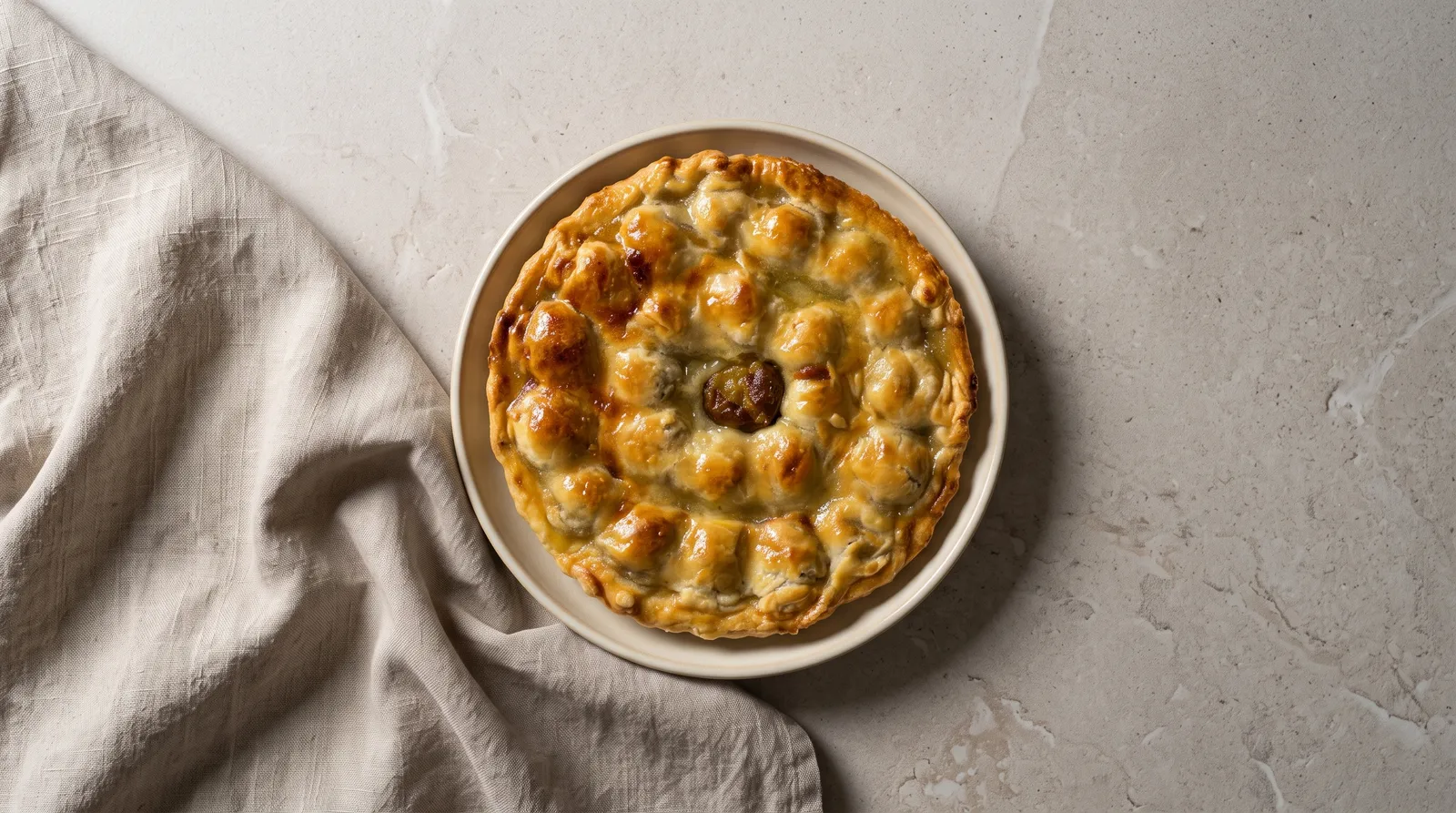
Pâté aux prunes is a sweet speciality of Angers and Anjou, despite the word pâté suggesting meat to many readers. Here it means fruit enclosed in pastry: a round lower crust is packed with small Reine-Claude plums, covered with a second crust, sealed and vented through a central opening. The fruit cooks in its own juice inside the pastry rather than being reduced to jam first.
The whole-plum form matters to the regional identity used here. One kilogram of washed, dried fruit goes into a 24 cm pie with the stones deliberately left in place. That makes the eating experience different from an ordinary plum tart, but it also creates a real hazard: every diner must be told clearly that the stones remain. A pitted version is a sensible household adaptation, yet it should be described as an adaptation rather than as exactly the same whole-fruit form.
The pastry is chilled before rolling, sealed before trimming and given a 3 cm central chimney so steam and bubbling fruit juice have a controlled exit. Baking continues until the crust is deeply golden and juice is visibly bubbling through the opening. A 90-minute cool is not cosmetic: it allows the retained plum liquid to thicken around the fruit instead of flooding the plate as soon as the first wedge is cut.