French National Dishes

Pâté de Chartres

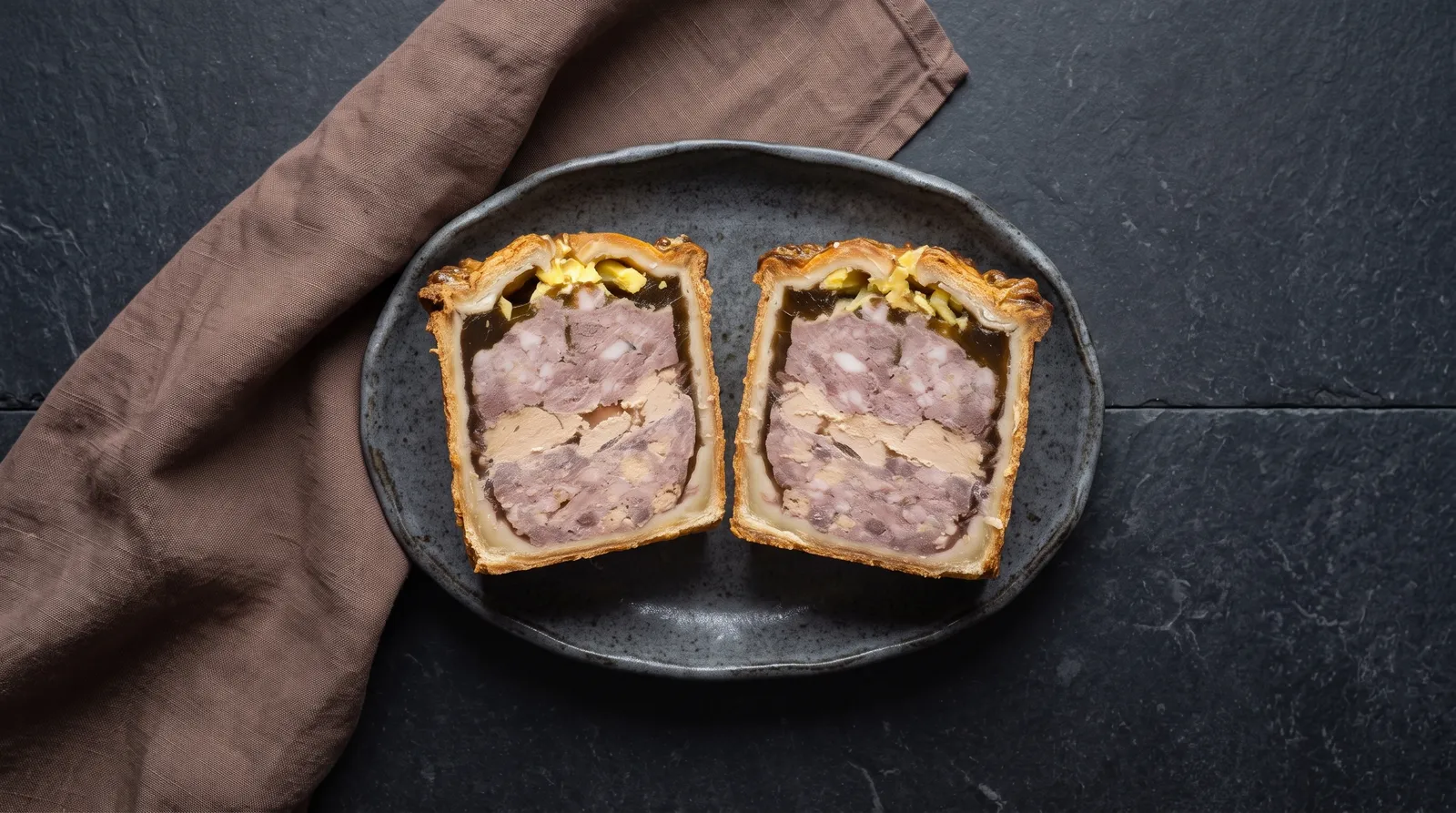
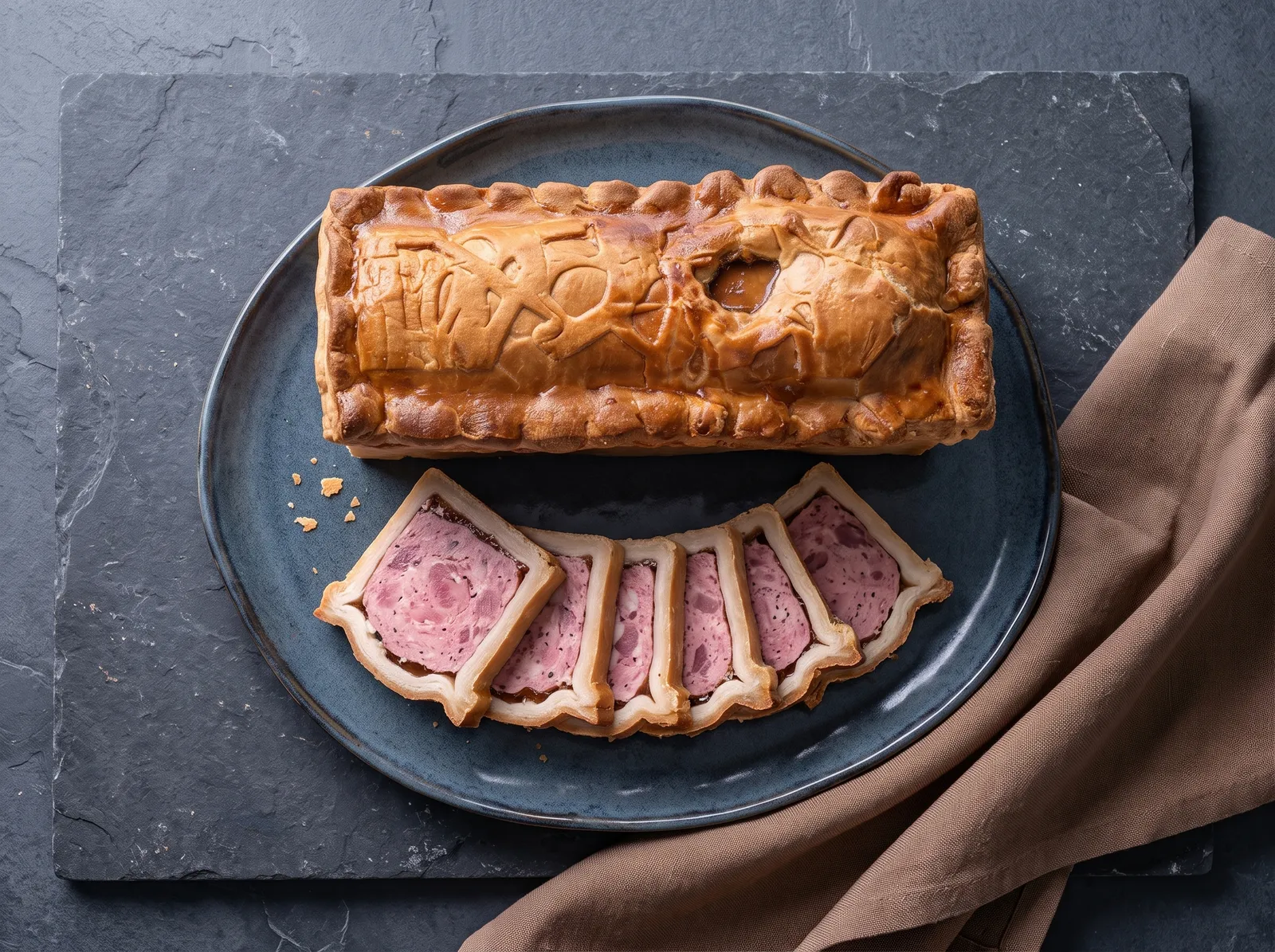
A chilled Chartres game pâté baked in pastry, combining commercially dressed partridge with veal, pork, poultry liver, back fat and a central baton of duck foie gras.

French National Dishes
Share
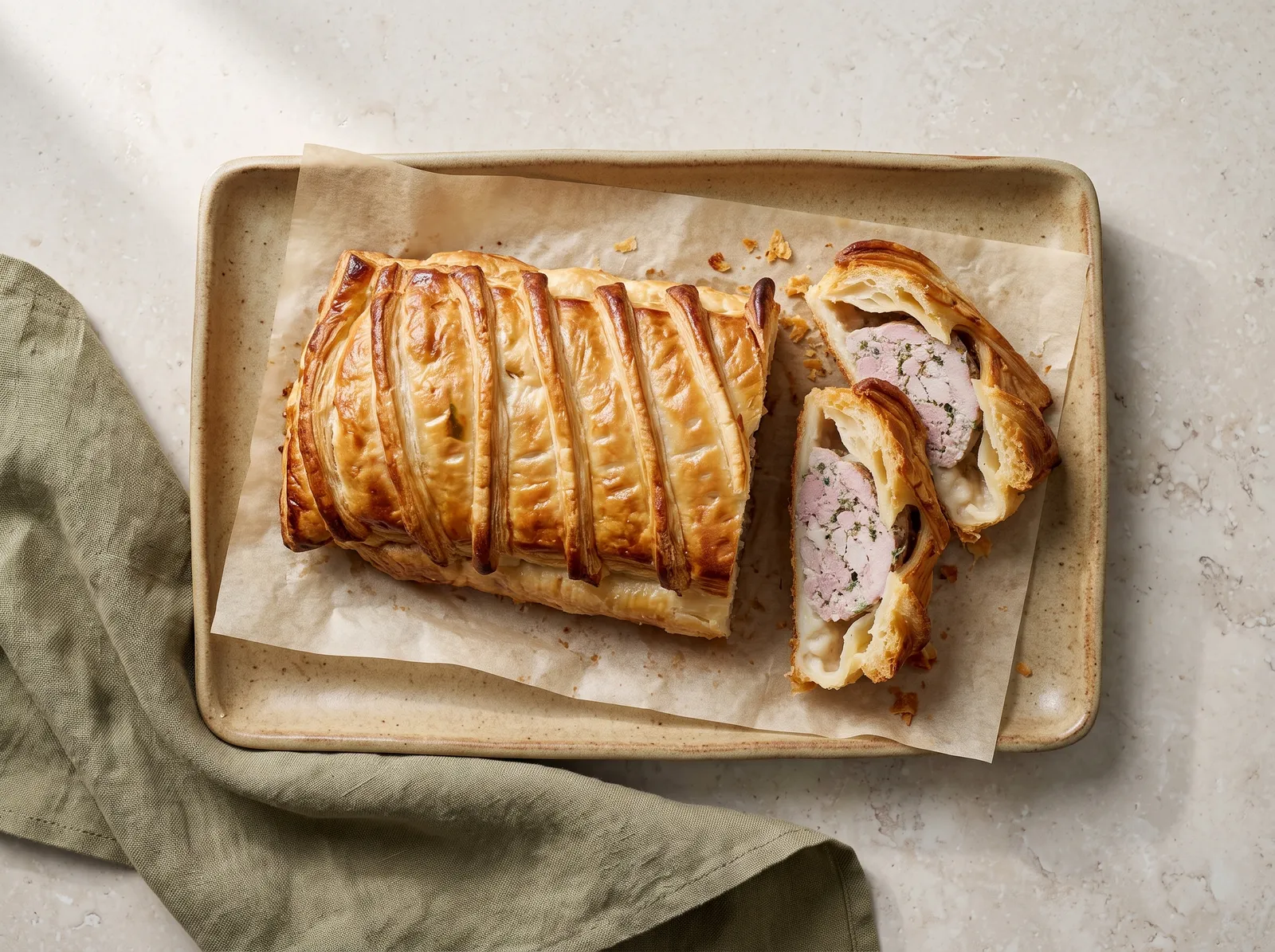
Pâté de Chartres — resting on baking parchment
Prep 75 minutes
Cook 90 minutes
Total 1425 minutes
Yield 1 moulded pâté, 12 chilled slices
Introduction and overview

Pâté de Chartres with partridge, veal, pork and foie gras

Pâté de Chartres is a game-led pâté in pastry with a history tied to the city of Chartres. Older descriptions mention migratory birds that are not appropriate to recreate in a household recipe today; modern local treatments instead use game such as partridge or pheasant and may enrich the filling with foie gras, truffle or fine spice. This practical version uses commercially dressed partridge and gives no hunting, slaughter or home-processing instructions.

The filling is not a smooth anonymous meat paste. Partridge, veal, pork, poultry liver and cold back fat are minced to a cohesive but still visibly coarse farce, while a separate baton of duck foie gras is placed through the centre. Cognac, dry white wine, shallot, parsley and pâté spices season the meat during an overnight refrigerated marinade. The drained farce must stay below 4 °C during mincing and moulding so the fat does not smear and the cold chain remains intact.

Because the mixture contains poultry liver and game bird, the safety endpoint is 74 °C at the centre even though pork-and-veal forcemeat alone would use a lower minimum. The pastry may look done before the filling is safe, so a probe thermometer is essential. After baking, the loaf is cooled for one hour, moved into the refrigerator within two hours and chilled for a further eight hours. It is a cold sliced pâté, not a warm puff-pastry parcel.
Success points

Success points

  • Keep the farce below 4 °C, pack it firmly without voids and verify 74 °C in the centre. The final long chill is necessary for clean slices, not an optional holding step.
Ingredients

Ingredients

Game farce

  • 300 g commercially dressed boneless partridge meat, cold, cut into small pieces
  • 200 g veal shoulder, cold, diced
  • 250 g pork shoulder, cold, diced
  • 150 g poultry liver, trimmed and kept below 4 °C
  • 100 g pork back fat, cold, diced
  • 100 g duck foie gras, cold, cut into a central baton
  • 120 ml Cognac, for marinade
  • 80 ml dry white wine, for marinade
  • 60 g shallots, finely chopped
  • 12 g flat-leaf parsley, finely chopped
  • 14 g fine salt
  • 3 g black pepper, ground
  • 2 g mixed pâté spices

Pastry and finish

  • 700 g all-butter puff pastry, cold, rolled to line and cover a 22 × 10 × 9 cm mould
  • 50 g whole egg, beaten for sealing and glazing
Method

Method

Directions

  1. Marinate the meats. Refrigerate and marinate the partridge, veal and pork with Cognac, white wine, shallot, parsley, salt, pepper and spices for 12 hours in a covered non-reactive container. The meat is uniformly coated and remains fully chilled, with no warm areas. Working temperature: 4 °C. Keep all meat at 4 °C or below; use only commercially dressed game.

  2. Mince the cold farce. Drain the meat thoroughly, reserving no free marinade for the pastry. Mince the drained partridge, veal, pork, poultry liver and back fat through a medium plate, then mix until tacky while keeping the farce below 4 °C. The farce is cohesive and tacky but still visibly coarse, and its temperature remains below 4 °C. Never taste raw farce; cook a small separate sample if seasoning must be checked.

  3. Line and fill the mould. Line the 22 × 10 × 9 cm mould with about two-thirds of the puff pastry, leaving enough overhang to seal. Pack in half the farce without air pockets, place the cold foie gras baton along the centre, and cover with the remaining farce. The filling is tightly packed with the foie gras centred and no visible voids against the pastry. Working temperature: below 4 °C. Return components to refrigeration if assembly temperature rises above 4 °C.

  4. Seal the pastry case. Cover with the remaining pastry, brush the seam with beaten egg, seal firmly, trim, decorate only with clean pastry trimmings and cut two small steam vents. Brush the top with the remaining egg. The lid is fully sealed around the perimeter and both vents remain open. Keep raw-meat tools separate from clean serving equipment.

  5. Bake to the poultry endpoint. Bake at 190 °C for 20 minutes, then reduce to 170 °C and continue for about 70 minutes, until a probe in the centre of the mixed farce reaches at least 74 °C. The pastry is deep golden and the centre of the farce reaches at least 74 °C. Measure 74 °C in the centre; colour alone is not a safety test.

  6. Cool and chill fully. Cool in the mould for 60 minutes, then refrigerate for 480 minutes until fully chilled before unmoulding and slicing. The pâté is fully cold through the centre and slices without the filling smearing. Working temperature: 4 °C. Refrigerate within 2 hours of leaving the oven and keep at 4 °C or below.

Serving and planning

Practical

Serving and planning

Serve fully chilled in 12 slices as a cold starter, allowing each slice only a brief tempering on the plate.

Serving and planning

Marinate the meats overnight. The fully baked pâté benefits from its final 8-hour chill and may be made one day ahead.

Storage and reheating

Keep refrigerated at 4 °C or below for up to 3 days. Serve cold; reheating is not recommended because it softens the pastry and melts the structured farce.

Substitutions

Commercial pheasant can replace partridge in the same weight if legally sourced; flavour changes but the game-led Chartres profile remains coherent.

Substitutions

Omitting foie gras makes a leaner pâté but removes one documented luxury element; do not replace it with an unrelated spread.

Nutrition per serving

Nutrition per serving

  • Serving size1 of 12 slices
  • Calories476 kcal
  • Carbohydrate30.8 g
  • Protein24.7 g
  • Fat27.2 g
  • Fibre1.3 g
  • Sodium783 mg
Allergens and food safety

Allergens and food safety

Use only legally sourced, commercially dressed game and do not home-process wild birds.

Keep raw farce below 4 °C and prevent cross-contamination.

Cook the centre to at least 74 °C because poultry components are present.

Cool rapidly, refrigerate within 2 hours and slice only when fully chilled.

Alcohol can remain after baking.

Allergens: egg, milk, gluten, sulphites from wine and possibly Cognac.

FAQ

FAQ

Can pheasant replace partridge?

Commercially sourced pheasant is a coherent game alternative at the same weight, although the flavour changes.

Why is the temperature 74 °C?

The mixed filling contains poultry components, so the stricter poultry-based endpoint governs the whole farce.

Closing

Closing

  • Result: A chilled Chartres game pâté baked in pastry, combining commercially dressed partridge with veal, pork, poultry liver, back fat and a central baton of duck foie gras.
  • Decisive technique: Keep the farce below 4 °C, pack it firmly without voids and verify 74 °C in the centre. The final long chill is necessary for clean slices, not an optional holding step.