French National Dishes

Gâteau basque

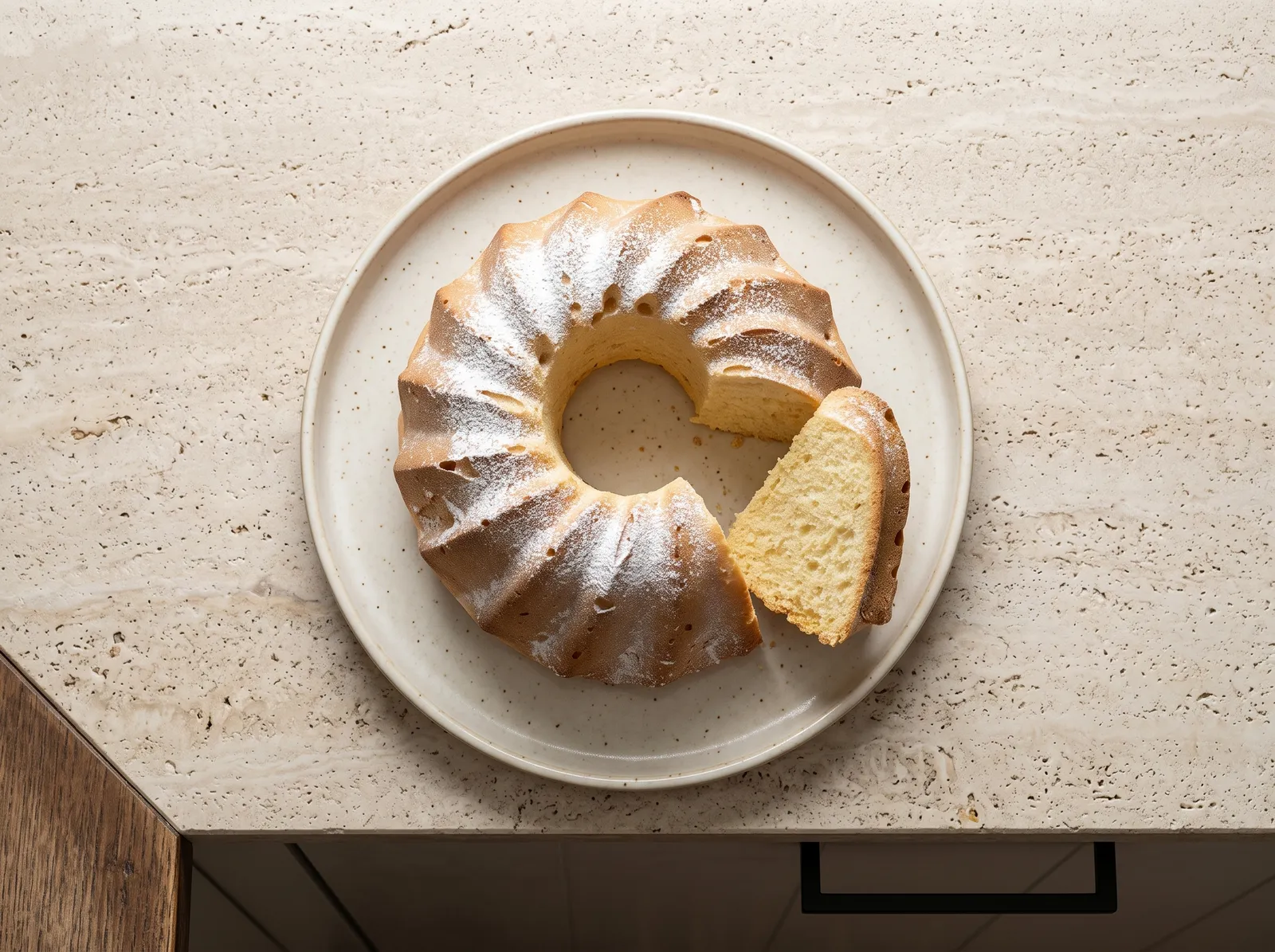
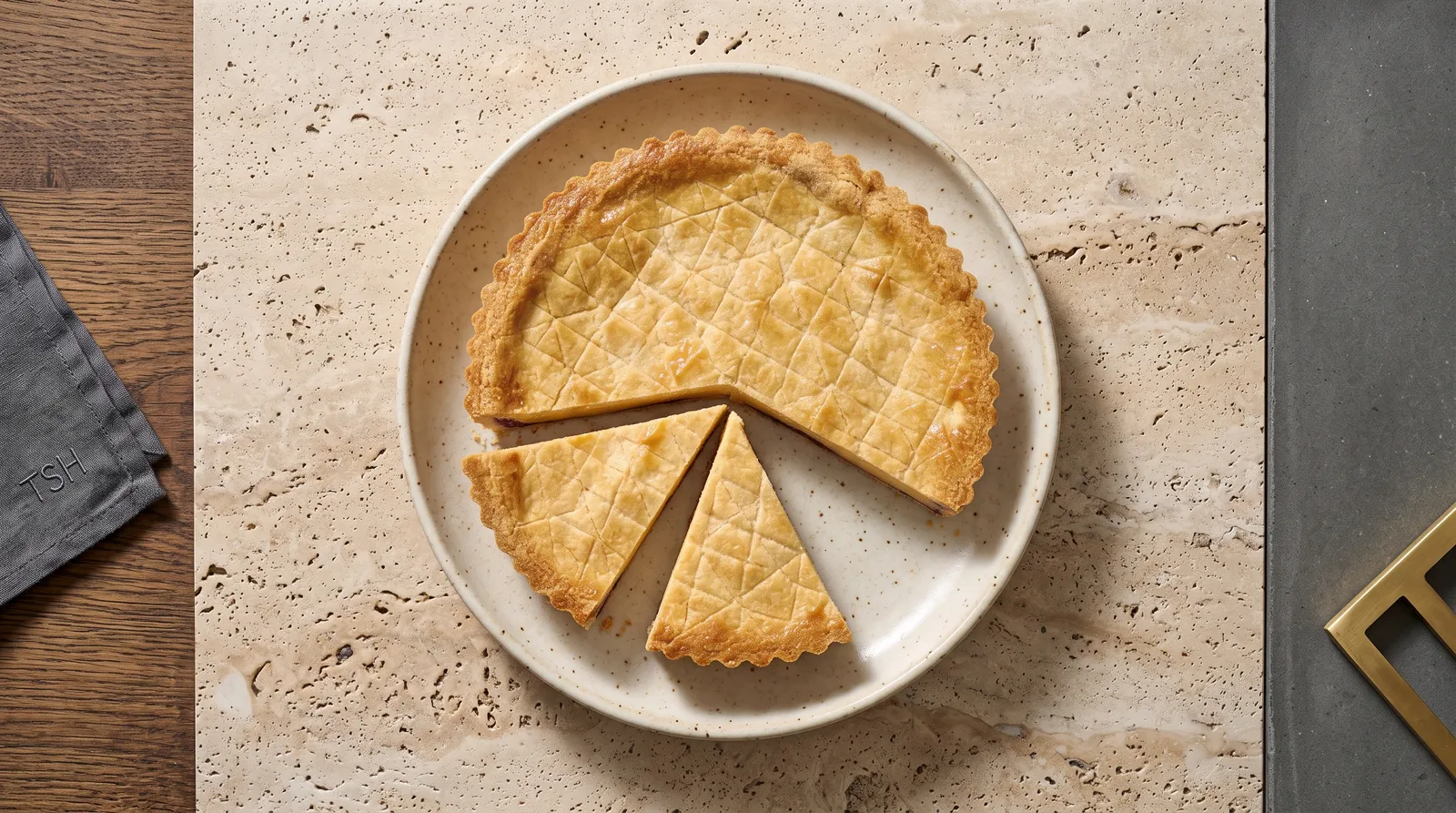
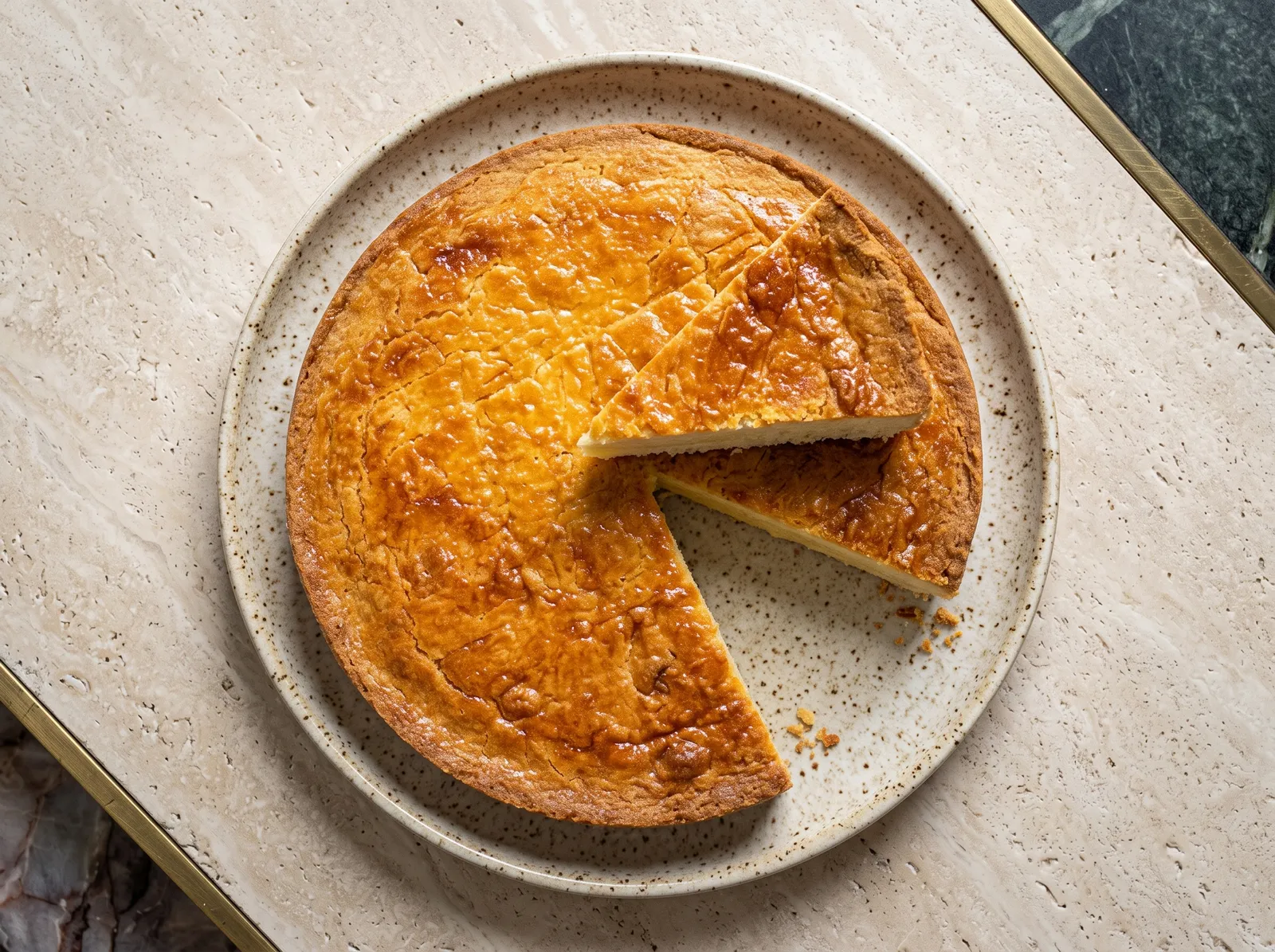
A 22 cm French Basque gâteau with a crisp golden enclosing dough and a fully cooked pastry-cream centre, finished with the characteristic egg-washed pattern.

French National Dishes
Share
Gâteau basque — shown with a cut section visible
Prep 55 minutes
Cook 48 minutes
Total 343 minutes
Yield 1 cake, 22 cm diameter, 8 slices
About the dish

Gâteau basque — butter-rich Basque cake with cooked pastry cream

Gâteau basque is a round, enclosed bake from the French Basque country, with a butter-rich dough surrounding a filling. This record uses the cooked pastry-cream form consistently. It does not mix pastry cream and black-cherry preserve, and it should not be confused with the crustless, deeply browned cheesecake commonly called Basque cheesecake in English-language baking.

The dough uses flour, butter, sugar and fresh egg, while the filling is a pastry cream cooked from milk, egg, sugar and flour. The cream is brought to 85 °C until properly thickened, then spread shallowly and cooled quickly to 4 °C. That cooling stage is essential both for food safety and for clean assembly: warm custard would soften the butter-rich dough.

After an hour of chilling, the dough is divided between a base and lid and worked to about 4–5 mm thick. The cold custard is enclosed without gaps, the top is brushed with egg and marked before baking at 160 °C. The cake is ready when the shell is evenly deep golden and the centre reaches about 93 °C; it then needs a full cooling period before the first clean slice.
Success points

Success points

  • Keep both dough and pastry cream cold for assembly.
  • Roll the shell to an even 4–5 mm and use roughly 60% below, 40% above.
  • Cool the pastry cream to 4 °C or below within 2 hours.
  • Bake until the lid is deep golden and the enclosed centre is set, then cool fully before slicing.
Ingredients

Ingredients

Dough

  • 300 g plain wheat flour
  • 120 g unsalted butter — softened but cool
  • 200 g caster sugar
  • 100 g whole egg — about 2 medium eggs, beaten
  • 11 g baking powder
  • 3 g fine salt
  • 30 ml dark rum

Pastry cream

  • 500 ml whole milk
  • 150 g whole egg — about 3 large eggs, beaten
  • 125 g caster sugar
  • 40 g plain wheat flour — sifted
  • 30 ml dark rum
  • 5 g vanilla bean — about 1 bean, split and scraped

Finish

  • 25 g whole egg — beaten, for egg wash
Method

Method

Dough and pastry cream

  1. Mix and chill the dough. Beat the 120 g softened butter with the 200 g sugar, then mix in the 100 g egg, 300 g flour, 11 g baking powder, 3 g salt and 30 ml rum until a cohesive dough forms. Cover and refrigerate for at least 60 minutes at 4 °C. The dough is smooth but not sticky and is firm after chilling at 4 °C. Cold butter-rich dough can be rolled and fitted without smearing. Keep chilled at 4 °C; the dough contains raw egg and flour.

  2. Cook the pastry cream. Infuse the 500 ml milk with the split 5 g vanilla bean and bring it close to a boil. Whisk the 150 g egg with 125 g sugar and 40 g flour, temper with the hot milk, return to the saucepan and cook while whisking until the cream reaches 85 °C and bubbles gently for about 3 minutes; stir in the 30 ml rum. The cream reaches 85 °C, boils gently for about 3 minutes and becomes thick enough to hold whisk trails. Heating fully cooks the flour and egg mixture before it becomes the enclosed filling. Stir continuously and do not taste until fully cooked.

  3. Cool the pastry cream rapidly. Spread the hot cream in a shallow metal tray, cover its surface and use an ice bath to pull down the heat quickly. Refrigerate and make sure it reaches 4 °C or below within 2 hours. The pastry cream reaches 4 °C or below within 2 hours and is cold and firm before assembly. Rapid shallow cooling limits time in the warm temperature range and keeps the dough from melting at assembly. Cover the surface and refrigerate at 4 °C or below as soon as rapid cooling has begun.

Assemble and bake

  1. Line the 22 cm pan and enclose the cold cream. Roll the chilled dough to 4–5 mm. Use about 60% to line the base and sides of the 22 cm pan, spread in all the cold pastry cream, and close with the remaining 40% of dough, sealing the edge cleanly. The dough is rolled 4–5 mm thick, about 60% lines the base and sides, the cold cream forms an even layer, and the remaining 40% seals the top completely. Even dough thickness and a complete seal give the characteristic enclosing shell. Keep the cream cold during assembly and return the pan to the refrigerator if the dough softens.

  2. Egg-wash, mark and bake. Brush the lid with the 25 g beaten egg, mark the traditional fork pattern without cutting through and bake at 160 °C for about 40 minutes. Probe discreetly and continue until the enclosed centre reaches about 93 °C. The surface is deep golden with a clear fork pattern, the centre reaches about 93 °C, and the cake feels set rather than fluid under the lid. The moderate bake cooks the enclosing dough while setting the custard again without burning the top. Use a clean probe through an inconspicuous point and avoid serving the custard-filled cake underbaked.

  3. Cool completely before cutting. Cool on a rack for 90 minutes before slicing. Once fully cool, refrigerate rather than leaving the custard-filled cake out for extended holding. The cake is completely cool and the pastry-cream filling cuts cleanly instead of flowing. Cooling stabilises both the butter-rich crust and custard. Do not leave the custard-filled cake at room temperature for extended holding; refrigerate once cool.

Serving, storage and make-ahead

Practical

Serving, storage and make-ahead

If the lid cracks badly, the dough was probably too warm or rolled too thin; chill before sealing and maintain 4–5 mm thickness.

Serving, storage and make-ahead

If cream leaks at the edge, leave a clean sealing margin and make sure the pastry cream is fully cold and thick before assembly.

Nutrition per serving

Nutrition per serving

  • Serving size1 slice (1/8 of 22 cm cake)
  • Calories519 kcal
  • Carbohydrate77 g
  • Protein10.8 g
  • Fat17.9 g
  • Fibre1.1 g
  • Sodium371 mg
Allergens and food safety

Allergens and food safety

Allergens: Gluten (wheat); Milk; Egg.

Keep dough and cooked pastry cream at 4 °C or below before assembly.

Cook the pastry cream to 85 °C, then cool it in a shallow container to 4 °C or below within 2 hours.

Bake the assembled cake until the custard-rich centre is fully set at about 93 °C.

Refrigerate the finished cake after cooling and keep for up to 3 days.

Rum alcohol may remain after baking; the nutrition calculation uses a conservative retention assumption.

Closing

Closing

  • Result: A 22 cm French Basque gâteau with a crisp golden enclosing dough and a fully cooked pastry-cream centre, finished with the characteristic egg-washed pattern.
  • Decisive technique: Keep both dough and pastry cream cold for assembly.