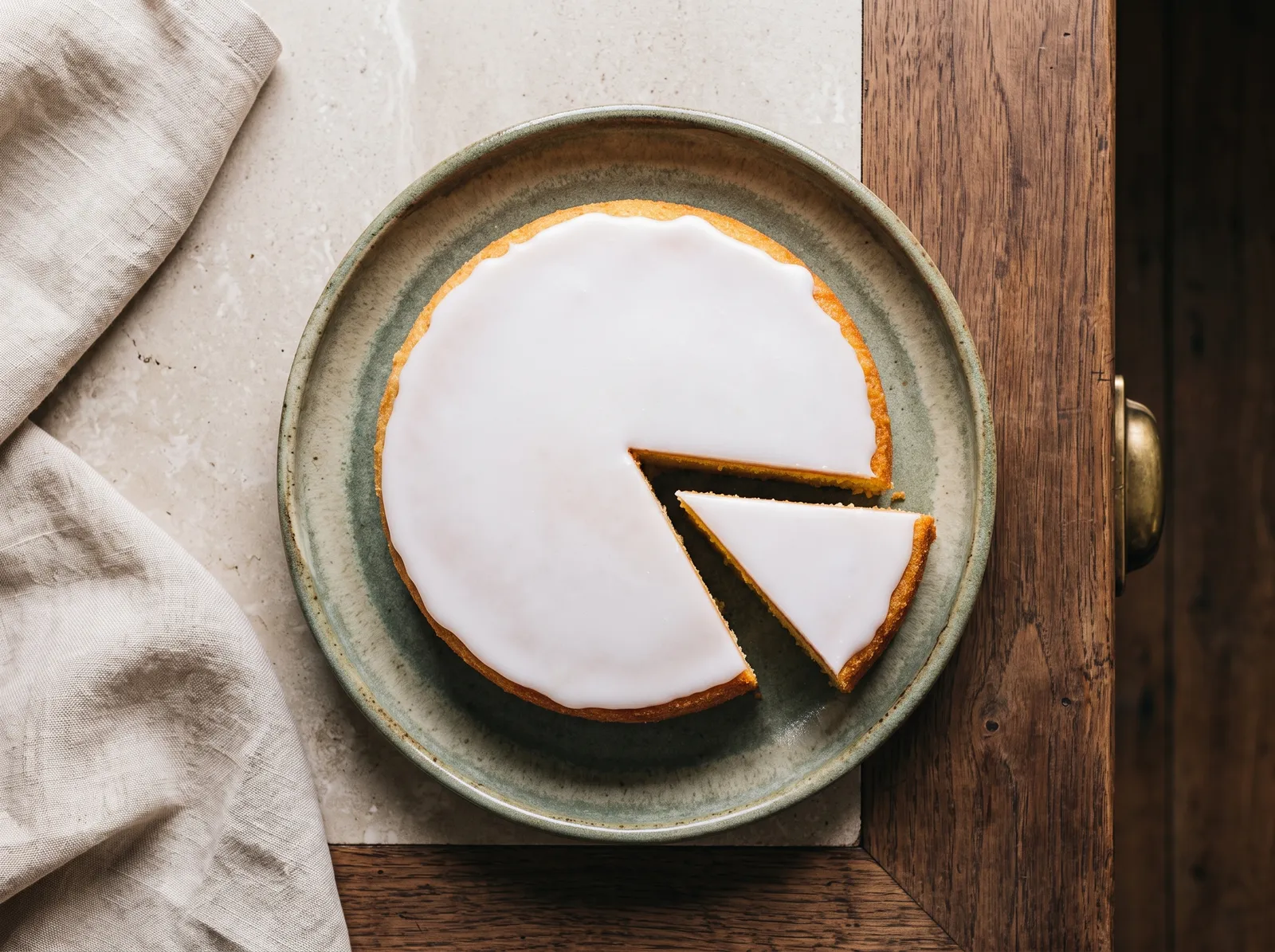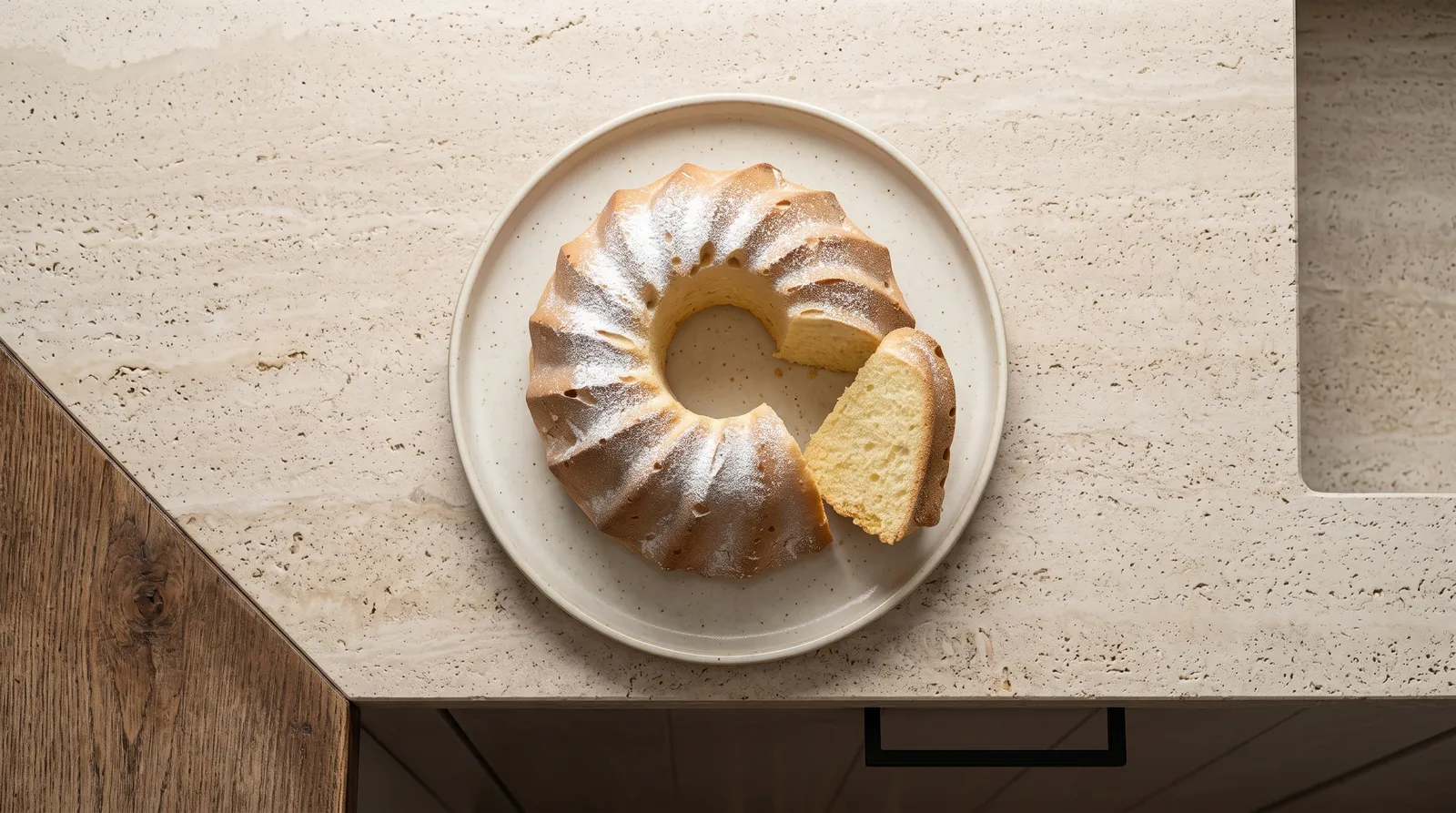
Gâteau de Savoie — feather-light egg and starch sponge
Gâteau de Savoie, also called biscuit de Savoie, is defined by lightness rather than richness. The structure comes from eggs: the yolks and one whole egg are whisked with sugar until they form a ribbon, while the remaining whites are beaten separately and folded through a sifted blend of flour and cornstarch. That combination gives a crumb that is fine, springy and noticeably lighter than a butter cake.
This is not a génoise or chiffon. There is no melted butter or oil in the batter, and there is no baking powder. The cook therefore has to protect the air already built into the eggs. Sifting matters, as does the order of folding: alternate the dry ingredients and whites instead of forcing all the flour into the foam at once, and stop as soon as the batter is evenly aerated.
A 20 cm springform gives the cake enough height for the foam to show its character. The cake is fully baked when the top springs back and a skewer comes out clean, but it is still fragile while hot. Release it carefully and cool it on a rack for a full hour so steam can escape and the crumb can stabilise before cutting.