French National Dishes

Gâteau battu

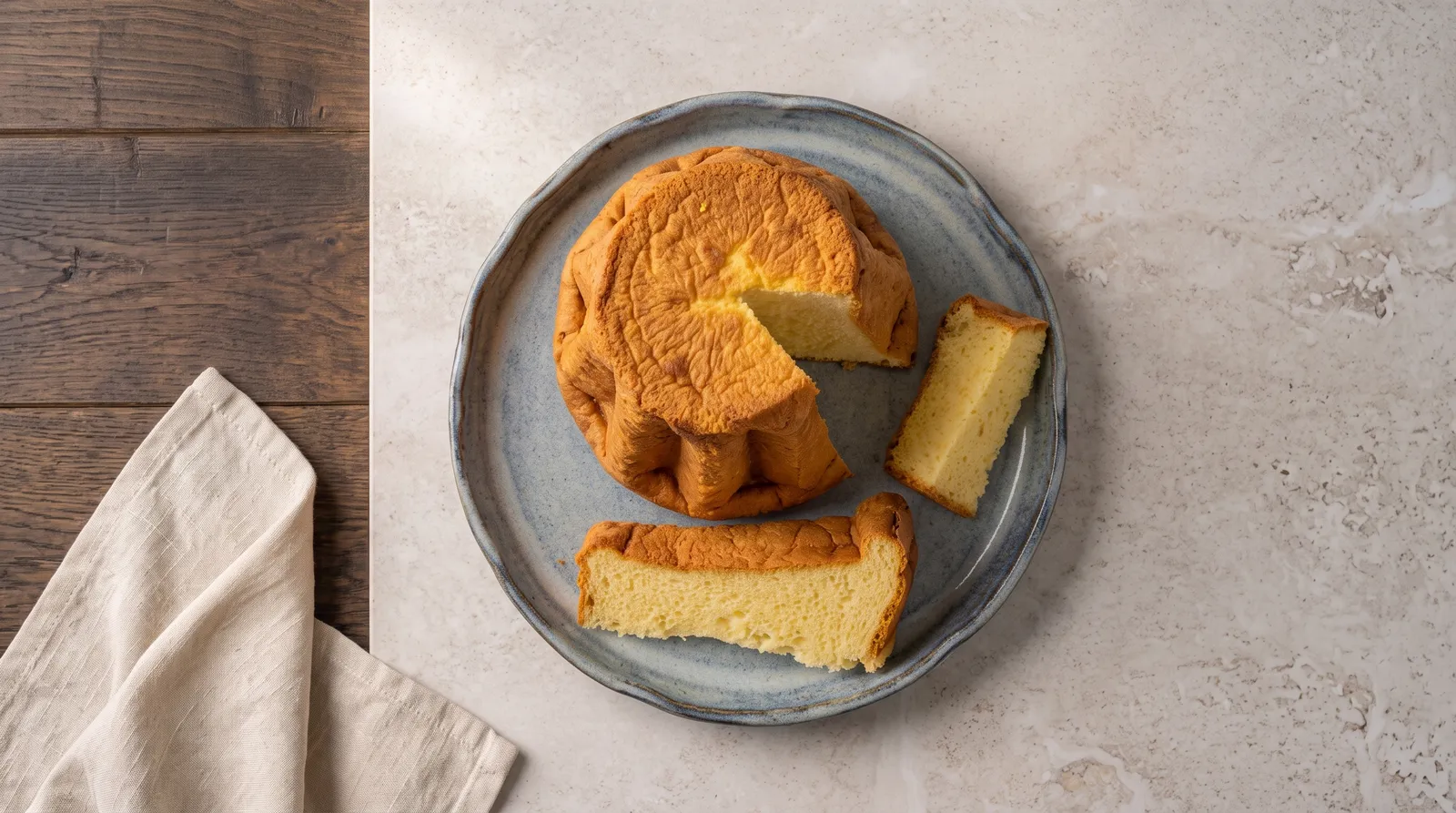
A tall, fluted Picard yeast cake enriched with six yolks, one whole egg and butter, intensively beaten and raised in its characteristic cylindrical mould.

French National Dishes
Share
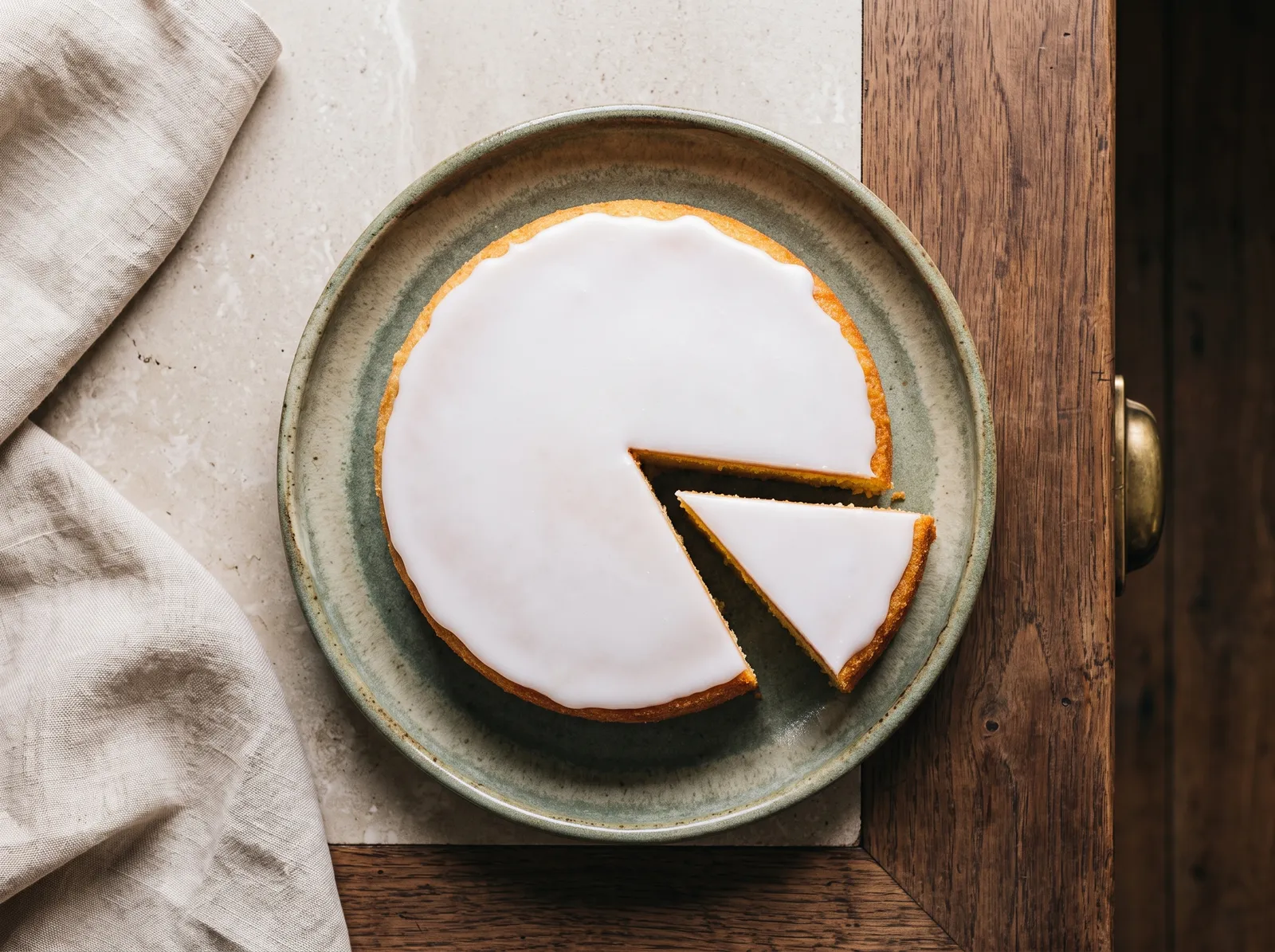
Gâteau battu — shown with a cut section visible
Prep 40 minutes
Cook 30 minutes
Total 370 minutes
Yield 1 tall cake, about 650 g, 8 slices
About the dish

Gâteau battu — tall Picard enriched yeast cake

Gâteau battu is associated with the Vimeu and Baie de Somme area of Picardy and is built differently from an ordinary brioche. The dough is exceptionally rich in yolks and butter, receives prolonged beating, and rises in a tall fluted cylindrical mould that gives the finished cake its chef’s-hat silhouette. A low ring mould would change both the shape and the way the enriched dough bakes.

The dough begins with flour, six yolks, one whole egg and fresh baker’s yeast dispersed in water at about 28 °C. It is beaten intensively for 20 minutes in total, with sugar and salt incorporated during that period, then given its first rise before the softened butter is worked in. The butter must be soft, not melted or hot; excess heat weakens the yeast and makes the dough greasy.

Three fermentation stages develop the unusually light crumb: the first rise, a second rise after butter incorporation, and a final rise in the mould after gentle knocking back. Clock times are planning guides, while volume remains the decisive cue. The cake bakes at 170 °C until its crust is deep brown, the centre reaches about 93 °C and a skewer comes out clean, then cools fully before unmoulding.
Success points

Success points

  • Beat for the full 20-minute structural phase before the first rise.
  • Keep water lukewarm and butter soft, never hot.
  • Judge each rise by volume as well as time.
  • Start with the special mould only half filled and let the final rise reach about 1 cm below the rim.
  • Bake to a dark-brown crust and about 93 °C centre, then cool fully before unmoulding.
Ingredients

Ingredients

  • 250 g plain wheat flour — T45-style fine wheat flour if available without claiming exact equivalence
  • 108 g egg yolks — 6 large yolks, edible weight
  • 50 g whole egg — 1 medium egg, beaten
  • 30 g fresh baker’s yeast — crumbled
  • 100 ml water — lukewarm, about 28 °C
  • 5 g fine salt
  • 75 g caster sugar
  • 175 g unsalted butter — soft, about 22–24 °C
Method

Method

Mix and first rise

  1. Dissolve the fresh yeast and begin the dough. Dissolve the 30 g fresh yeast in all 100 ml water at about 28 °C. Put the 250 g flour, 108 g yolks and 50 g whole egg in the mixer bowl, add the yeast liquid and mix until no dry flour remains. The yeast is evenly dispersed in 100 ml water and the flour, yolks and whole egg form a firm cohesive dough. Even yeast distribution matters in this rich dough. Water must be warm, not hot; excessive heat can damage the yeast.

  2. Beat until elastic, then add sugar and salt. Beat for about 15 minutes, then add the 75 g sugar and 5 g salt and continue beating for another 5 minutes. Keep the dough around 23–25 °C rather than letting mixer friction heat it excessively. The dough is glossy, elastic and begins to pull cleanly from the bowl after the full intensive beating period. Prolonged beating develops the structure needed to support the unusually high egg and butter content. Stop if the dough becomes hot; warm butter must not overheat the dough or weaken yeast activity.

  3. Rest and rise for the first fermentation. Cover the bowl and leave the dough at about 24–26 °C for roughly 75 minutes, using the volume rather than the clock as the controlling cue. The dough has approximately doubled in volume. The first fermentation begins flavour and gas development before the butter is fully worked in. Keep the bowl away from direct heat and do not exceed a warm room range.

Butter and second rise

  1. Beat in the soft butter. Restart the mixer and work in the 175 g soft butter in pieces over about 5 minutes, scraping the bowl as needed without melting the butter. All butter is absorbed and the dough again pulls from the bowl in a smooth, glossy mass. Butter is added after initial structure develops so the dough can remain aerated despite enrichment. Butter should be soft, not melted or hot.

  2. Rest and rise a second time. Cover again and leave at about 24–26 °C for a second rise of roughly 75 minutes. The enriched dough has again approximately doubled in volume. A second rise after butter incorporation rebuilds gas structure. Do not place the bowl against a heater or in an overheated oven.

Mould, final rise and bake

  1. Rest and rise in the mould after knocking back gently. Knock the dough back gently, brush the traditional 146 mm high × 107 mm base × 164 mm fluted-top tinplate mould with a very thin film taken from the measured butter, and fill it to about half height. Leave at about 24–26 °C for roughly 60 minutes. The mould is filled to about half its height at first, then the risen dough reaches about 1 cm below the fluted rim. The tall mould creates the characteristic chef’s-hat profile and the final rise establishes the airy crumb. Handle the risen mould gently; a hard knock can collapse the structure.

  2. Bake to a deep-brown crust and fully set centre. Bake at 170 °C for about 30 minutes. Check the thick centre with a clean probe and skewer and continue until it reaches about 93 °C. The crust is deep brown, the centre reaches about 93 °C, a skewer comes out clean, and the cake feels light but fully set. Moderate heat lets the tall enriched cake bake through before the dark crust becomes bitter. Probe the centre without touching the metal mould; tent loosely only if the top darkens too quickly.

  3. Cool fully before unmoulding and slicing. Set the mould on a wire rack and cool for the full 90 minutes before unmoulding and slicing. The cake is completely cool, keeps its tall fluted shape after unmoulding and shows a golden airy crumb when sliced. Full cooling prevents the delicate enriched crumb from compressing. Do not seal the cake while warm because trapped steam softens the crust.

Serving, storage and make-ahead

Practical

Serving, storage and make-ahead

If the dough is greasy and fails to pull from the bowl, the butter or dough was too warm; cool the bowl briefly and resume mixing gently.

Serving, storage and make-ahead

If the cake is dense, the rises were likely cut short or the dough structure was underdeveloped; wait for the stated volume cues rather than relying on the clock alone.

Nutrition per serving

Nutrition per serving

  • Serving size1 slice (1/8 of cake)
  • Calories364 kcal
  • Carbohydrate34 g
  • Protein6.7 g
  • Fat22.3 g
  • Fibre0.8 g
  • Sodium265 mg
Allergens and food safety

Allergens and food safety

Allergens: Gluten (wheat); Milk; Egg.

Keep water around 28 °C and butter about 22–24 °C so the yeast is not overheated.

Allow all three rise stages to reach their volume cues; do not force fermentation with excessive heat.

Bake until the egg-rich centre reaches about 93 °C and the skewer is clean.

Cool completely before wrapping.

Closing

Closing

  • Result: A tall, fluted Picard yeast cake enriched with six yolks, one whole egg and butter, intensively beaten and raised in its characteristic cylindrical mould.
  • Decisive technique: Beat for the full 20-minute structural phase before the first rise.