French National Dishes

Gâteau breton

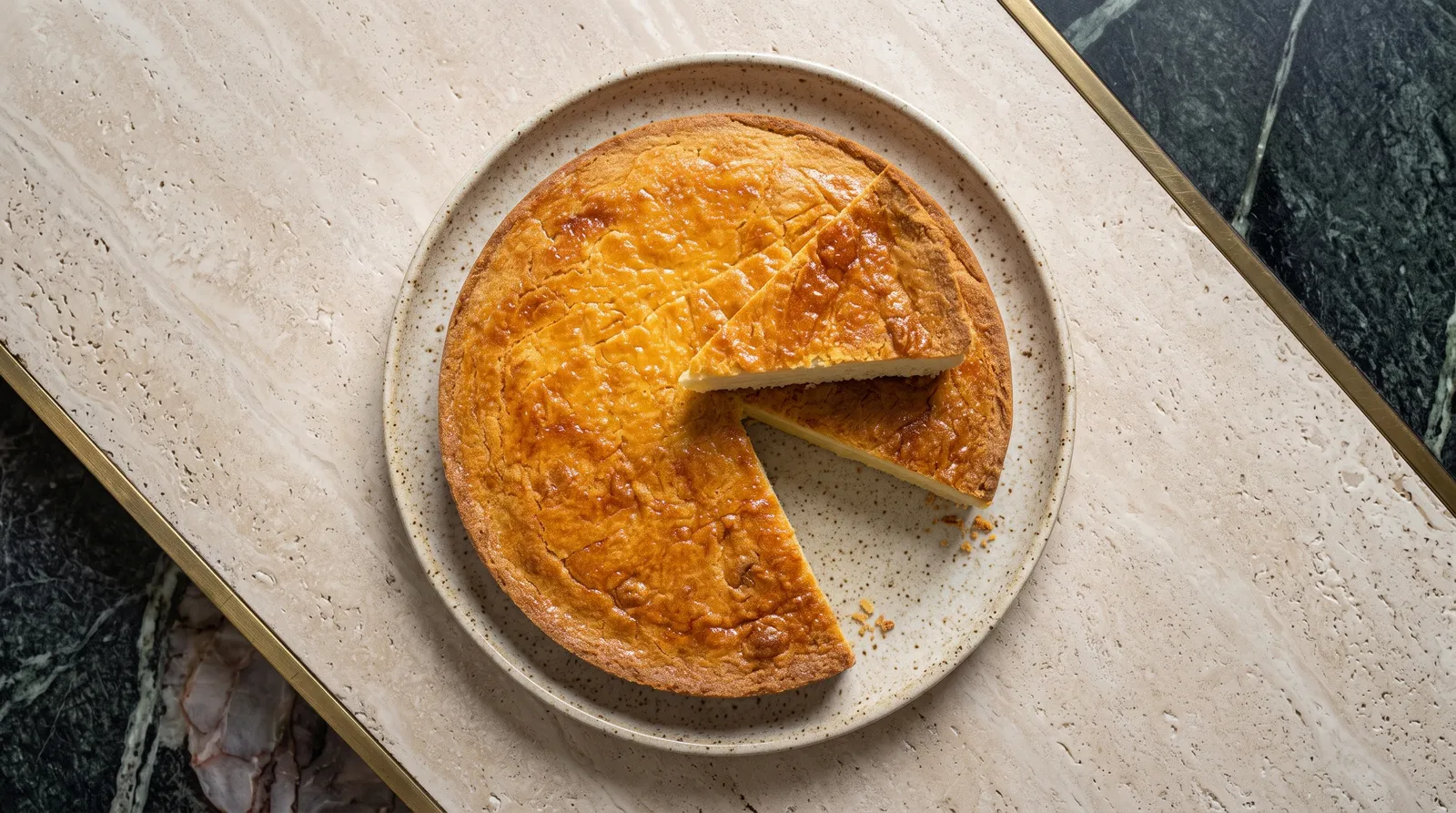
A dense Breton butter cake with a fine sandy crumb, a burnished yolk-washed top and the familiar fork cross-hatching. This plain form keeps the focus on demi-sel butter, egg yolk, flour and sugar.

French National Dishes
Share
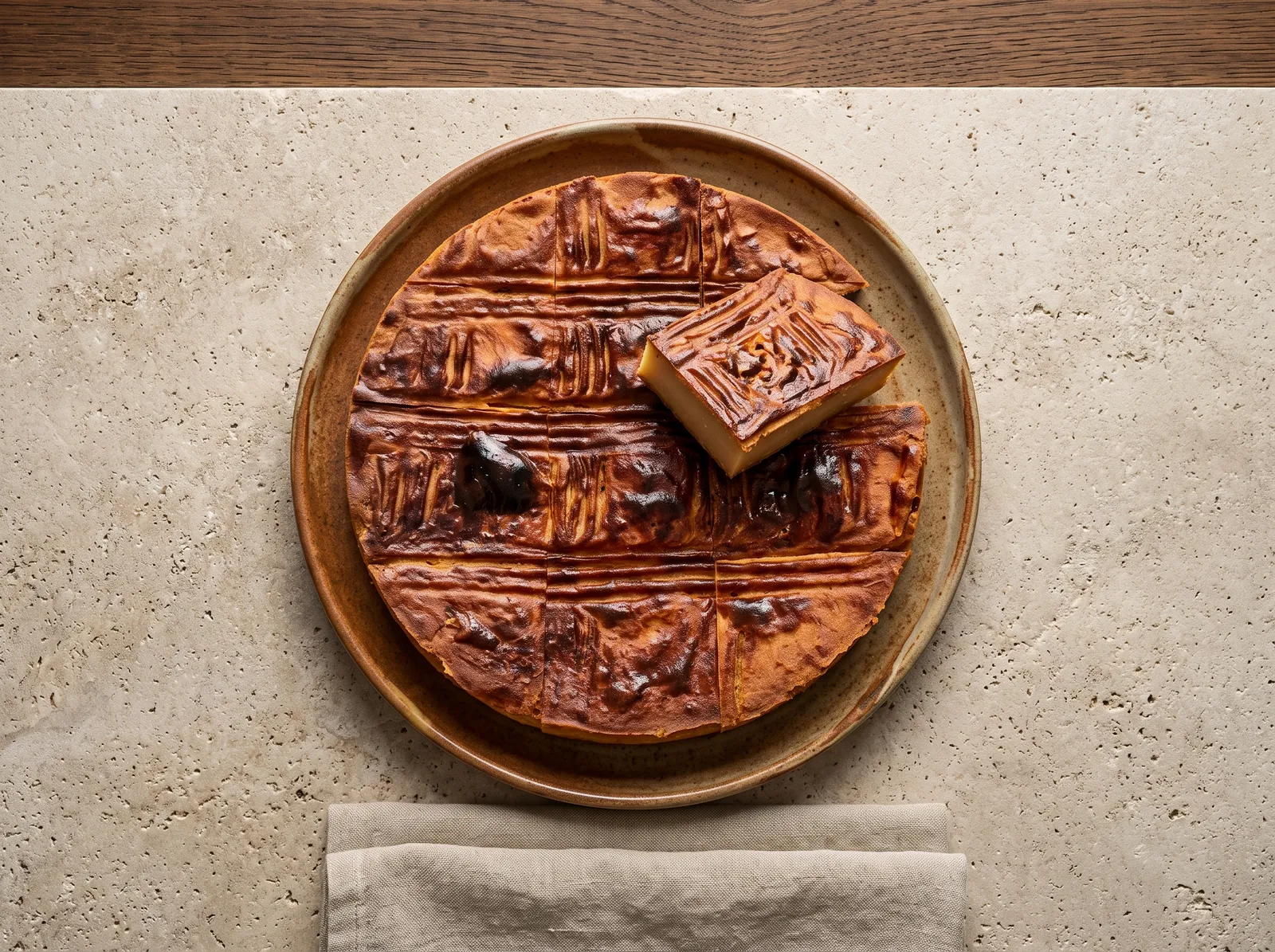
Gâteau breton — shown with a cut section visible
Prep 30 minutes
Cook 50 minutes
Total 2 h 50 min (170 minutes)
Yield 1 round 24 cm cake, 12 slices
Introduction and overview

Gâteau breton — thick salted-butter short cake from the Lorient area

Gâteau breton is a substantial butter cake from Brittany, especially associated with the Lorient area of Morbihan. Its structure is closer to a very thick, tender short dough than to an airy sponge: flour, sugar, egg yolk and a generous proportion of demi-sel butter are pressed into a deep round tin and baked until the edge is deeply golden and the centre is set. The surface is finished with egg yolk and crossed with a fork before baking.

The most important distinction is thickness and texture. A palet breton is smaller and biscuit-like, while kouign-amann relies on laminated yeast dough and caramelised sugar. Here the butter is worked into the flour and sugar, then the yolks are added only until the dough comes together. That restrained mixing is what keeps the crumb fine and sandy rather than bready or elastic.

This plain cake needs a full cooling period. Warm from the oven it is fragile and can seem softer and greasier than the final texture suggests; once cool, the butter firms the crumb and the cake cuts into clean, rich slices. The 24 cm tin keeps the layer thick enough to match the regional style without turning the bake into a dry biscuit.
Success points

Success points

  • Use soft demi-sel butter, never melted butter; the dough should remain thick and pressable.
  • Stop mixing as soon as no dry flour remains.
  • Score only the surface: the fork marks should decorate the egg wash, not cut the cake into pieces.
Ingredients

Ingredients

  • 250 g plain wheat flour — sifted
  • 250 g demi-sel butter — soft but not melted; At least 20% of the formula by total batter weight; all retained in nutrition.
  • 250 g caster sugar
  • 126 g egg yolks — from 7 large eggs; 108 g from 6 yolks for the dough; 18 g from 1 yolk for the surface wash.
Method

Method

Directions

  1. Prepare the tin and oven. Line a 24 cm round, 4 cm-deep cake tin and preheat the oven. Use 24 cm round cake tin. Allow 10 minutes. Keep the relevant temperature at 170 °C. The pan base and sides are evenly lined, and the oven is fully heated to 170 °C. A consistent pan depth prevents a thin palet-like result. Keep the hot oven door and metal pan clear of bare hands.

  2. The 250 g demi-sel butter into the 250 g flour and 250 g sugar. Rub the 250 g demi-sel butter into the 250 g flour and 250 g sugar. Use large bowl. Allow 8 minutes. The mixture is evenly sandy with no large butter pieces. Coating the flour with butter limits gluten development. Do not taste the uncooked flour mixture.

  3. 108 g egg yolk and mix only until the dough is uniform. Add 108 g egg yolk and mix only until the dough is uniform. Use large bowl and spatula. Allow 5 minutes. The dough is thick, cohesive and uniform with no dry flour patches. Stopping once uniform preserves a fine sandy crumb. Avoid tasting raw dough containing egg and flour.

  4. Shape and finish the surface. Press the dough evenly into the tin, smooth it, brush with 18 g yolk and score two diagonal fork grids about 2 cm apart. Use tin, offset spatula, pastry brush, fork. Allow 7 minutes. The top is level and glossy with shallow fork cross-hatching that does not cut through the dough. Even thickness gives even baking and the shallow grid is characteristic. Keep fingertips away from sharp fork tines while scoring.

  5. Until the rich short cake is set. Bake until the rich short cake is set. Use preheated oven. Work at 170 °C conventional oven. Allow 50 minutes. Keep the relevant temperature at 170 °C. The rim is deep golden, the top is evenly amber, and the centre feels set rather than soft when lightly pressed. A moderate bake sets the centre without drying the high-butter crumb. Use oven gloves for the hot tin.

  6. Completely in the tin before unmoulding and slicing. Cool completely in the tin before unmoulding and slicing. Use wire rack. Allow 90 minutes passive cooling. The cake is fully cool and firm enough to release cleanly from the pan. Cooling lets the butter-rich crumb set and slice cleanly. Do not force a warm, fragile cake from the tin.

Serving, storage and make-ahead

Practical

Serving, storage and make-ahead

Serve the cake completely cool, cut into 12 slim slices. Its richness makes it well suited to coffee or tea, and it needs no cream, fruit sauce or extra garnish to make the texture work.

Serving, storage and make-ahead

For make-ahead cooking, bake it the day before and let it cool uncovered before wrapping. Keep it tightly wrapped in a cool, dry place for up to four days. Reheating is not recommended because warmth softens the set butter and makes the crumb seem greasy.

Serving, storage and make-ahead

If demi-sel butter is unavailable, a carefully salted substitute can make a usable butter cake, but it does not preserve the same ingredient identity. Do not replace the butter with margarine or reduce it sharply: the high butter proportion is structural as well as regional.

Nutrition per serving

Nutrition per serving

  • Serving size1 slice (1 of 12)
  • Calories342 kcal
  • Carbohydrate37.1 g
  • Protein4.0 g
  • Fat19.9 g
  • Fibre0.6 g
  • Sodium141 mg
Allergens and food safety

Allergens and food safety

Allergens: Egg; Milk; Gluten (wheat).

Fully bake the flour-and-egg dough; do not taste it raw.

Cool before covering so condensation does not collect against the cake.

Closing

Closing

  • Result: a thick, deeply golden cake with a fine sandy crumb and a clean salted-butter finish.
  • Decisive technique: mix only to a uniform dough, press it evenly in the 24 cm tin and cool it completely before unmoulding.