
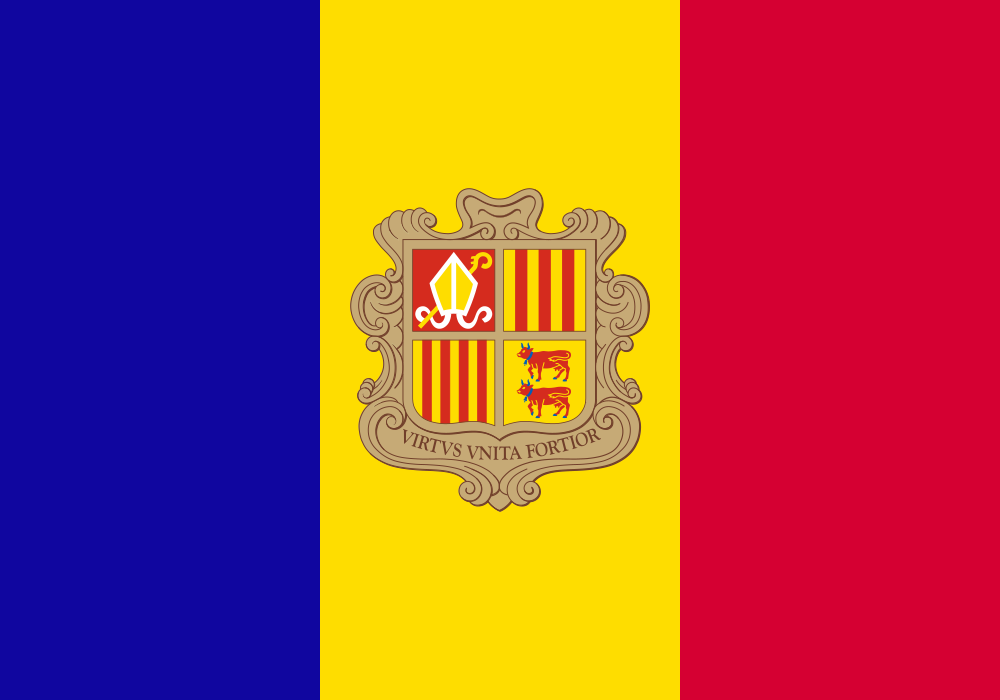

Eating in Andorra la Vella is easiest to understand when the menu is read as a record of mountain life rather than a claim that every dish began inside the principality. The town’s food belongs to a wider Pyrenean and Catalan world, shaped by cold seasons, livestock, stored provisions and the need to make a household pantry last. Its most recognisable dishes—escudella, trinxat, cured pork, mushroom preparations, game stews and river trout—connect everyday cooking with communal celebrations and with today’s restaurant menus. Some recipes are shared across the border; local ingredients, names, techniques and traditions give them a particular Andorran setting.S001S002S003
That distinction helps visitors choose well. A steaming bowl of escudella in January is not the same kind of meal as a summer plate of grilled meat or a modern tasting menu using local produce. Nor does the word “traditional” certify where every ingredient came from. Look for the dish, the season, the story and—when provenance matters—an explicit product label. In Andorra la Vella, a visitor can compare a daily changing menu in the centre, a restaurant advertising a mountain-cuisine selection and a contemporary kitchen that names local meat or seasonal dishes. Ask what is being served now, because recipes, menus and operating schedules change.S001S004
A mountain kitchen, not a single-origin claim
Andorran cooking grew from practical conditions. The municipality’s cultural account describes households keeping hens and rabbits, with pork as the most common meat; the winter slaughter, usually in December, supplied sausages and meat that could be salted or preserved. Cured products named in local food writing include donja, bringuera, bulls, llonganissa and botifarra. These are not just decorative words on a menu: they point to older ways of using different cuts and preserving food through the colder months. Today, a restaurant may serve one of these items as part of a larger plate, in a stew or as a small starter, but the precise preparation belongs to that kitchen.S001S005
The same cultural account lists game stews—wild boar, isard and hare, often described as civets with wine and chocolate—and river trout prepared with almonds. Mushrooms appear as a seasonal ingredient or accompaniment, while coca, snails, chicory salads and cod broaden the repertoire. These are documented elements of local food culture, not a promise that every restaurant has them in stock. Game and mushroom dishes especially depend on the menu and season. It is more useful to ask what the kitchen is offering this week than to treat a heritage list as a permanent menu.S001S003
“Andorran” also does not mean “exclusive to Andorra”. Trinxat is popular in the principality and in neighbouring Catalan Pyrenean areas such as Alt Urgell and Cerdanya; escudella has a wider Catalan context too. The relevant distinction is not a competition over who invented a shared dish. Andorra’s versions belong to a local pattern of ingredients, names and occasions, and the municipality’s own account describes how a Saint Anthony’s escudella became part of the capital’s civic calendar. A careful visitor can enjoy a dish as Andorran without claiming that its entire family tree stops at the national border.S001S002
This is also why the form of the restaurant matters. A borda was historically an agricultural outbuilding used to store hay, equipment or animals; many restored bordes are now restaurants. Their architecture can make a meal feel connected to the old mountain economy, but a rustic room alone does not prove that a recipe or ingredient is local. Ask the restaurant what it means by “mountain cooking”, and look for a named dish or origin statement rather than inferring provenance from stone walls and timber beams.S003
What to look for on the menu
Escudella: a meal built to feed and gather
Escudella is the clearest bridge between the household kitchen and public celebration. The municipality presents it as a winter dish of vegetables, legumes, meats and sausages, with ingredients such as cabbage, potato, chickpeas, beans, noodles, meatballs, beef, pork, hen and several Andorran charcuterie products. The exact mixture can vary. It is a substantial stew or broth-and-meat meal, not a precisely standardised restaurant recipe; a household pot could reflect what was available, while a feast-day version might include richer cuts and more preserved meat.S001S006
In Andorra la Vella, escudella is also a communal event. The municipality recounts that a group of shopkeepers on Avinguda Meritxell began sharing the dish with neighbours on Saint Anthony’s Day in the early 1970s, reviving a custom of distributing food on 17 January. As attendance grew, the celebration moved through central squares, and the Confraria d’Escudellaires took responsibility for the annual gathering. The municipal confraternity page says the Escudella de Sant Antoni is held in Plaça Guillemó each 17 January, with the food blessed before it is served. That public pot is a different experience from ordering an individual restaurant bowl: the first is a local act of gathering; the second depends on the kitchen’s current menu.S001S006
If your visit falls in mid-January, check the Comú’s current notice for the year’s arrangements, time and any public-space changes. Do not assume the exact service format from an old listing. Outside the festival, a restaurant may offer escudella, escudella de pagès or a related soup at another time, but its presence should be confirmed directly. Because it is hearty and often includes meat and stock, ask about the actual preparation if you have dietary restrictions; the dish’s name does not disclose every ingredient.S006S007
Trinxat: cabbage, potato and a crisp finish
Trinxat begins with a short list: cabbage, potato, garlic, oil and salt, often served with bacon or another cured pork product. The name suggests the chopping or mashing that brings the cooked vegetables together. The municipal description calls it a winter dish and notes that salted herring can stand in alongside bacon; Andorra Tourism presents the Pyrenean preparation as a dish with room for household and chef variations. Some kitchens shape it into a cake or brown it in a pan, while others serve a softer mound with a crisp topping. Those differences are normal, not evidence that one version is the only authentic form.S001S002
When ordering, read the whole plate rather than the title. A version topped with bacon is not vegetarian; a side garnish may change from one menu to another. Trinxat suits someone who wants a compact expression of winter produce and preserved meat, and it can be a filling starter or a main depending on portion and accompaniments. Restaurants in bordes may feature it, but the official tourism account says it is found on menus around Andorra, not that every establishment serves it every day. Ask whether it is available before planning a meal around it.S002
Charcuterie, game, mushrooms and trout
The names donja, bringuera, bull, bisbe and botifarra refer to distinct local cured or cooked pork products, not interchangeable synonyms for generic sausage. The Government’s “Andorra Traditional Recipe” seal page documents some of these preparations, their ingredients and named authorised operators. For example, it describes botifarra negra as including blood, fatty bacon and onion, while bringuera uses a mixture of cooked meats and fat. Such detail explains why an escudella can carry more than one texture and flavour. It also makes ingredient questions important: recipes built around charcuterie may include parts of the animal a visitor does not expect.S004
Game civets and mountain rice belong to the region’s documented repertoire, though their availability is seasonal and restaurant-specific. The municipality lists wild boar, isard and hare stewed with wine and chocolate, and rice with squirrel in its culinary account. These descriptions are evidence of dishes in local food culture, not a recommendation to expect them on a current menu. A restaurant that serves game should identify the species and preparation in its present offer; visitors should not infer a dish from an old guide or assume that all game is locally hunted.S001
River trout with almonds is another named preparation in the municipal account. It gives visitors a clear contrast with the meat-and-legume centre of winter cooking, but it does not establish where a particular restaurant sources its fish. A current menu may describe trout, river trout or a specific preparation; ask the restaurant if the origin is important. The same rule applies to mushrooms: “seasonal mushrooms” can refer to changing varieties and suppliers, and the word does not show whether they were gathered locally or purchased from elsewhere.S001S003
Local provenance: what a label actually tells you
Menus often use the language of place—local, Andorran, mountain, farm-to-table—but these terms do not all carry the same guarantee. If the origin of meat matters, look for the official identification rather than relying on the restaurant’s setting or a dish name. Government information distinguishes beef protected by the Carn d’Andorra geographical indication from other species that may carry the separate Carn de Qualitat Controlada d’Andorra seal. The government’s controlled-quality system covers beef, horse, sheep and goat meat when it meets the regulated production requirements; the IGP claim in the current official material specifically applies to beef. These are not interchangeable labels.S004S008
The seal system is designed to make production and origin traceable. Government material describes identification and controls from livestock raising through slaughter and sale, with the official mark appearing on the product. That is a more precise basis for a provenance question than asking simply whether a restaurant serves “local meat”. If a restaurant says its beef is Carn d’Andorra, ask whether the dish you are ordering uses certified meat and whether the seal is shown or stated on its menu. Do not generalise a certified beef claim to lamb, goat, horse or every meat item in the same kitchen.S008
Andorra also has an official quality-controlled wine seal. The Government says the mark applies to wine produced within the country under the corresponding cultivation, production and labelling rules. A restaurant’s list may include both local and imported wines, so look for the named producer and official seal rather than assuming every bottle in an Andorran restaurant is Andorran.S008
The destination’s food literature also mentions local honey, vegetables, cured meats and family-made ratafia, a liqueur associated with walnuts and herbs. These products can make an interesting finish to a meal or a purchase from a specialist shop, but a product description is not proof that a specific bottle or jar was made in the country. Check the label for producer, origin and any official mark. When a source says “traditional recipe” or “made in Andorra”, that is a different statement from saying that each ingredient was grown or raised there.S003S011
Dairy, cheese and the working pantry
Milk and its derivatives were important in a society organised around animal husbandry. The municipal account singles out tupí, a cheese still made in the region, alongside other varieties of cheese. It also explains how pork preservation, rather than one cut of meat, supplied a range of cured foods across winter. These details help explain why a traditional table can move between a fresh dairy product, a stew and strongly preserved charcuterie: they reflect different ways of making use of what a household could raise, preserve or store.S001
When a cheese is described as Andorran, ask which producer made it and what kind of milk it uses. A tourism page may introduce a regional product category or named maker, but it does not establish that every cheese served in a restaurant was produced in the country. Tupí is especially useful as a word to recognise because it appears in the municipal account; beyond the name, the particular texture, age and serving style are product-specific. A cheese board may combine local and imported cheeses, and the menu or server should clarify which is which.S001S011
The same approach applies to honey and chocolate. Andorra Tourism lists local honey producers and artisanal chocolate makers, including operators based outside Andorra la Vella. Those names are useful if you want to explore the wider country, but a city restaurant using honey or chocolate is not thereby using Andorran-made product. Ask for the producer or look for a country-of-origin statement if provenance is part of the reason for ordering. A flavour pairing in a menu is a culinary choice; it is not a supply-chain claim.S011
Shopping for edible souvenirs
The historic centre’s market and the town’s specialist food shops can turn a meal into a small food-shopping visit. Andorra Tourism describes local shops as a way to find local products, and the municipal market calendar has included food producers among its craft and artisan stalls. The difference between a restaurant plate and a packaged souvenir is traceability: a label gives you the producer, ingredients, quantity and sometimes a quality mark, while a menu description may offer only a dish name. For a product to carry home, check its storage requirements, ingredients and origin before buying, especially if you have limited luggage space or will cross a national border later.S003S011
Look for the official seal that matches the product instead of treating all Andorran marks as one. “Carn d’Andorra” identifies IGP beef; “Carn de Qualitat Controlada d’Andorra” is a separate controlled-quality mark with regulated scope; and “Vi de Qualitat Controlada d’Andorra” applies to qualifying wine. A “traditional recipe” seal is another category again. The distinctions may look technical, but they answer different questions: where the product comes from, what production rules were followed, or whether an authorised traditional recipe was used. Ask the seller if a label is unclear rather than relying on a general “local” sign.S004S008
If you do not have time to travel to a producer, browse the town’s food shops or market when it is operating and treat each product as an individual purchase, not a representative sample of the whole country. A jar of honey, a cheese, a cured sausage and a bottle of wine will have different sourcing rules and storage needs. Ask whether refrigeration is required and whether the seal refers to every component of a prepared product or only to the named meat or wine. These are ordinary questions that make a small purchase more informative without requiring a formal farm visit.S003S011
Where to eat: match the venue to the meal
The best choice depends on whether you want a classic dish, a seasonal menu or an easy central meal. Restaurant names below are examples of different approaches, not rankings or guarantees. Menus and opening patterns can change; confirm directly with the venue before making a special dish, late arrival or dietary need the basis of your plan.
La Cava: a listed escudella in a broader mountain menu
Andorra.com’s current visitor listing for La Cava, at Carrer Mossèn Cinto Verdaguer 7, includes “Escudella de Pagès” in the menu alongside meat, seafood, rice and other dishes. The same page describes its offer as traditional mountain cooking and provides contact details, but it is a destination directory rather than the restaurant’s own live ordering system. Treat the listing as a useful lead: call the restaurant to confirm that escudella is available on your date, which version it serves and whether the menu has changed. This is a practical option for someone seeking a named local stew without assuming that every central restaurant offers one.S007
Restaurant de L’Isard: a seasonal and more contemporary route
Restaurant de L’Isard describes its cooking as a meeting of Andorran, Catalan and French traditions, with seasonal menus, tasting menus and offers for groups. Its operator page says the chef adapts the menu to seasonal products and identifies a selection of local recipes as part of the restaurant’s offer. This makes it a reasonable fit if you want regional cuisine presented through a changing menu rather than a fixed list of rustic classics. The operator publishes separate lunch, dinner, weekly and tasting menus; check which one applies to your date, because a menu category or web page is not the same as a dish being available that evening.S012
Can Manel: a central address and a daily changing menu
Can Manel sits on Plaça Príncep Benlloch in the historic centre. Its own menu page says the list is updated daily and includes allergen information, while the restaurant frames its approach as tradition combined with contemporary cooking. The published kitchen schedule lists lunch and dinner service and notes Tuesday and Wednesday closures. That makes it useful to check when you are already exploring the centre, but do not select a dish from an old photograph or event menu and expect it to be on today’s list. Review the current menu and contact the restaurant directly about ingredients or reservations.S013
Celler d’en Toni: a long-running contemporary address
Andorra Tourism identifies Celler d’en Toni as a historic restaurant founded in 1966. That long-running address is a useful counterpoint to a meal centred on escudella or trinxat: local food culture includes established restaurants as well as home-style dishes and public food traditions. Treat the historical description as context, not as a current menu or a guarantee about what is in stock; consult the restaurant directly for its present offer.S011
These examples answer different needs rather than forming a “best restaurants” list. La Cava is a directory-listed lead for a named farmhouse-style stew; L’Isard makes seasonal menus explicit; Can Manel provides a central, daily updated list; and Celler d’en Toni represents a long-running restaurant address. If you want a traditional dish, search menus for the dish name first. If you want traceable ingredients, ask about the seal. If you want a tasting experience, compare the current menu format and timing. The restaurant’s own information is the final source for today’s availability.S007S011S012S013
How to plan a meal around the day
Restaurant service is not one continuous window. As examples, the operator pages for Can Manel and L’Isard publish lunch and dinner periods, with Can Manel showing a later dinner service and weekday closures, while L’Isard separates a weekly lunch menu from evening tasting options. Those are venue-specific schedules, not a rule for every restaurant in Andorra la Vella. Check current kitchen hours, especially if you arrive between lunch and dinner, on a Sunday or during a public holiday. A restaurant can be open while its kitchen is closed, or show separate hours for a terrace, bar and dining room.S012S013
For a quick lunch, look for a set or weekly menu and read the service hours, included courses, drinks and supplements before ordering. For a long meal, book if the restaurant recommends it and confirm the number of people, timing and any special request. If you are travelling with children or need a wheelchair-accessible entrance, ask the venue directly; an address in the centre does not establish the step-free route, lift or seating arrangement. None of the restaurant pages reviewed here provides a blanket guarantee for every access need.S012S013
Dietary requests deserve precise questions. Escudella is usually built on meat stock and may contain several sausages; trinxat commonly includes bacon or salted fish; a sauce or garnish can add ingredients not obvious from the dish title. Ask the kitchen about the exact preparation, shared equipment and substitutions. Menus that display allergens help start the conversation, but neither a dish name nor an online allergen panel establishes that a meal is suitable for a particular person. For a strict requirement, confirm directly with the restaurant before booking and again when ordering.S001S013
Vegetarian visitors can still find options in a varied city restaurant scene, but the classic dishes most strongly associated with the local winter table are often meat-led. Even a vegetable dish may use stock, pork fat or a meat garnish. The sensible question is not “Is Andorran food vegetarian?” but “Can this kitchen prepare this particular dish without the ingredients I avoid?” Current menus, rather than cultural summaries, determine the answer. Guests avoiding alcohol should similarly ask about wine in sauces, liqueurs in desserts and drinks included in a set menu.S001S012
Food as part of the town’s calendar
The strongest local food experience may not be a restaurant reservation. The Escudella de Sant Antoni turns the town square into a place where a recipe, a religious feast day and neighbourly distribution meet. Its 17 January date gives visitors a clear seasonal anchor, while the Confraria’s account preserves the ingredients and sequence of the dish as well as its public setting. If the event coincides with your stay, treat it as a communal celebration: follow the organiser’s arrangements, expect a crowd and distinguish the shared festival serving from a restaurant tasting.S006
Food also appears in the Comú’s cultural-event calendar under Andorra a Taula. Treat that entry as a prompt to check the current agenda, not as proof of a particular date, participating venue or menu. A restaurant event can offer a temporary way to compare dishes across town, but an older programme is not a live booking tool. If your dates are flexible, first verify the current edition and then contact the participating restaurants about price, booking and menu availability.S001
A short ordering compass
If you have one meal to explore the local repertoire, start with a dish rather than a ranking: escudella for the winter stew-and-community tradition; trinxat for cabbage, potato and a crisp or cured accompaniment; a named local sausage or game dish if the restaurant confirms it is on the menu; or trout with almonds if offered. Ask whether the preparation and principal ingredients match the description, then check the origin claim separately. “Traditional”, “mountain” and “local” are useful clues, but they do not replace a menu or a label.S001S002S008
For a meal with documented provenance, ask specifically about Carn d’Andorra or Carn de Qualitat Controlada d’Andorra and which product the mark applies to. For wine, look for the official Vi de Qualitat Controlada d’Andorra mark and the producer’s name. For an ingredient story without a certification claim, ask the restaurant what is seasonal and where it comes from. The answer may be simple, but that distinction lets you enjoy Andorra la Vella’s mountain table without turning every familiar Pyrenean dish into an unsupported claim of exclusive origin.S008
Reading a menu without over-reading it
A short menu can tell you what a kitchen has chosen to cook now; a heritage page tells you what belongs to the wider food culture. Keep those two documents in their proper roles. The municipality’s cultural account names game civets, mushroom dishes, snails, trout, cod and several kinds of charcuterie, but that list is an explanation of the local repertoire, not a restaurant inventory. A current menu might feature only one of those categories, or none, and an older photograph may preserve an item that has since disappeared. If one dish matters to your visit, verify it directly on the day rather than building a meal around a remembered web listing.S001
Look for the form of the offer as well as the dish name. L’Isard publishes different lunch, weekly and tasting-menu formats; Can Manel says its list changes daily and supplies allergen information. These formats affect how much choice you have, when the kitchen serves, and how easily the staff can answer a specific ingredient question. A set menu may be a convenient way to try several preparations, but check exactly what is included and whether alternatives are possible. A tasting menu is a longer commitment and may require advance notice; do not assume it can be shortened or adapted without asking.S012S013
Translations can flatten useful distinctions. A menu may render a local sausage simply as “sausage”, or translate a stew name without explaining its contents. If the original Catalan name is shown, keep it in view while asking what is inside; if not, describe the ingredients you are trying to identify. This matters especially for escudella, whose communal Sant Antoni preparation is documented with a sequence of ingredients and cooking stages, and for trinxat, whose familiar base of cabbage and potato can be accompanied by bacon or salted fish. The title helps you recognise a dish, but the kitchen can explain its own recipe.S001S002S006
For a useful conversation with staff, separate three questions: what is the dish made with, is it available today, and where does its principal ingredient come from? One answer does not settle the others. A dish can be traditional without using certified local meat; a kitchen can serve locally identified beef in a preparation that is not traditionally Andorran; and a seasonal ingredient can come from outside the principality. Asking one question at a time makes the reply clearer and lets you decide whether flavour, cultural context or provenance is most important for this meal.S004S008
Sources
Culture and cuisine in Andorra la Vella — Comú d’Andorra la Vella Tourism; accessed 24 September 2026. ↩
Trinxat amb rosta: cabbage, potato and pork crackling — Andorra Tourism; accessed 24 September 2026. ↩
Andorra 2025 visitor guide — Andorra Tourism; accessed 24 September 2026. ↩
Official Andorra Traditional Recipe seal — Government of Andorra; accessed 24 September 2026. ↩
Mountain lives: high-altitude livestock farming — Government of Andorra, Ethnography Archive; accessed 24 September 2026. ↩
Confraria d’Escudellaires d’Andorra la Vella — Comú d’Andorra la Vella; accessed 24 September 2026. ↩
La Cava — Andorra.com destination directory; accessed 24 September 2026. Menu listing is third-party and should be confirmed with the restaurant. ↩
Official controlled-quality Andorran meat and wine seals — Government of Andorra; accessed 24 September 2026. ↩
Local products — Andorra Tourism; accessed 24 September 2026. ↩
Restaurant de L’Isard: gastronomic offer — Restaurant de L’Isard; accessed 24 September 2026. ↩
Can Manel menu — Restaurant Can Manel; accessed 24 September 2026. ↩