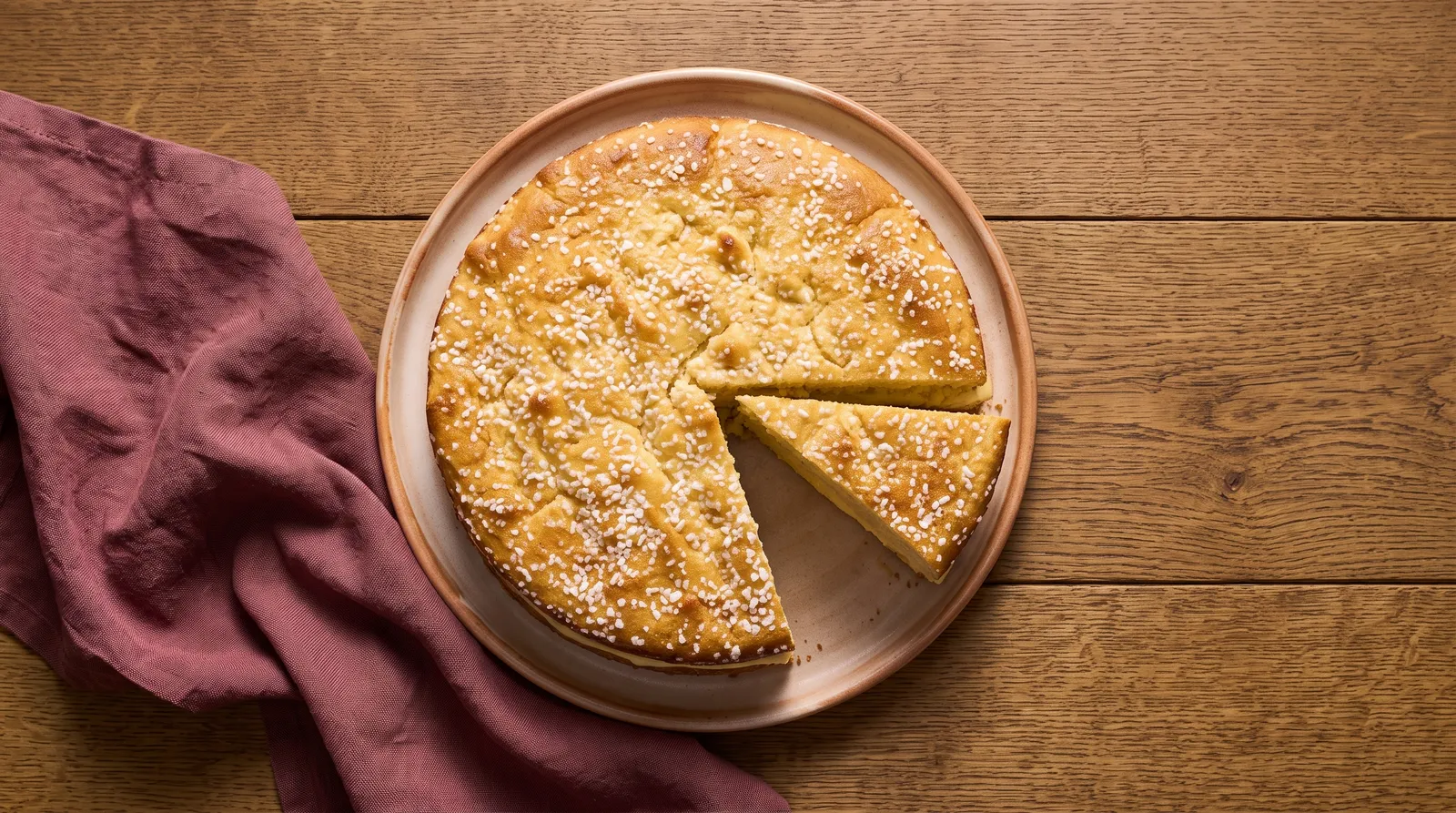
Tarte tropézienne — sugar brioche with orange-flower cream
Tarte tropézienne looks like a cake, but its foundation is enriched yeast brioche. The 22 cm round is made with egg, butter and milk, allowed a first rise, shaped, proofed again and baked under pearl sugar. The crumb needs enough gluten strength to support a generous cream layer without becoming bread-heavy or collapsing when the cake is split.
The famous Saint-Tropez commercial cream is proprietary, so a responsible home formula should not pretend to reproduce it exactly. Here the filling is a documented household-style combination: pastry cream scented with orange-flower water, enriched with butter and lightened with whipped cream. It gives the expected contrast of tender brioche and cool cream while keeping the limits of the interpretation clear.
Temperature control is central to both texture and safety. The pastry-cream base is cooked to 71 °C, spread shallow and chilled to 4 °C or colder. Before whipping, both the custard and the finishing 50 g butter are brought to the same 18–20 °C range; mismatched temperatures are a common route to a split mousseline. The filled cake then returns to 4 °C or colder for a 60-minute set before slicing.