French Recipes

Stockfish à la niçoise

Genuine air-dried cod rehydrated for four days under refrigeration, then gently stewed Niçois-style with tomato, olive oil, potatoes and black olives.

French Recipes
Share
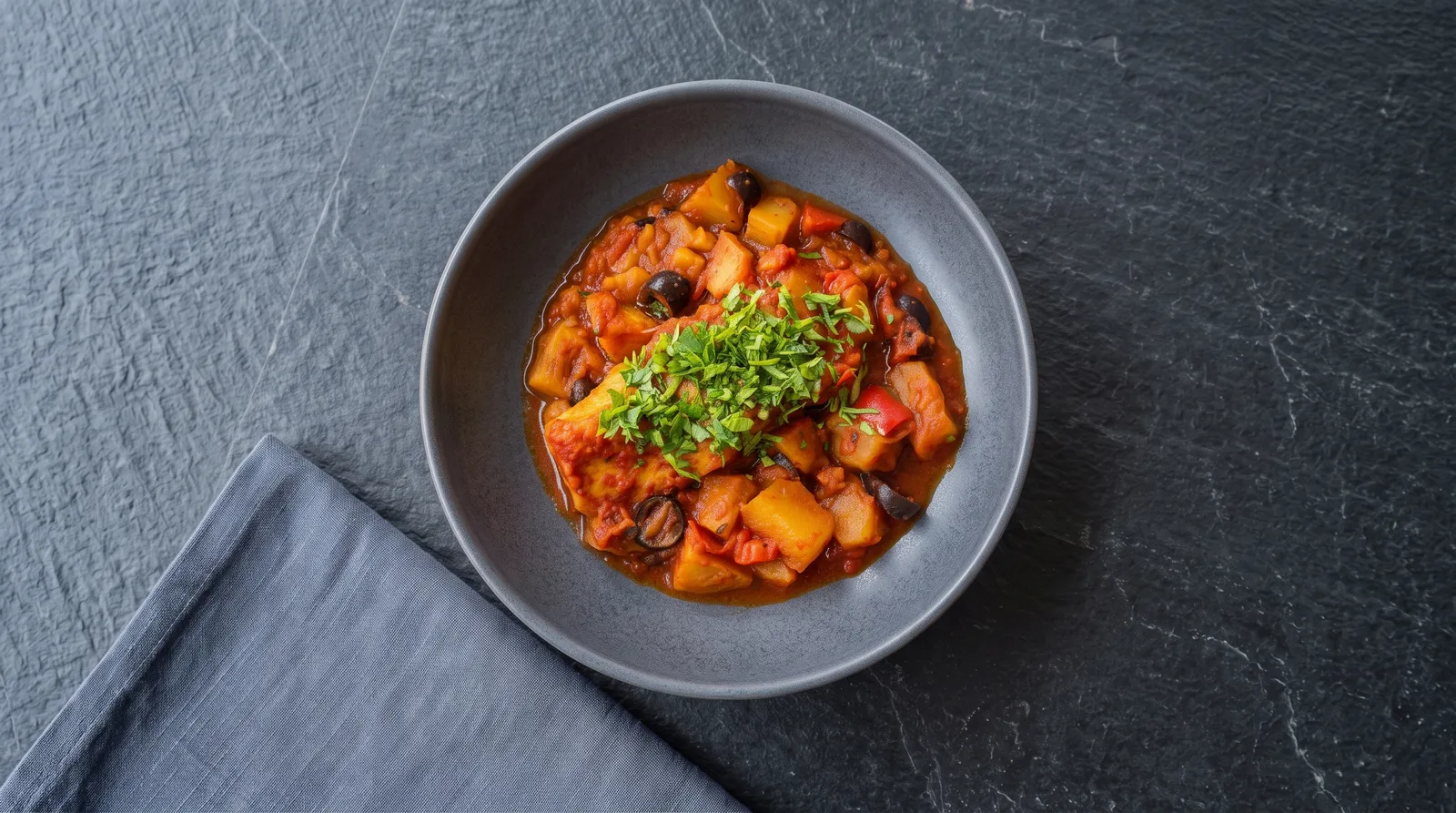
Stockfish à la niçoise — served on a plate
Prep 50 minutes
Cook 105 minutes
Total 5915 minutes
Yield 1 large cocotte, 6 deep-plate portions
Introduction and overview

Stockfish à la niçoise — Niçois air-dried cod stew

Stockfish à la niçoise, also known in Niçois cooking as an estocafic-style preparation, starts with genuine stockfish: cod dried hard by air rather than fresh cod or brined salt cod. That distinction is essential. The fish needs several days of cold rehydration before it can be cleaned, deboned and cooked into the tomato-and-olive-oil stew associated with Nice.

The long soak is planning time, not active cooking. The dry fish remains at 4 °C or below and the cold water is changed every 12 hours. Once flexible, the stockfish is cleaned into substantial pieces and weighed on the rehydrated edible basis used for nutrition. The stew begins with olive oil, onion, leek, pepper, garlic and tomato, then the fish simmers gently rather than boiling hard.

Potatoes and black olives enter later so they become tender without the fish disappearing into the sauce. The final texture should still show fish pieces, potatoes and vegetables in a thick tomato base. A late garlic-and-parsley finish brightens the long-cooked flavours, while the fish itself must reach at least 63 °C.

How to preserve the stockfish texture

How to preserve the stockfish texture

  • Buy genuine air-dried stockfish and do not substitute fresh cod or salt-cured cod.
  • Keep the entire 96-hour rehydration at 4 °C or below with hygienic water changes.
  • Simmer gently enough that the fish remains in pieces.
Ingredients

Ingredients

Fish

  • 600 g air-dried unsalted cod stockfish — purchased dry; target about 1200 g drained edible fish after rehydration and trimming; nutrition uses 1200 g rehydrated edible fish basis
  • 5000 ml cold water — for refrigerated rehydration; change with clean cold water every 12 hours

Stew

  • 120 g extra-virgin olive oil
  • 300 g yellow onions — sliced
  • 150 g leek — sliced
  • 200 g red bell pepper — diced
  • 1000 g ripe tomatoes — peeled, seeded and chopped
  • 30 g garlic — finely chopped
  • 20 g bouquet garni — thyme, bay and parsley stems
  • 800 g waxy potatoes — cut into 3 cm pieces
  • 100 g black Niçoise-style olives — pitted if preferred
  • 400 ml fresh water — measured braising liquid
  • 30 g flat-leaf parsley — chopped
  • 2 g black pepper
Method

Method

Directions

  1. Rehydrate under refrigeration. Place the dry stockfish in the covered container with cold water and refrigerate for 96 hours at 4 °C or below, replacing the water every 12 hours. The stockfish has roughly doubled in mass, feels flexible rather than board-hard and is hydrated through the thickest pieces.

  2. Clean and portion the fish. Drain the fish, remove the skin and accessible bones and cut the edible flesh into substantial pieces. The drained edible fish weighs about 1200 g and the pieces are free of obvious skin and large bones.

  3. Soften the aromatics. Warm the olive oil and cook the onions, leek, red pepper and half the garlic for about 15 minutes without hard browning. The vegetables are soft and glossy with only light colouring.

  4. Build the tomato base. Add the tomatoes and bouquet garni and simmer for 15 minutes. The tomatoes have broken down into a thick, chunky sauce while the vegetables remain visible.

  5. Simmer the stockfish gently. Add the stockfish and 400 ml fresh water, cover partly and simmer gently for 40 minutes. The fish reaches at least 63 °C and the pieces are tender enough to flake at the edges while still holding their shape.

  6. Add potatoes and olives. Add the potatoes and olives and simmer for 30 minutes. The potatoes are tender to a knife and the fish remains in identifiable pieces within the sauce.

  7. Finish with garlic and parsley. Add the remaining garlic and parsley and simmer for 5 minutes, seasoning with black pepper. The parsley and garlic remain aromatic and the sauce is thick enough to cling to the fish and potatoes.

  8. Serve without breaking the fish. Divide the stew carefully among six deep plates. Each portion contains visible fish pieces, potatoes, olives and tomato sauce rather than a smooth fish purée.

Serving

Practical

Serving

Serve very hot in deep plates, distributing fish, potatoes, olives and tomato sauce evenly. The sauce should cling to the solids rather than resemble a thin broth.

Make-ahead

The 96-hour rehydration is mandatory planning time. The finished stew may be cooked one day ahead, chilled promptly and reheated; many braised dishes integrate further overnight.

Storage and reheating

Refrigerate cooked stockfish within 2 hours and use within 3–4 days. Reheat to 74 °C throughout, stirring gently so the fish does not disintegrate.

Substitutions

Salt cod is not a direct substitute because salting changes both flavour and the soaking purpose. Fresh cod also does not reproduce the dense rehydrated texture of stockfish. Other small black olives can replace Niçoise-style olives if necessary, with a different salt and flavour profile.

Troubleshooting

Troubleshooting

  • Fish remains tough after cookingThe rehydration was too short or incomplete. Give the dry stockfish the full cold soak and verify flexibility through the thickest pieces before cooking.
  • Fish disappears into the sauceThe stew boiled too hard or was stirred aggressively. Keep a low simmer and move the solids by lifting rather than beating the pot.
Nutrition per serving

Nutrition per serving

  • Serving size1 deep plate, one sixth of the stew
  • Calories567 kcal
  • Carbohydrate42.8 g
  • Protein45.9 g
  • Fat24.7 g
  • Fibre7.8 g
  • Sodium488 mg
Allergens and food safety

Allergens and food safety

Allergens: Fish.

Keep the fish at 4 °C or below throughout the 96-hour rehydration. Change soaking water hygienically with clean cold water every 12 hours. Remove bones carefully and cook fish to at least 63 °C. Refrigerate leftovers within 2 hours and reheat to 74 °C.

FAQ

FAQ

Is stockfish the same as salt cod?

No. Genuine stockfish is air-dried unsalted cod; salt cod is cured with salt and needs a different soaking logic.

Why rehydrate for four days?

The dried fish is extremely hard. Long refrigerated soaking restores flexibility and an edible texture before the stew begins.

Closing

Closing

  • Result: Tender identifiable stockfish pieces in a thick tomato, olive-oil, potato and olive stew.
  • Decisive technique: Rehydrate genuine stockfish under refrigeration for the full 96 hours, then simmer gently.