French Recipes

Poularde aux morilles

Poularde aux morilles sits at the meeting point of Bresse poultry and Jura wine culture.

French Recipes
Share
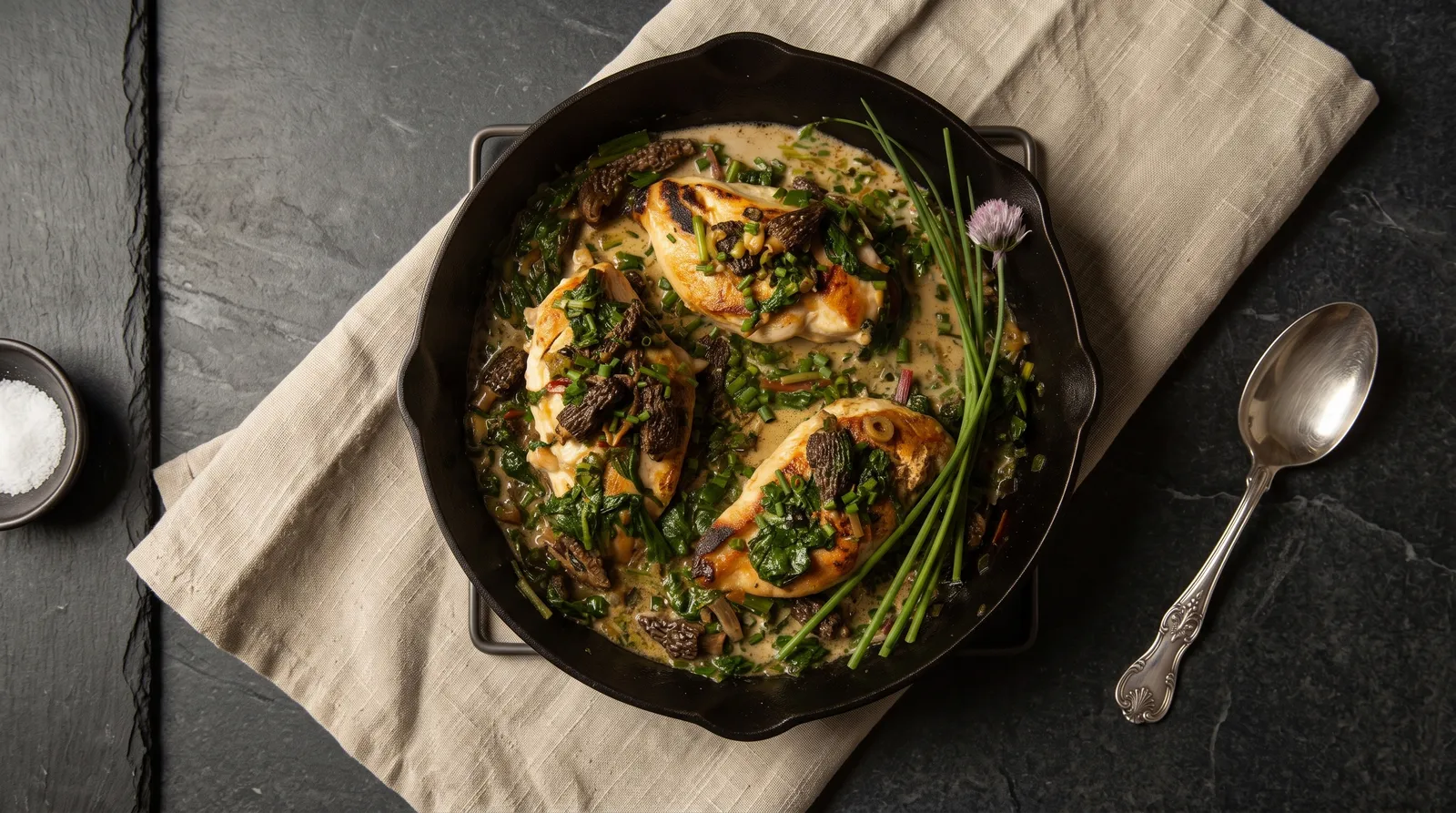
Poularde aux morilles — shown in a pan
Cook time 92 minutes after 40 minutes of preparation.
Passive time 120 minutes (2 hours) after the 92-minute cooking schedule.
Calories per serving 650 kcal across the 252-minute schedule.
Yield 6 main-course servings.
Introduction and overview

Poularde aux morilles: Bresse/Jura-style poularde with dried morels, Vin Jaune, cream and poultry stock.

Poularde aux morilles sits at the meeting point of Bresse poultry and Jura wine culture. A poularde is a mature tender poultry bird rather than a generic chicken label, and the sauce is built from true morels, Vin Jaune and cream. Ordinary button mushrooms would produce a different dish, while an ordinary chicken is best described as an adaptation rather than a poularde.

Dried morels are given a full two-hour soak, then rinsed individually and cooked for twenty minutes in the cream sauce. The soaking liquor can carry concentrated flavour, but it can also carry grit, so only a carefully filtered 200 ml portion enters the braise. The safety rule is stricter than texture alone: morels are never tasted raw and the poultry reaches 74 °C away from bone.

The poularde leaves the pan before the final fifteen-minute reduction. That protects the meat while the sauce concentrates enough to coat a spoon. Nutrition uses the cooked edible poultry yield rather than the 1.8 kg bone-in purchase, and it counts the sauce actually served, including cream, butter and an alcohol-retention allowance for the Vin Jaune.
Success points

Success points

  • Buy true commercially identified morels rather than relying on casual foraging identification.
  • Filter the soaking liquor very finely before it reaches the sauce.
  • Verify every poultry piece at 74 °C away from bone and remove the bird before the final sauce reduction.
Ingredients

Ingredients

Poularde and morels

  • 1800 g poularde, genuine mature tender poultry; cut into 8 bone-in pieces — about 900 g cooked edible meat expected after bones and cooking loss
  • 40 g dried true morels, commercially identified Morchella species
  • 500 ml water, for soaking morels; 200 ml filtered liquor reserved
  • 50 g unsalted butter
  • 100 g shallots, finely sliced
  • 10 g garlic, finely chopped

Sauce

  • 250 ml Vin Jaune du Jura
  • 400 ml chicken stock, unsalted or low-sodium
  • 400 ml double/heavy cream, about 30–35% fat
  • 6 g fine salt
  • 2 g black pepper
Method

Method

Directions

  1. Rehydrate the morels safely. Cover the 40 g dried commercial morels with exactly 500 ml water and soak for 120 minutes soaking. Lift them out, rinse each morel thoroughly, and pass the soaking liquid through a coffee filter or very fine cloth; reserve exactly 200 ml filtered liquor. The morels are fully plumped, free of visible grit and the reserved liquor is clear after filtration. Morels trap grit in their cavities, while filtered soaking liquor can contribute flavour without sediment. Use only correctly identified commercial true morels. Never taste them raw.

  2. Brown the poularde. Pat the 8 poularde pieces dry, season with the salt and pepper, and brown them in the butter in a wide cocotte over medium heat for 12 minutes, turning to colour all sides. The skin and exposed surfaces are evenly golden without blackened butter solids. Browning builds the base for the cream-and-wine sauce without cooking the bird through. Keep raw poultry tools separate and wash hands immediately after handling.

  3. Braise with Vin Jaune. Add shallots and garlic for 2 minutes within the pan, then pour in the 250 ml Vin Jaune, 400 ml stock and 200 ml filtered morel liquor. Cover and simmer gently for 45 minutes. Every poularde piece reaches 74 °C away from bone and the leg joints move more freely while the meat remains moist. Gentle covered braising cooks the mature bird evenly and carries the Jura wine into the sauce. Check 74 °C away from bone; do not rely on colour or clear juices alone.

  4. Cook the morels in cream. Add the rehydrated morels and 400 ml cream and simmer uncovered over low heat for 20 minutes. The morels have cooked thoroughly for 20 minutes and the sauce begins to coat the back of a spoon. Morels must be cooked thoroughly, and the cream needs gentle heat to avoid splitting. Do not serve raw or lightly warmed morels.

  5. Reduce the sauce. Transfer the poularde to a warm platter. Keep the morels in the sauce and simmer over medium-low heat for 15 minutes, stirring occasionally, until the sauce is lightly thickened. The sauce coats the back of a spoon in a thin even layer and no watery pool separates around the morels. Removing the poultry prevents overcooking while the sauce reaches serving consistency. Keep the hot sauce below a violent boil to limit splitting and splashing.

  6. Finish and serve. Return the poularde to the sauce for the final few minutes only to coat and heat evenly, then serve immediately. The poularde is evenly coated, the morels are distributed through the sauce and the cream remains smooth. A final coating preserves the poultry texture while keeping the sauce integrated. Warn diners about poultry bones and maintain safe hot service.

Serving and practical guidance

Practical

Serving and practical guidance

Serve immediately once the reduced sauce has been reunited with the poularde.

Serving and practical guidance

Soak and clean the morels earlier in the day if useful, but keep them refrigerated and cook them thoroughly before service.

Serving and practical guidance

Reheat leftovers gently to 74 °C; repeated boiling is especially hard on cream sauce.

Serving and practical guidance

If ordinary chicken replaces poularde, state it as an adaptation and monitor doneness earlier because the bird may be smaller and more tender.

Check

Gritty sauce means the morels or soaking liquor were not filtered carefully enough; rinse the mushrooms and filter the liquor before it enters the pan.

Check

Split sauce usually comes from hard boiling; keep cream at a gentle simmer and reduce without the poultry in the pan.

FAQ

Can fresh morels be used instead of dried? They can be a separate adaptation, but the quantities and soaking-liquid logic change; this recipe is calibrated specifically for 40 g dried morels.

FAQ

Why remove the poularde before reducing the sauce? The sauce needs extra evaporation after the poultry is already safe and tender, so removing the pieces prevents unnecessary overcooking.

Nutrition per serving

Nutrition per serving

  • Serving size1–2 poularde pieces with about 180 ml morel cream sauce
  • Calories650 kcal
  • Carbohydrate10 g
  • Protein48 g
  • Fat45 g
  • Fibre1 g
  • Sodium850 mg
Allergens and food safety

Allergens and food safety

Allergens: milk; sulphites from Vin Jaune. - Use only correctly identified commercial true morels and cook them thoroughly; raw or undercooked morels have been associated with illness. - Chicken/poularde must reach 74 °C away from bone. - Keep raw poultry separate from other foods. - Refrigerate leftovers within 2 hours and reheat poultry leftovers to 74 °C. - Vin Jaune supplies sulphites and some alcohol may remain after cooking. - Warn diners about bones.

Use only correctly identified commercial true morels and cook them thoroughly; raw or undercooked morels have been associated with illness.

Chicken/poularde must reach 74 °C away from bone.

Keep raw poultry separate from other foods.

Refrigerate leftovers within 2 hours and reheat poultry leftovers to 74 °C.

Vin Jaune supplies sulphites and some alcohol may remain after cooking.

Warn diners about bones.

Closing

Closing

  • Result: Poularde aux morilles with the texture and regional identity described above, portioned according to 1 of 6 servings.
  • Decisive technique: Buy true commercially identified morels rather than relying on casual foraging identification.