French National Dishes

Poulet à la comtoise

Poulet à la comtoise should read unmistakably as Franche-Comté cooking: bone-in chicken, Jura white wine, cream and Comté.

French National Dishes
Share
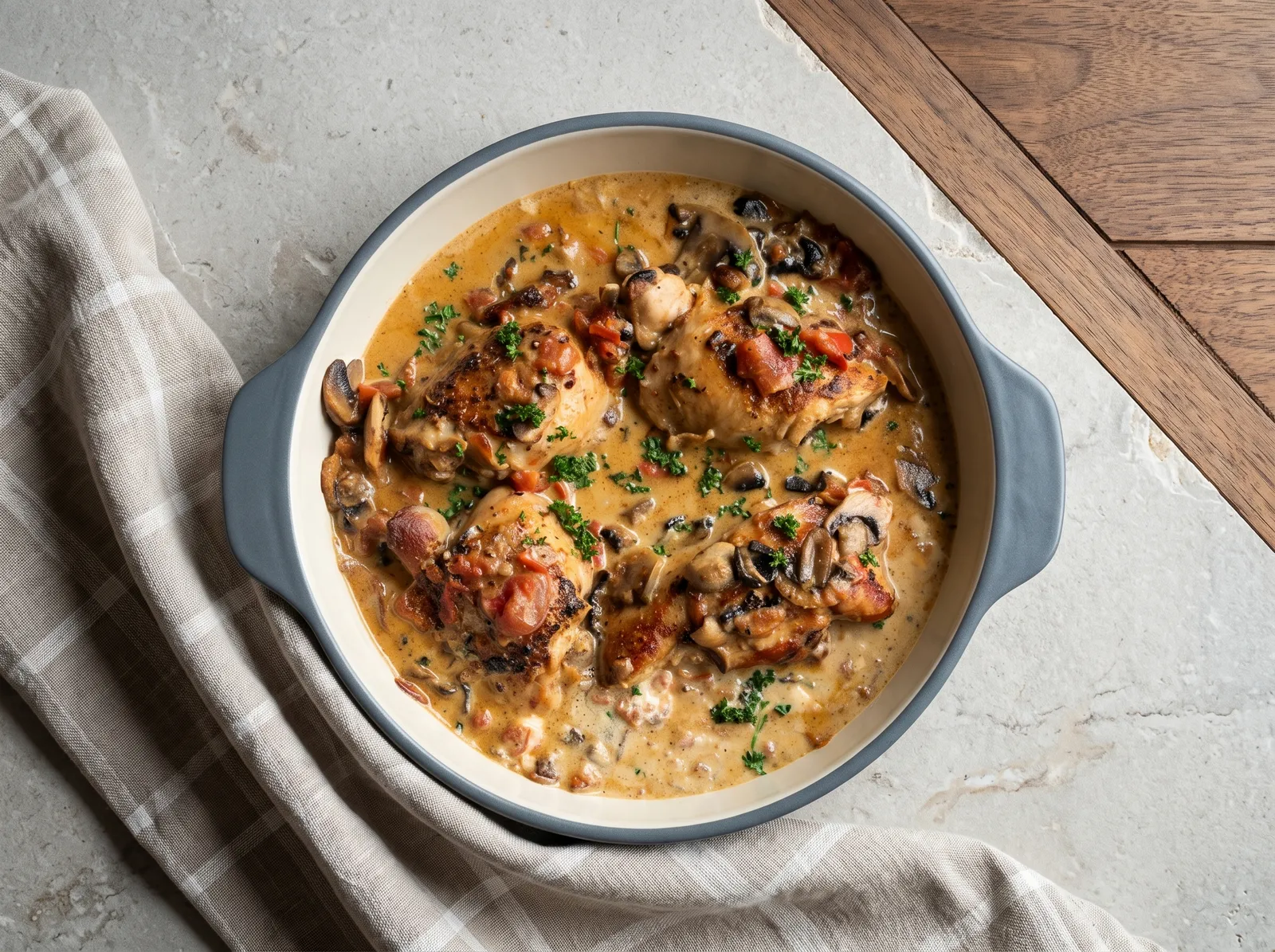
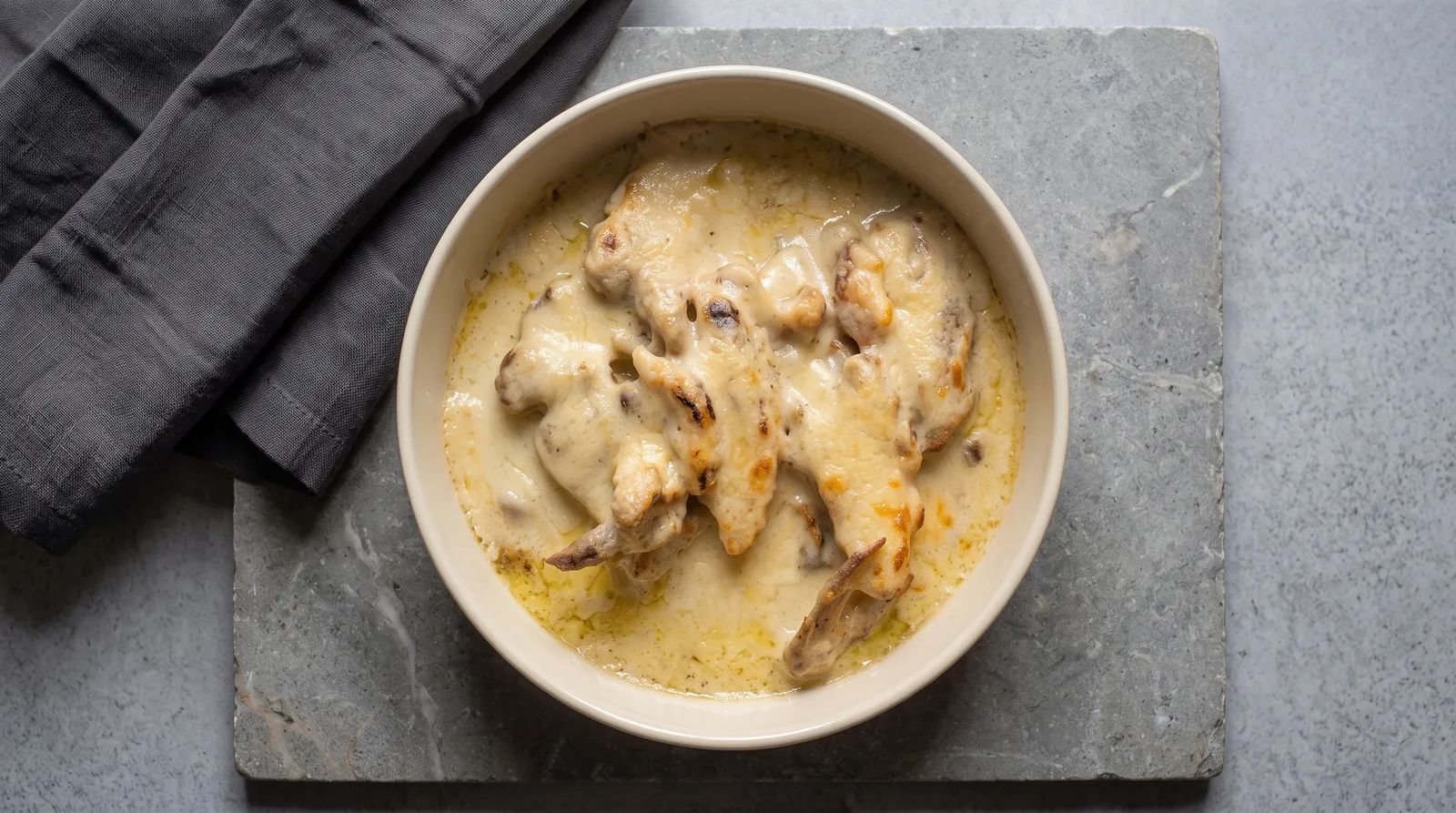
Poulet à la comtoise — presented in a serving dish
Cook time 62 minutes after 25 minutes of preparation.
Passive time 0 minutes after the 62-minute cooking schedule.
Calories per serving 760 kcal across the 87-minute schedule.
Yield 4 main-course servings.
Introduction and overview

Poulet à la comtoise: Franche-Comté bone-in chicken browned and braised with Jura white wine, then finished with cream and mature Comté under a short gratin.

Poulet à la comtoise should read unmistakably as Franche-Comté cooking: bone-in chicken, Jura white wine, cream and Comté. Smoked ham is not required in the documented formulas used here, so it is left out. The resulting sauce is cheese-forward without becoming the mustard-paprika profile associated with poulet Gaston Gérard.

The chicken is cooked to safety before the gratin. Browning contributes flavour, then the covered wine braise carries every piece to 74 °C away from bone. Only after the chicken leaves the casserole is the sauce thickened, creamed and enriched with Comté, which keeps the poultry from becoming dry while the liquid reduces.

Comté is added in two stages. One portion melts off heat into the sauce, which limits splitting; the remainder sits on top for a five-minute gratin at high heat. Nutrition counts the full served cheese and sauce, but the chicken basis is cooked edible meat rather than the entire 1.4 kg bone-in purchase.
Success points

Success points

  • Check all chicken pieces at 74 °C away from bone before the sauce is reduced.
  • Use mature Comté by name rather than generic hard cheese if the dish is to remain Comtoise.
  • Melt the first Comté addition off heat, then use only a short top-heat gratin for colour.
Ingredients

Ingredients

Chicken

  • 1400 g whole chicken, cut into 8 bone-in pieces — about 780 g cooked edible meat and skin expected
  • 15 ml olive oil
  • 25 g unsalted butter
  • 6 g fine salt
  • 2 g black pepper

Comté sauce

  • 250 ml dry Jura white wine, Savagnin or Chardonnay
  • 150 ml double/heavy cream, about 30–35% fat
  • 180 g Comté cheese, 12–18 months; finely grated
  • 30 g plain wheat flour
  • 2 g ground nutmeg
Method

Method

Directions

  1. Brown the chicken. Season the 8 chicken pieces with salt and pepper. Heat the olive oil and butter in a wide ovenproof casserole and brown the pieces over medium heat for 12 minutes, turning so the skin and cut surfaces take colour. The chicken is golden on several faces while still clearly undercooked inside. Browning builds flavour before the wine braise without relying on the gratin to cook raw chicken. Use tongs and keep raw chicken juices away from ready-to-eat foods.

  2. Braise in Jura wine. Add the 250 ml Jura white wine, scrape the browned deposits into the liquid, cover and simmer gently for 35 minutes. Every piece reaches 74 °C away from bone and the leg joints move freely without the meat drying out. The covered wine braise cooks the bone-in pieces evenly and creates the base for the Comté sauce. Chicken must reach 74 °C; colour is not a safety test.

  3. Build and reduce the sauce. Transfer the chicken to a warm gratin dish. Whisk the flour into the cooking juices over medium-low heat, cook for 2 minutes, then add the cream and nutmeg and simmer for 8 minutes, stirring until smooth. The sauce is smooth, lightly thickened and coats the back of a spoon without floury taste. Cooking the flour in the wine-rich juices gives the cream and cheese a stable base. Keep the sauce below a hard boil once the cream is added.

  4. Add Comté. Take the sauce off the heat and stir in 100 g of the grated Comté until melted, then spoon the sauce over the chicken. The cheese is fully melted and the sauce remains smooth rather than oily or stringy. Melting Comté off heat reduces the risk of the sauce splitting. The sauce and dish are very hot; support the gratin dish securely.

  5. Gratinate. Scatter the remaining 80 g Comté over the top and gratinate at 220 °C for 5 minutes. The Comté forms small golden blisters while the sauce still looks creamy at the edges. A short high-heat finish browns the cheese without extending the chicken cooking unnecessarily. Watch continuously under the grill and keep the dish clear of the upper element.

  6. Serve promptly. Serve the chicken immediately with all of the Comté sauce divided among four portions. Each portion has two chicken pieces where practical and enough sauce to coat rather than drown the meat. Serving promptly keeps the cheese sauce smooth and the gratin surface fresh. Warn diners about chicken bones; wine alcohol may remain in the sauce.

Serving and practical guidance

Practical

Serving and practical guidance

Serve as soon as the gratin comes out, while the cheese is blistered and the sauce remains fluid.

Serving and practical guidance

For partial make-ahead, braise the chicken first and chill promptly; complete the cream/Comté sauce and gratin near service.

Serving and practical guidance

Reheat leftovers to 74 °C under cover before a brief uncovered finish.

Serving and practical guidance

Do not replace Comté with generic grated cheese while describing the regional identity as unchanged.

Check

Greasy sauce usually means the cheese was boiled hard; melt Comté off heat and keep the cream stage gentle.

Check

Pale gratin means the top heat was too weak or distant; use a properly preheated grill for the final 5 minutes while watching continuously.

FAQ

How is this kept distinct from poulet Gaston Gérard? The flavour profile is centred on Jura wine, cream and Comté without the onion-mustard-paprika combination that characterises many Gaston Gérard formulas.

FAQ

Why add Comté off heat? High heat can make aged cheese release fat and turn the sauce grainy; gentle off-heat melting gives a smoother base before gratinating.

Nutrition per serving

Nutrition per serving

  • Serving size2 small chicken pieces with about 140 ml Comté sauce
  • Calories760 kcal
  • Carbohydrate15 g
  • Protein58 g
  • Fat49 g
  • Fibre1 g
  • Sodium1000 mg
Allergens and food safety

Allergens and food safety

Allergens: milk; gluten (wheat); sulphites from Jura wine. - Chicken must reach 74 °C away from bone before service. - Keep raw poultry separate from other foods. - Refrigerate leftovers within 2 hours and reheat leftovers to 74 °C. - Jura wine supplies sulphites and some alcohol may remain after cooking. - Milk and wheat gluten are present. - Warn diners about bones.

Chicken must reach 74 °C away from bone before service.

Keep raw poultry separate from other foods.

Refrigerate leftovers within 2 hours and reheat leftovers to 74 °C.

Jura wine supplies sulphites and some alcohol may remain after cooking.

Milk and wheat gluten are present.

Warn diners about bones.

Closing

Closing

  • Result: Poulet à la comtoise with the texture and regional identity described above, portioned according to 1 of 4 servings.
  • Decisive technique: Check all chicken pieces at 74 °C away from bone before the sauce is reduced.