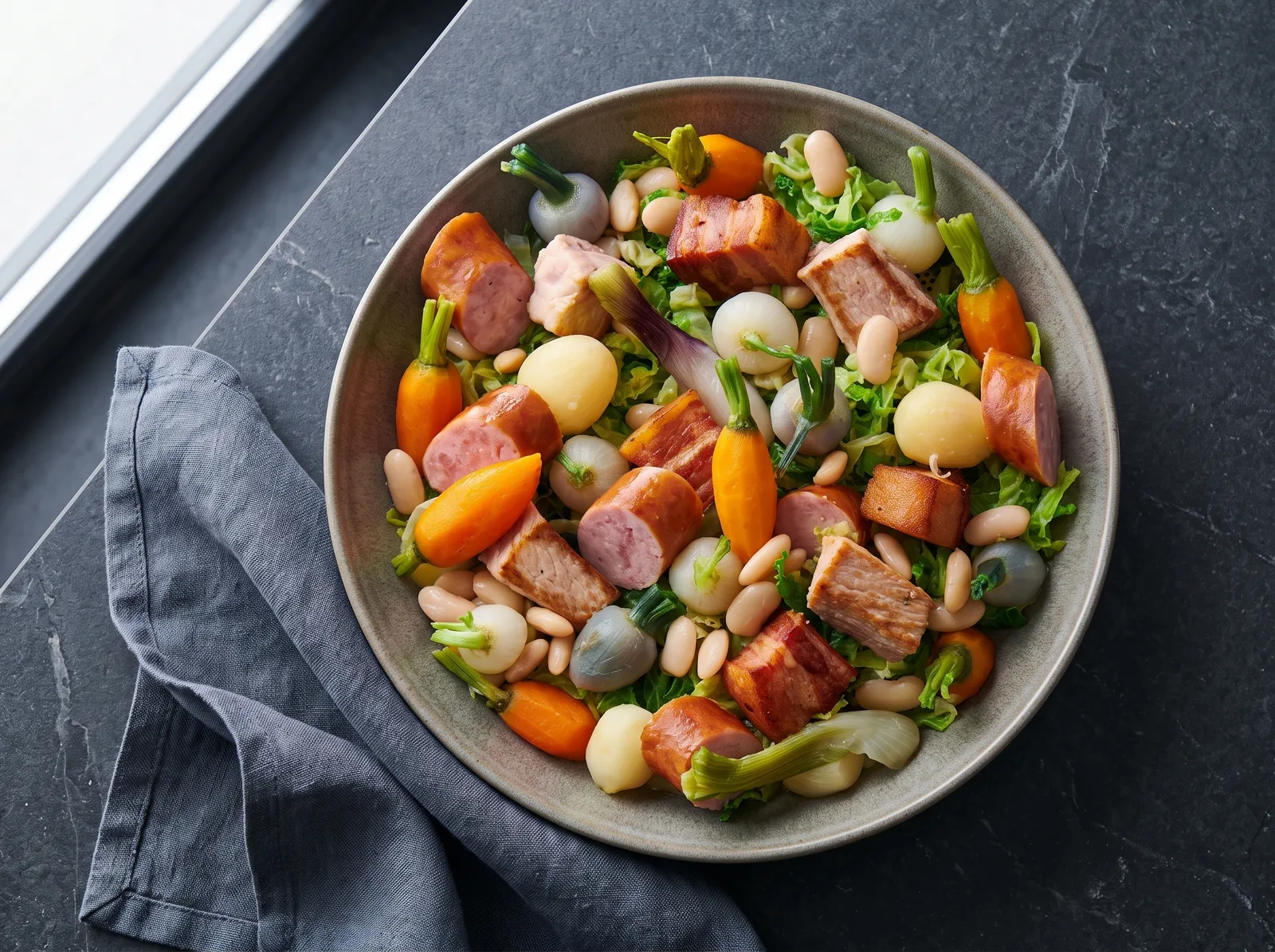
French Recipes

Pot-au-feu

Pot-au-feu is built around several beef textures rather than one uniform cut.

French Recipes
Share
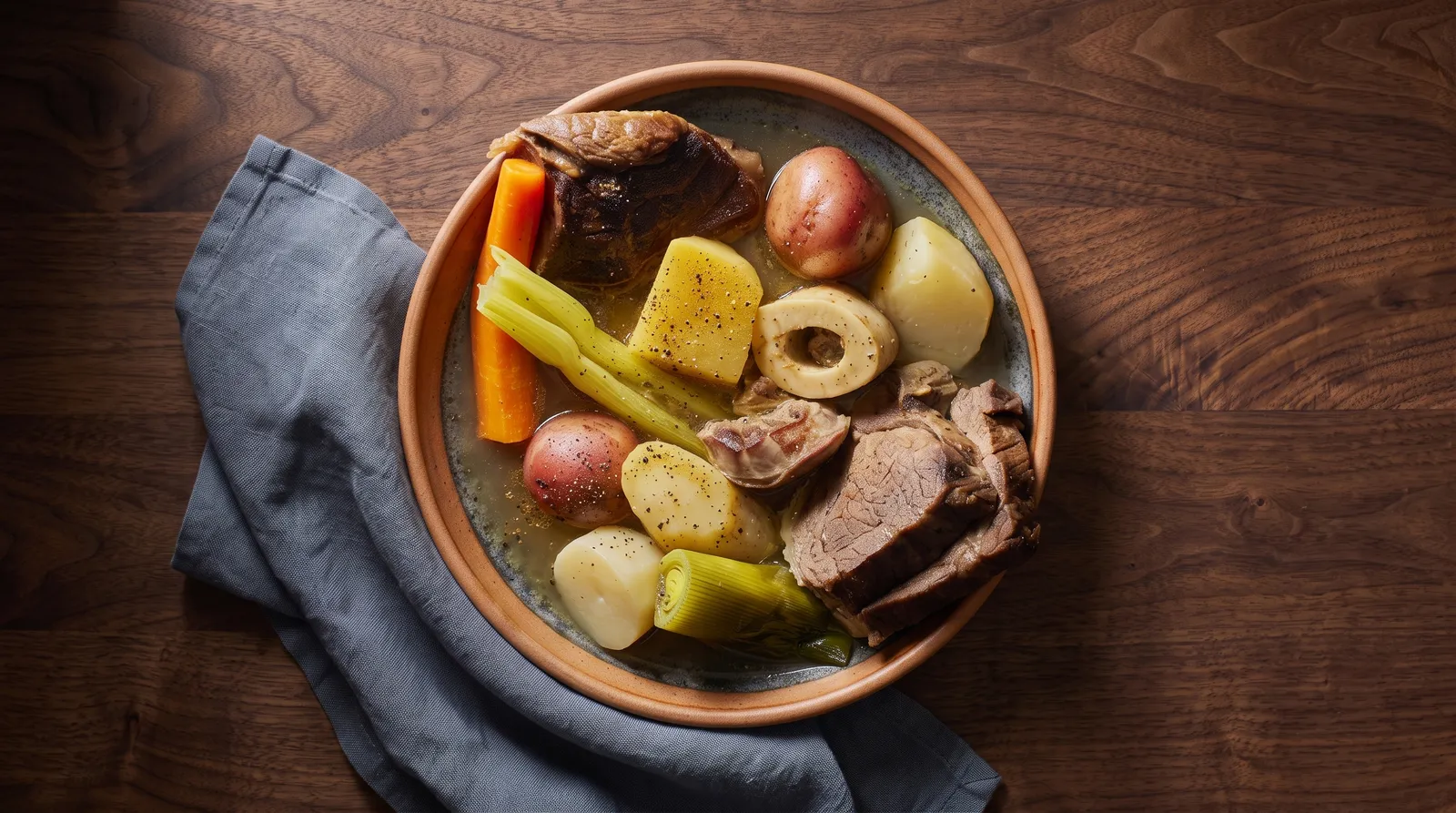
Pot-au-feu — served in a bowl
Cook time 210 minutes after 40 minutes of preparation.
Passive time 3 minutes after the 210-minute cooking schedule.
Calories per serving 680 kcal across the 253-minute schedule.
Yield 6 meal servings plus broth course.
Introduction and overview

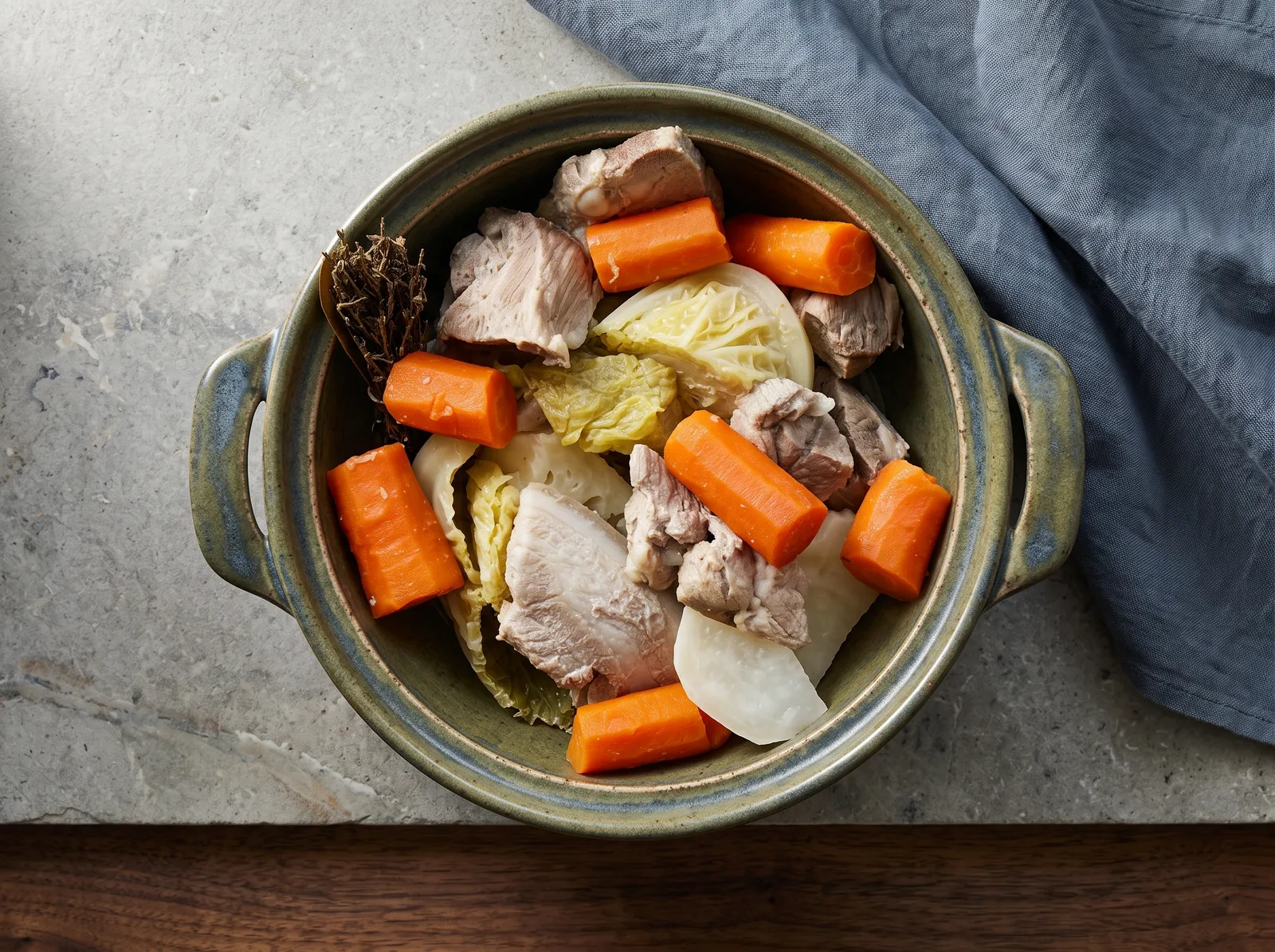
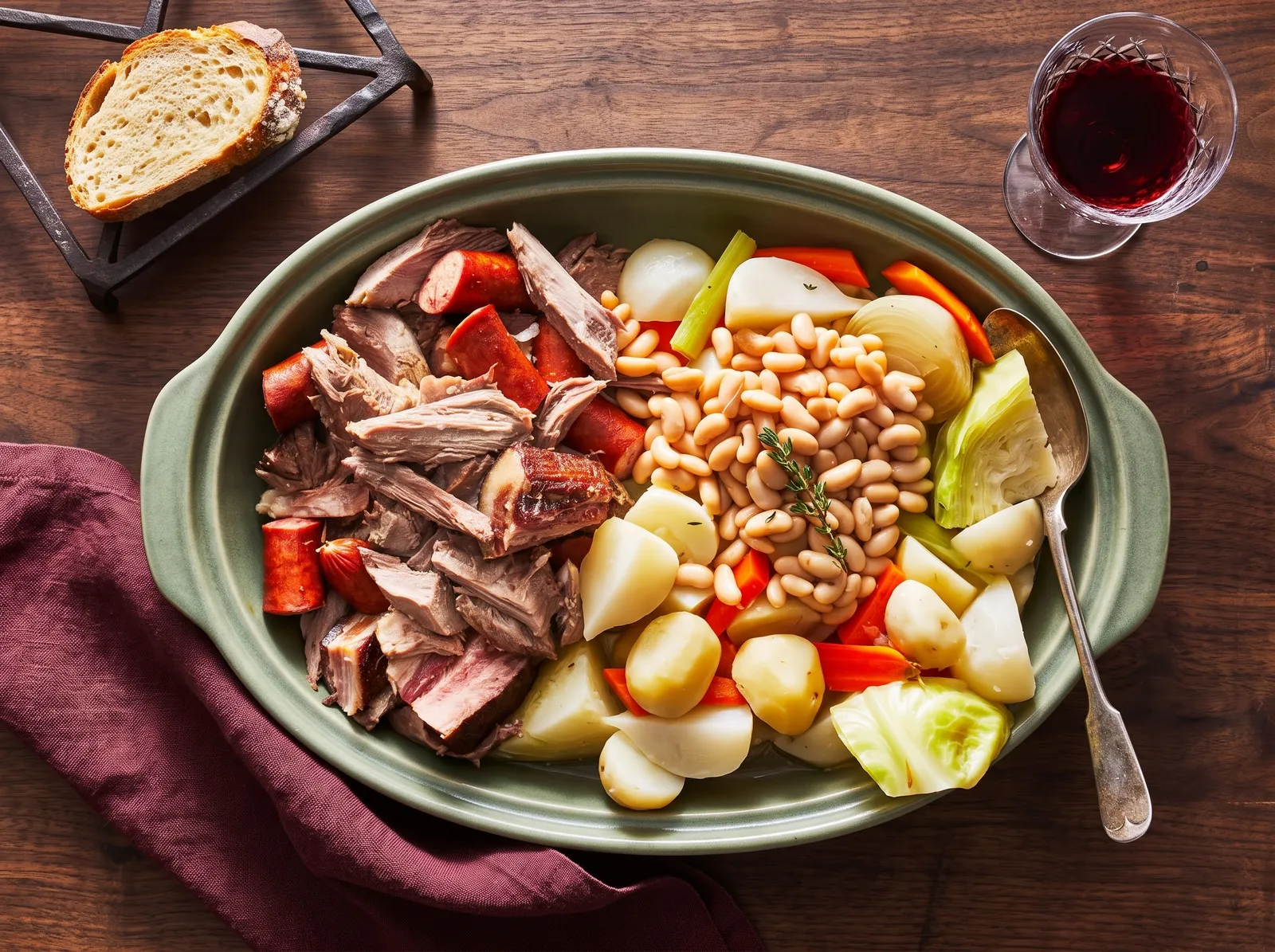
Pot-au-feu: Classic beef pot-au-feu with three beef cuts, marrow bones, root vegetables, leeks, celery and potatoes, served in sequence as broth followed by meat and vegetables.

Pot-au-feu is built around several beef textures rather than one uniform cut. Paleron contributes succulent muscle, gîte brings collagen, and plat de côtes adds richness; marrow bones deepen the broth and are served as a separate edible element. Large vegetables stay recognisable because they join the pot after the beef has already simmered for a long period.

Clarity comes from restraint. Starting the meat in cold water, skimming as the temperature rises and then holding only a bare simmer keeps proteins from dispersing through the broth. The aim is not a concentrated stew sauce but a broth that can be served first in its own bowl before the meat and vegetables arrive.

Yield accounting is especially important here because the purchased pot contains heavy bones, trimming losses and several litres of extraction liquid. Nutrition therefore uses cooked edible beef, an estimated edible marrow yield, the vegetables actually served and a defined 250 ml broth portion. The discarded bones and skimmed surface fat are not counted as eaten.
Success points

Success points

  • Keep the broth at a bare simmer, never a rolling boil.
  • Add vegetables in stages so potatoes do not dissolve before the beef is tender.
  • Treat marrow as a separate edible yield and discard the heavy bone weight rather than counting it as food.
Ingredients

Ingredients

Beef and broth

  • 650 g beef paleron/chuck, boneless, tied if irregular
  • 550 g beef gîte/shank meat, boneless
  • 450 g beef short ribs / plat de côtes, bone-in — about 330 g raw edible meat before cooking
  • 600 g beef marrow bones, 4 cross-cut bones — about 100 g edible marrow expected; bones discarded
  • 4000 ml water, cold
  • 12 g coarse salt
  • 3 g black peppercorns
  • 4 g thyme and bay bouquet, tied

Vegetables and service

  • 500 g carrots, peeled; large pieces
  • 400 g leeks, trimmed and thoroughly washed
  • 400 g turnips, peeled; halved if large
  • 250 g yellow onions, peeled; one halved and browned dry
  • 120 g celery stalks, trimmed
  • 600 g waxy potatoes, peeled; kept whole if small
  • 20 g garlic, peeled
  • 60 g Dijon mustard, for service
Method

Method

Directions

  1. Prepare the meat and vegetables. Tie the paleron if needed, rinse and dry the beef surfaces, prepare the vegetables in large pieces and brown one onion half cut-side down in a dry pan. The vegetables are in large, serviceable pieces and the browned onion has a dark caramelised cut face without being ash-black. Large pieces survive the long simmer and the browned onion deepens broth colour. Keep raw beef utensils separate from ready-to-eat items and wash hands after handling.

  2. Start and skim the broth. Put the three beef cuts in a 10-litre stockpot, add exactly 4000 ml water and bring slowly toward a bare simmer over medium heat for 15 minutes, skimming foam as it rises. The liquid is steaming with only small bubbles and the surface foam has been removed. A controlled rise and early skimming support a clearer broth. Avoid a rolling boil that can splash and emulsify fat into the broth.

  3. Simmer the beef. Add salt, peppercorns, bouquet, browned onion and garlic. Lower the heat and maintain a bare simmer for 120 minutes. The broth moves only gently and the beef has begun to soften while remaining in large pieces. Long gentle heat dissolves collagen without shredding the meat or clouding the broth. Each intact beef cut must pass at least 63 °C; continue braising far beyond that minimum until tender.

  4. Add the long-cooking vegetables. Add carrots, turnips, leeks, celery and the remaining onion and continue the bare simmer for 45 minutes. The carrots and turnips are nearly tender but still keep their shape. Staging the vegetables prevents them from dissolving during the full beef simmer. Submerge vegetables with a ladle rather than pushing hands near hot broth.

  5. Finish with potatoes and marrow. Add the potatoes and marrow bones and simmer for 30 minutes, skimming excess surface fat if needed. The potatoes are tender through the centre, the marrow is soft, and the beef yields easily to a fork without falling apart. Potatoes and marrow need less time than the beef and are added late to preserve shape and flavour. Marrow bones and hot broth are scalding and bone edges can be sharp.

  6. Rest and serve in sequence. Lift the beef to a warm platter and rest it for 3 minutes passive rest before slicing across the grain. Strain enough broth for the first course, then serve meat and vegetables with a little broth and Dijon mustard. The sliced beef is moist and tender, and the broth is clear enough to see through in the bowl. The brief rest completes the intact-meat safety interval and the separate broth course preserves classic service logic. Warn diners about marrow bones; do not place hidden bone fragments in portions.

Serving and practical guidance

Practical

Serving and practical guidance

Serve the clear broth first, then bring the sliced beef, marrow and vegetables to the table with mustard.

Serving and practical guidance

For make-ahead service, chill broth and solids promptly in separate shallow containers; next-day reheating makes surface-fat removal easier.

Serving and practical guidance

Leftovers should be reheated to 74 °C and not repeatedly cooled and warmed.

Serving and practical guidance

Substitutions should preserve the functional mix of lean, gelatinous and richer beef rather than reducing pot-au-feu to one cut.

Check

Cloudy broth usually comes from a rolling boil; lower to a bare simmer and skim rather than stirring.

Check

Vegetables collapsing means they entered too early; keep potatoes and marrow to the final 30 minutes.

FAQ

Why are several beef cuts used? Different cuts contribute tenderness, collagen and richness, giving both the broth and the meat platter more range than a single cut.

FAQ

Why is the broth served separately? Serving the strained broth first preserves the classic distinction between the clear soup course and the later platter of meat and vegetables.

Nutrition per serving

Nutrition per serving

  • Serving sizeabout 250 g edible meat/marrow, 350 g vegetables and 250 ml broth
  • Calories680 kcal
  • Carbohydrate38 g
  • Protein50 g
  • Fat36 g
  • Fibre8 g
  • Sodium1200 mg
Allergens and food safety

Allergens and food safety

Allergens: celery; mustard. - Raw beef must remain separate from ready-to-eat food. - Intact beef must reach at least 63 °C and rest for at least 3 minutes before eating; the braise should continue until fork-tender. - Handle marrow bones carefully and warn diners about bone fragments. - Refrigerate leftovers within 2 hours and reheat leftovers to 74 °C. - Dijon mustard is an allergen for people sensitive to mustard; celery is also present.

Raw beef must remain separate from ready-to-eat food.

Intact beef must reach at least 63 °C and rest for at least 3 minutes before eating; the braise should continue until fork-tender.

Handle marrow bones carefully and warn diners about bone fragments.

Refrigerate leftovers within 2 hours and reheat leftovers to 74 °C.

Dijon mustard is an allergen for people sensitive to mustard; celery is also present.

Closing

Closing

  • Result: Pot-au-feu with the texture and regional identity described above, portioned according to 1 of 6 servings.
  • Decisive technique: Keep the broth at a bare simmer, never a rolling boil.