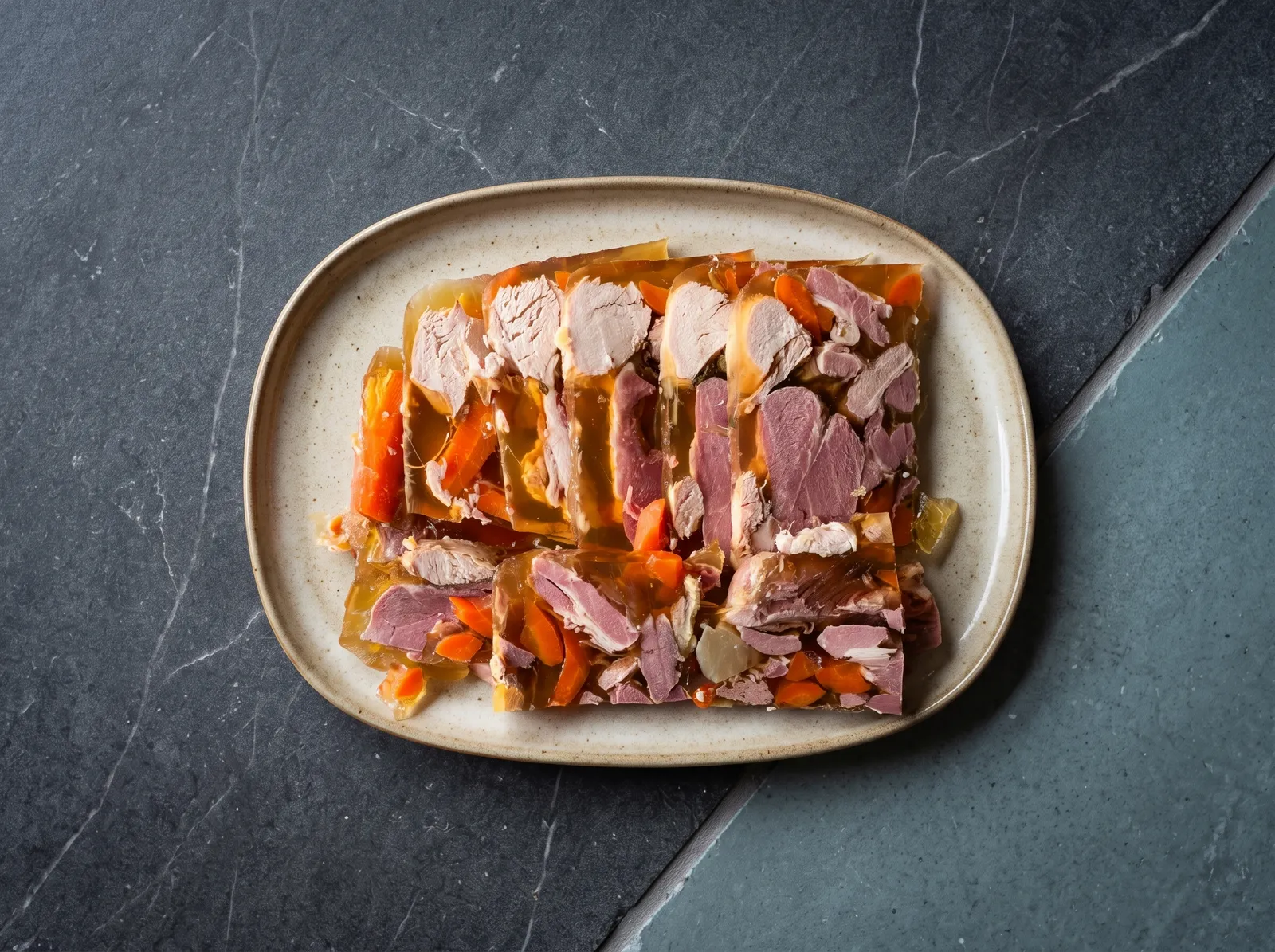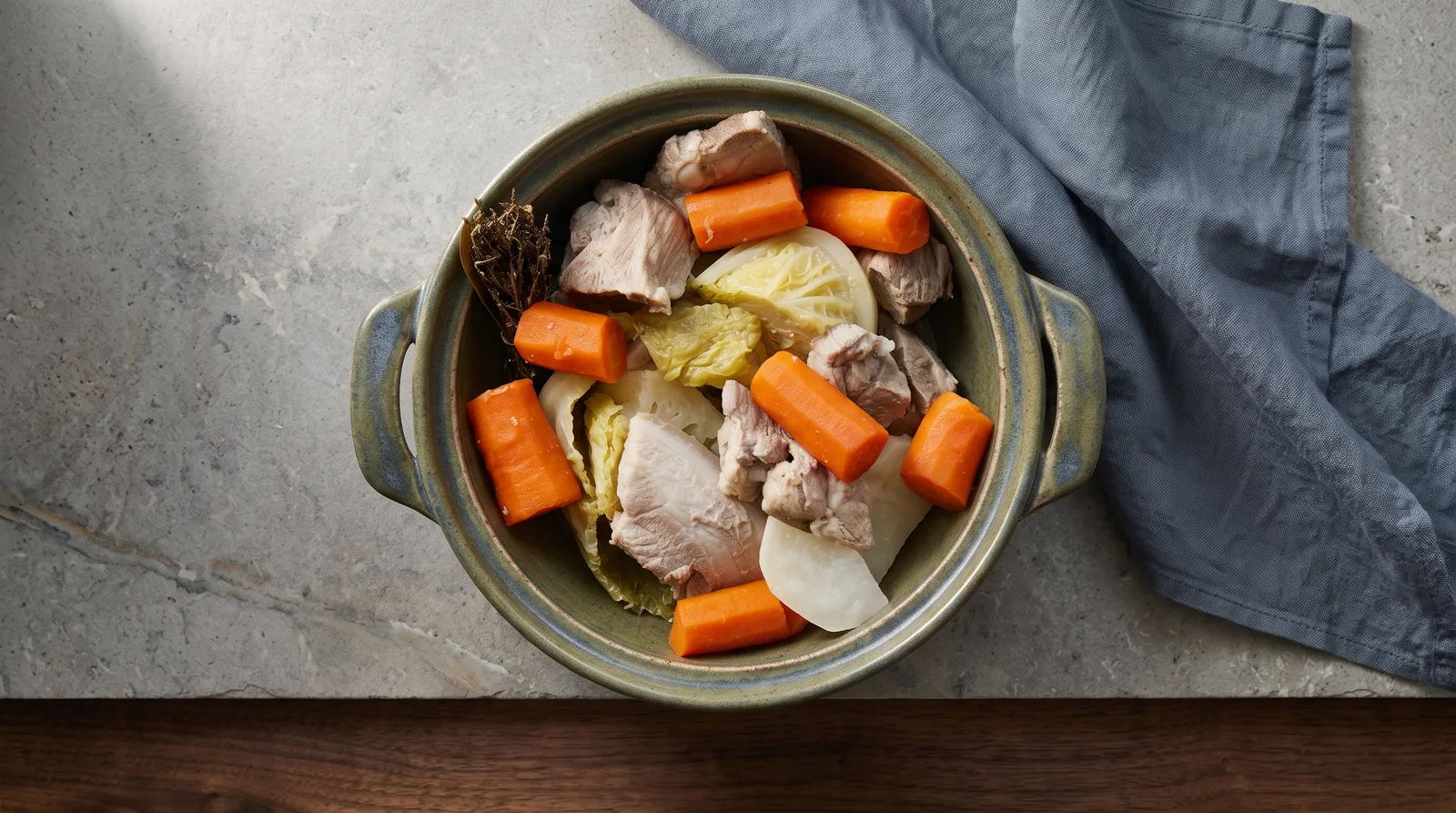
French National Dishes

Potée bourguignonne

Potée bourguignonne is materially different from the other potées here because the meat pot includes beef shank alongside demi-sel pork and small pork sausages.

French National Dishes
Share
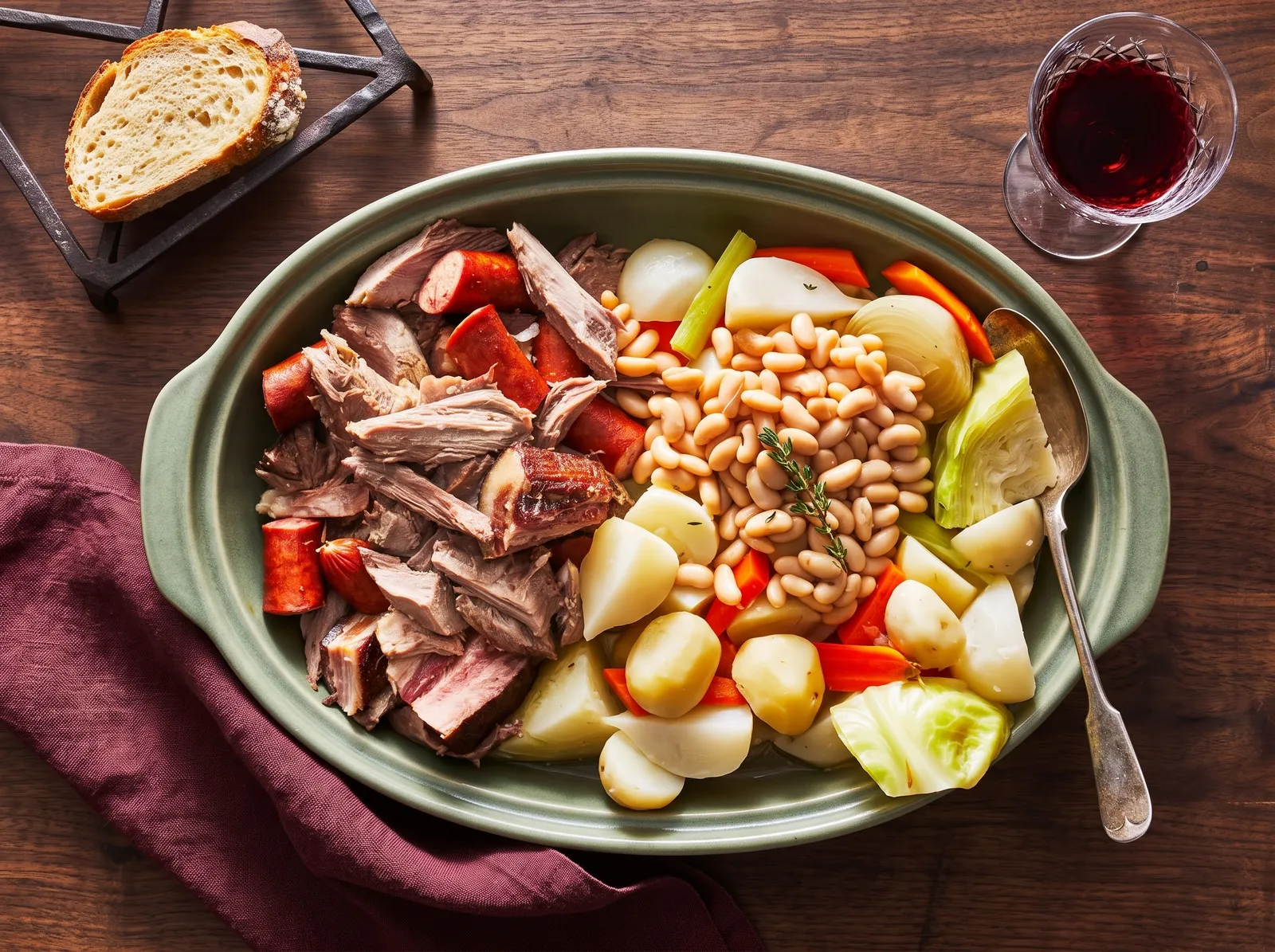
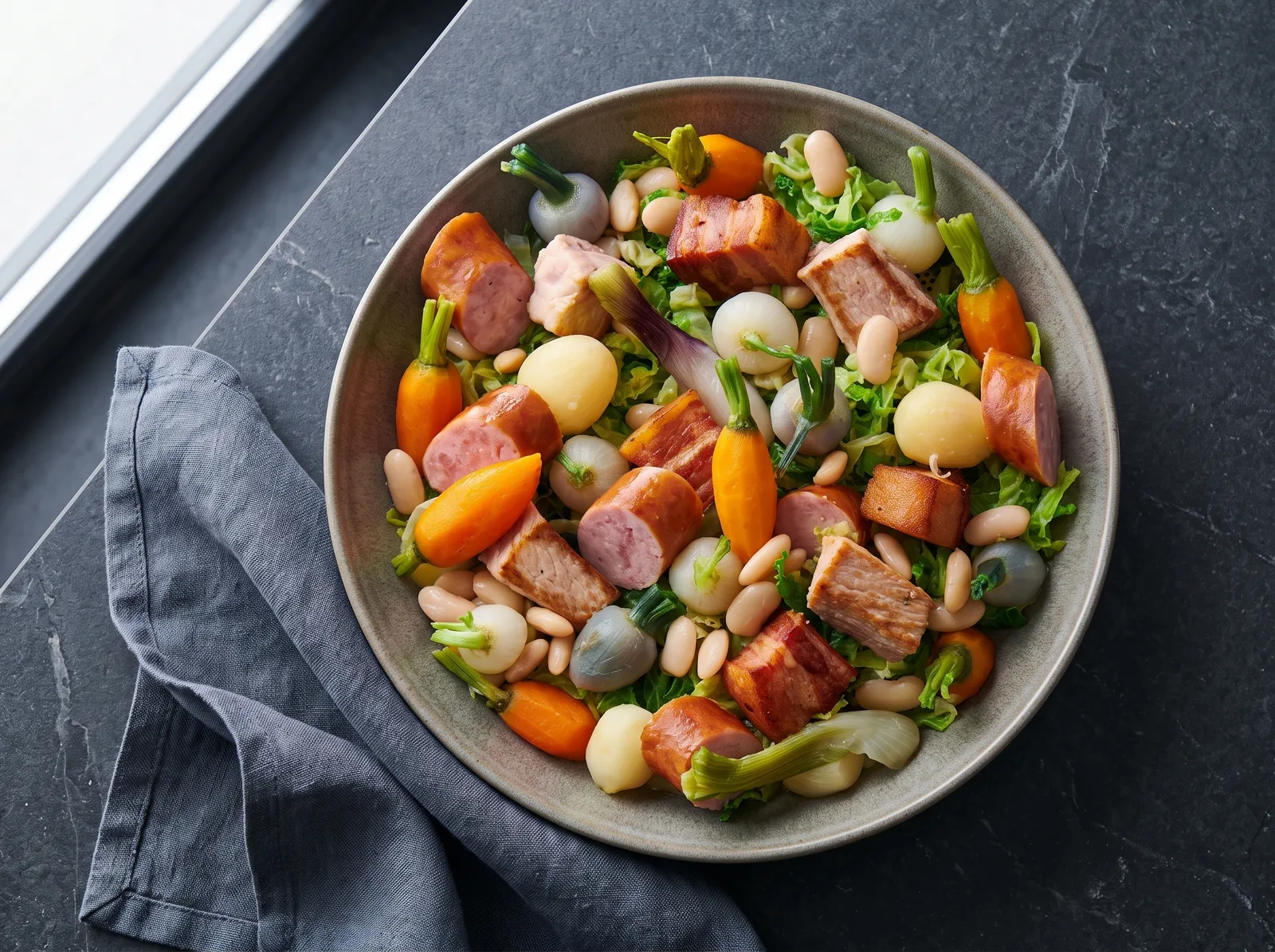
Potée bourguignonne — served in a bowl
Cook time 160 minutes after 35 minutes of preparation.
Passive time 65 minutes after the 160-minute cooking schedule.
Calories per serving 700 kcal across the 260-minute schedule.
Yield 6 main-course servings.
Introduction and overview

Potée bourguignonne: Burgundian mixed-meat potée combining demi-sel pork, beef shank, small pork sausages, cabbage, root vegetables and Dijon mustard at service.

Potée bourguignonne is materially different from the other potées here because the meat pot includes beef shank alongside demi-sel pork and small pork sausages. Cabbage, root vegetables, leeks and potatoes make it a complete one-pot meal, while Dijon mustard provides a distinctly Burgundian table condiment without being cooked into the broth.

The cured pork is soaked cold for a controlled hour before the pot starts. That step moderates harsh surface salinity, but it is not treated as if it magically removes all curing sodium. Beef shank and cured pork then simmer first because they need far more time than sausage, cabbage or potatoes.

Yield is calculated from edible cooked meat rather than the full purchased bone and rind weights. The broth is also portioned: nutrition counts the roughly 200 ml that reaches each bowl, while the discarded bones, any tough rind and broth left in the pot are excluded. This keeps the arithmetic tied to what diners actually receive.
Success points

Success points

  • Desalt only enough to control salinity; do not assume soaking removes the curing sodium.
  • Give beef shank and cured pork a substantial head start before adding sausage and potatoes.
  • Keep this Burgundian profile distinct through the beef shank, small sausages and Dijon service.
Ingredients

Ingredients

Meats

  • 500 g demi-sel pork ribs, bone-in; commercially cured
  • 700 g beef shank, bone-in
  • 350 g demi-sel pork belly, rind removed after cooking if tough
  • 360 g small plain pork sausages, 6 × 60 g; commercially prepared

Vegetables and broth

  • 600 g green cabbage, cored; cut into wedges
  • 300 g carrots, peeled; thick slices
  • 250 g turnips, peeled; wedges
  • 250 g leeks, washed; thick rounds
  • 500 g waxy potatoes, peeled; large pieces
  • 200 g yellow onions, sliced
  • 12 g garlic, chopped
  • 80 g celery stalks, chopped
  • 3000 ml water
  • 4 g thyme-bay bouquet, tied
  • 60 g Dijon mustard, for service
Method

Method

Directions

  1. Desalt the cured pork. Place the demi-sel pork ribs and belly in a non-reactive container, cover with cold water and refrigerate for 60 minutes soaking, then drain and pat dry. The soaking water tastes distinctly salty and the meat surface is clean and dry after draining. A controlled soak moderates excess curing salt without pretending to remove all sodium. Keep cured meat refrigerated during soaking and discard the used water.

  2. Prepare the vegetables. Cut the cabbage into firm wedges and prepare the remaining vegetables in large pieces so they can withstand a long simmer. The cabbage wedges are compact and the root vegetables are in pieces large enough to hold their shape. Large cuts prevent the potée from turning into an undifferentiated soup. Keep the vegetable board separate from raw meat equipment.

  3. Start the meats. Put pork ribs, pork belly, beef shank, onions, garlic, celery and bouquet in a large pot with exactly 3000 ml water. Bring to a gentle simmer over medium heat for 10 minutes and skim. Foam has been skimmed and the liquid has settled to a gentle simmer. Skimming controls broth harshness and keeps the finished potée cleaner. Hot broth and bones are burn and cut hazards.

  4. Tenderise the main meats. Lower the heat and simmer gently for 100 minutes. The beef shank is beginning to yield around the bone and the cured pork is tendering without shredding. The beef shank needs a longer head start than sausage and potatoes. Intact pork and beef must reach at least 63 °C; the long braise continues well beyond this minimum.

  5. Add cabbage, roots and sausage. Add cabbage, carrots, turnips, leeks and the sausages. Simmer gently for 50 minutes, adding potatoes for the final 30 minutes of this same stage. The sausage centres reach 71 °C, the cabbage is tender but still wedge-shaped, and the potatoes are fully tender without crumbling. Late potatoes and sausages prevent both from overcooking while the cabbage softens. Probe sausage in the centre; ground pork sausage must reach 71 °C.

  6. Rest and portion. Turn off the heat, rest the potée for 5 minutes passive rest, then lift meats and vegetables to a deep platter and ladle a measured amount of broth over them. Serve Dijon mustard separately. The meats slice cleanly, the vegetables hold their shape and each portion receives broth without becoming soup-heavy. A short rest settles the broth and completes the intact-meat rest interval. Warn diners about bones and remove loose bone fragments before serving.

Serving and practical guidance

Practical

Serving and practical guidance

Serve mustard at the table rather than stirring it into the pot, so the broth remains clear and each diner controls acidity.

Serving and practical guidance

Make ahead by cooling meat, vegetables and broth promptly; reheat gently so potatoes stay intact.

Serving and practical guidance

Reheat leftovers to 74 °C and avoid repeated reheating.

Serving and practical guidance

Maintain the Burgundian identity by keeping beef shank in the meat mix; an all-pork substitution would move the dish toward a different regional potée.

Check

Over-salty broth means the cured pork was very salty; dilute with a measured amount of hot water before adding potatoes, then avoid extra salt.

Check

Burst sausages usually indicate vigorous boiling; keep the liquid at a gentle simmer and probe rather than boiling hard.

FAQ

What makes it Burgundian here? The mixed meat pot includes beef shank with cured pork and small pork sausages, and Dijon mustard is served alongside.

FAQ

Why is the sausage added late? Ground sausage needs to reach 71 °C, but a full multi-hour simmer would make it dry and more likely to split.

Nutrition per serving

Nutrition per serving

  • Serving sizeabout 250 g edible meats, 320 g vegetables and 200 ml broth
  • Calories700 kcal
  • Carbohydrate45 g
  • Protein49 g
  • Fat35 g
  • Fibre9 g
  • Sodium1600 mg
Allergens and food safety

Allergens and food safety

Allergens: celery; mustard. - Keep cured and raw meats refrigerated and separate from ready-to-eat foods. - Ground pork sausage must reach 71 °C. - Intact pork and beef must reach at least 63 °C and rest at least 3 minutes before eating; the long braise exceeds that minimum. - Refrigerate leftovers within 2 hours and reheat to 74 °C. - Bones, steam and hot broth are hazards.

Keep cured and raw meats refrigerated and separate from ready-to-eat foods.

Ground pork sausage must reach 71 °C.

Intact pork and beef must reach at least 63 °C and rest at least 3 minutes before eating; the long braise exceeds that minimum.

Refrigerate leftovers within 2 hours and reheat to 74 °C.

Bones, steam and hot broth are hazards.

Closing

Closing

  • Result: Potée bourguignonne with the texture and regional identity described above, portioned according to 1 of 6 servings.
  • Decisive technique: Desalt only enough to control salinity; do not assume soaking removes the curing sodium.