Pan-Seared Magret de Canard with Slowly Rendered Skin
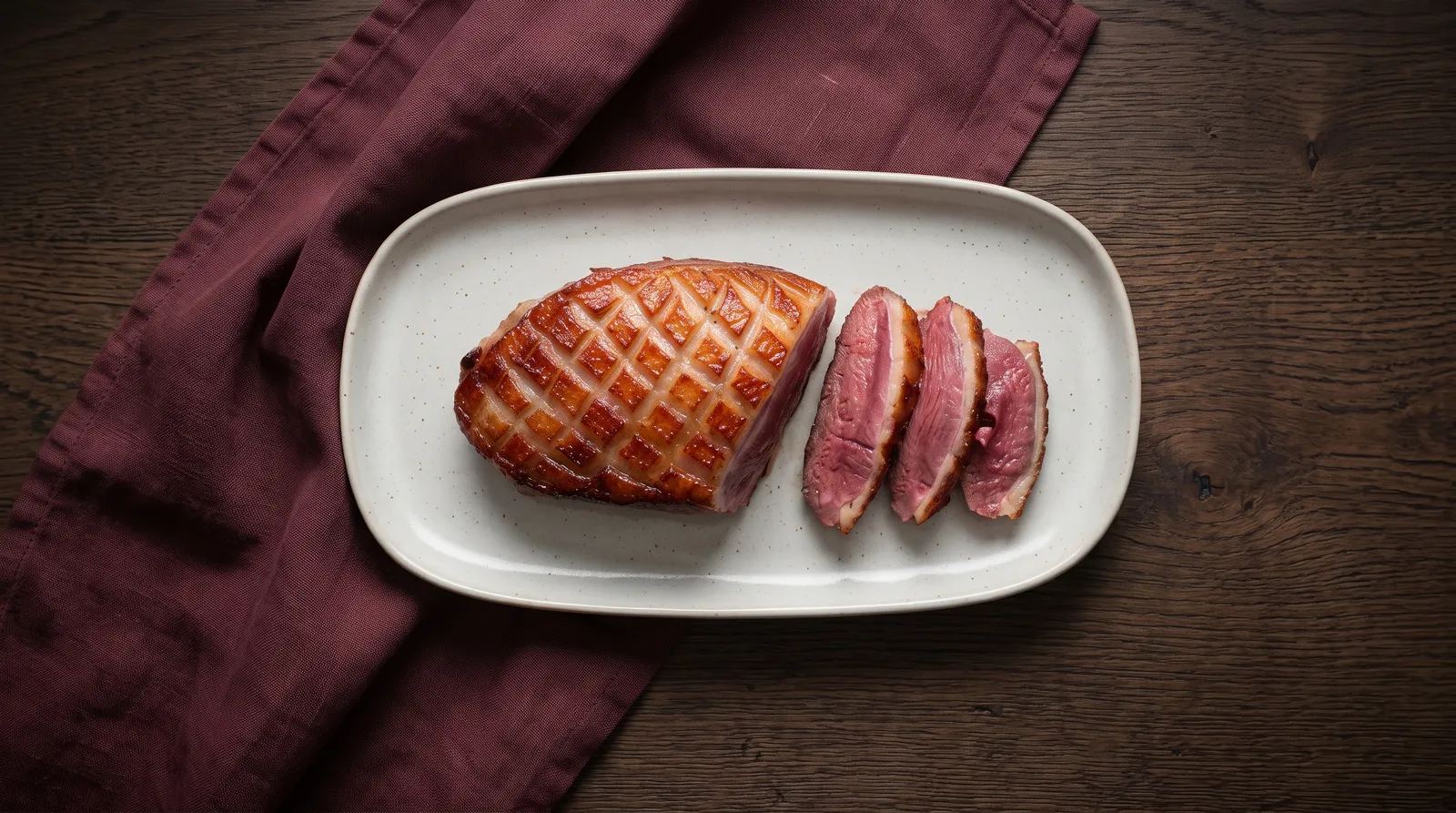
Magret de canard is not simply another name for duck breast. In French usage, magret refers to the thick breast from a duck raised for foie gras and presented with its substantial skin and subcutaneous fat. That fat layer is the central technical feature of the dish: it must render slowly enough to become thin and crisp while protecting the meat underneath. This preparation keeps the focus on that defining structure rather than covering it with a sweet glaze or a heavy pan sauce.
The pan starts cold. That detail gives the fat time to soften and flow before the skin surface becomes dark, and it also makes it easier to drain the rendered fat in controlled stages. Score a shallow diamond pattern through the skin and fat only, never into the flesh. As the pan warms, remove excess liquid fat so the skin continues to fry against the metal instead of simmering in a deep pool. The final flesh-side cook is shorter but must still bring the thickest point to the required internal temperature.
The safety target here is deliberately conservative for a household poultry recipe: both breasts must reach 74 °C at their thickest point, checked with a food thermometer. Pink colour is not used as a safety test. Once the endpoint is reached, an eight-minute rest lets the juices settle before the meat is sliced across the grain. The served portion includes the cooked meat and retained skin only; rendered duck fat that is poured off and reserved is outside the nutrition calculation.