French Recipes

Omelette de la Mère Poulard

A plain, intensely aerated egg omelette cooked quickly in salted butter, designed to echo the famous Mont-Saint-Michel preparation without claiming a proprietary restaurant formula.

French Recipes
Share
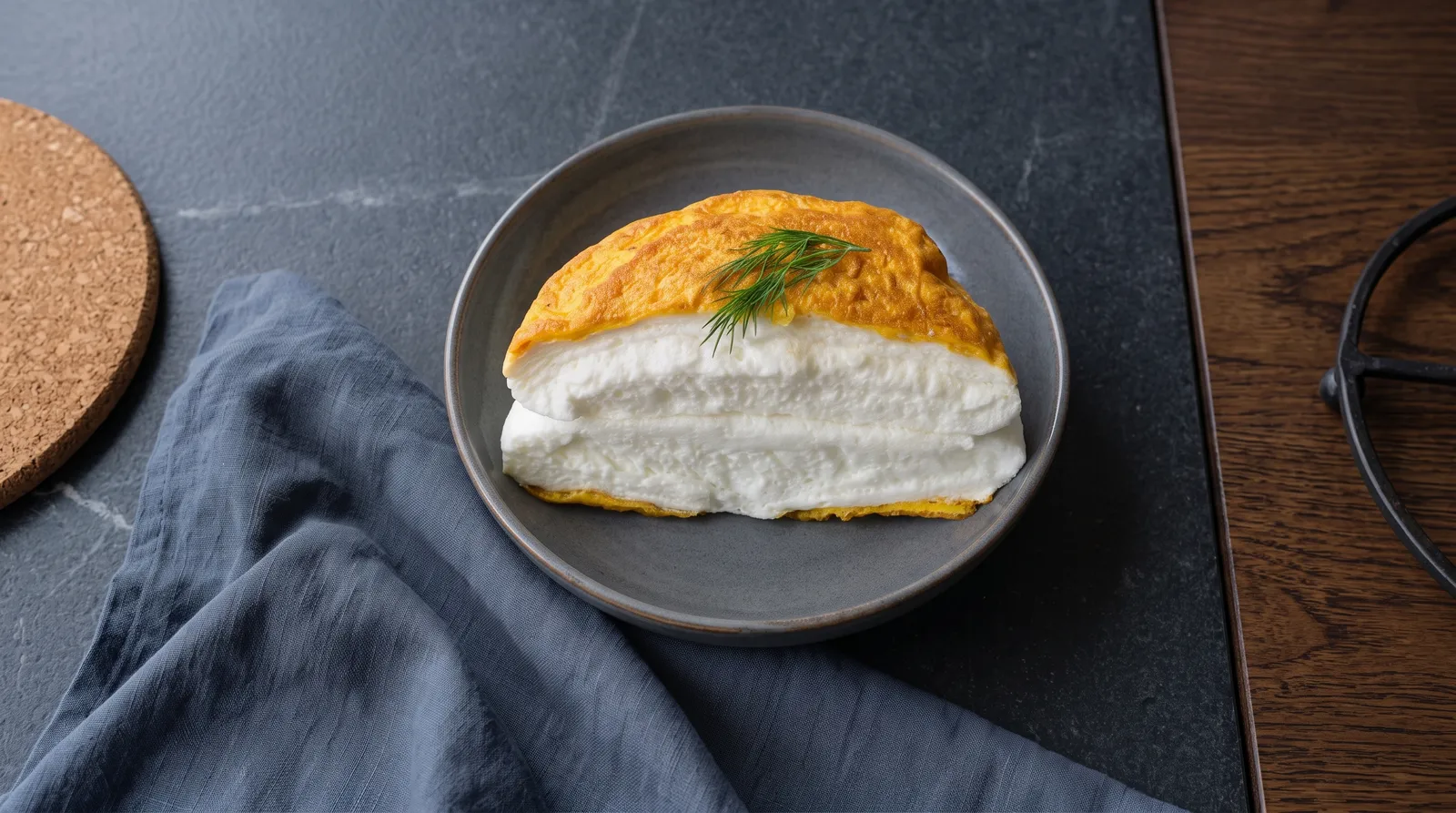
Omelette de la Mère Poulard — served on a plate
Prep 8 minutes
Cook 5 minutes
Total 13 minutes
Yield 1 large omelette, 2 portions
Introduction and overview

Omelette de la Mère Poulard: an aerated Mont-Saint-Michel-style omelette for the home kitchen

The Omelette de la Mère Poulard is inseparable from Mont-Saint-Michel and the name of Annette Poulard. Its reputation rests less on elaborate fillings than on the treatment of eggs: they are beaten until unusually aerated, then cooked quickly with butter over strong heat. Public descriptions of the restaurant method are not fully consistent, so a home cook should treat this as a careful household interpretation rather than an exact copy of a secret commercial recipe.

The practical challenge is to create volume without turning the dish into an oven soufflé. Six eggs are whisked for several minutes until the mixture is pale, foamy and visibly expanded. A 26 cm heavy pan gives enough surface area for the base to set quickly while the upper layer remains soft. Salted butter supplies both cooking fat and the characteristic dairy richness, so no cheese, cream or modern filling is needed in the base recipe.

A wood fire can deliver intense, responsive heat, but a home hob can approximate the cooking effect by preheating a heavy pan over medium-high heat and working quickly. The eggs go into the pan as soon as they are beaten, the omelette is folded while still tender, and it is served immediately. Pasteurized shell eggs are used because the desired centre is soft; ordinary unpasteurized eggs should instead be cooked to 71 °C in the centre.
Success points

Success points

  • Use pasteurized eggs if you want the tender centre; do not infer safety from softness or colour.
  • Beat with a large whisk until the foam is visibly expanded, not merely frothy on the surface.
  • Have the pan and platter ready before beating so the foam is not left standing.
Ingredients

Ingredients

  • 6 pasteurized large shell eggs, about 300 g edible egg in total
  • 40 g Normandy-style salted butter
  • 1 g fine salt
Method

Method

Directions

  1. Aerate the eggs. Crack the eggs into a large bowl, add the salt and beat vigorously with a balloon whisk for 6 minutes. The eggs are pale, foamy and visibly expanded in volume. Cook them immediately rather than letting the foam stand.

  2. Foam the butter. Heat a 26 cm heavy frying pan over medium-high heat for a moment, add the 40 g butter and allow about 2 minutes for it to melt and foam. The butter is fully melted and foaming but not browned. Hot butter can spit, so keep hands and face clear.

  3. Cook rapidly. Pour the beaten eggs into the hot pan and cook for about 3 minutes, lifting an edge once or twice so loose foam can reach the hot surface. The base is set and lightly golden while the upper centre remains tender and foamy. If the eggs are not pasteurized, verify that the centre reaches 71 °C.

  4. Fold and serve. Fold the omelette loosely in half or into a broad roll, slide it onto a warm platter and divide it into two portions within about 2 minutes. The omelette holds its fold but remains visibly soft and aerated inside. Serve immediately.

Serving and make-ahead

Practical

Serving and make-ahead

This omelette is at its best straight from the pan, without a heavy garnish that would hide its aerated texture. Preparation can be organised in advance — weigh the butter, set out the whisk, preheat the serving platter — but do not beat the eggs ahead because the foam gradually loses volume.

Storage and substitutions

Refrigerate any leftover cooked omelette within two hours. It can be reheated until fully hot, but it will be firmer and less airy than when freshly cooked. Unsalted butter can work if salt is adjusted, but the result loses part of the salted-butter character associated with Normandy cooking. Cheese or cream are not base substitutions here; adding them creates a different omelette.

Troubleshooting

Troubleshooting

  • The omelette is heavyThe eggs were not aerated enough or stood too long before cooking. Beat until the bowl holds a visibly expanded foam and transfer it to the pan immediately.
  • The underside browns too fastThe pan is excessively hot. Lower the heat slightly while keeping the cooking brief enough for the centre to stay tender.
Nutrition per serving

Nutrition per serving

  • Serving sizehalf of the 6-egg omelette
  • Calories358 kcal
  • Carbohydrate1.1 g
  • Protein19.1 g
  • Fat30.5 g
  • Fibre0.0 g
  • Sodium538 mg
Allergens and food safety

Allergens and food safety

Allergens: egg and milk. Pasteurized shell eggs are required for the tender-centred result described here. If using ordinary unpasteurized eggs, cook the centre to 71 °C. Do not judge egg safety from colour or softness alone. Butter can spit in a hot pan, so keep the pan stable and its handle turned inward. Refrigerate leftovers within two hours.

FAQ

FAQ

Is this the exact restaurant recipe?

No. The famous restaurant method is not published as a complete proprietary formula, and public descriptions vary. This home approach preserves the defining ideas of strong aeration, butter and rapid pan cooking without claiming access to a secret recipe.

Should the omelette go in the oven?

No. This preparation is cooked in the pan. Baking it as a cheese soufflé would change both technique and identity.

Closing

Closing

  • Result: The finished omelette is buttery, pale-gold outside and markedly aerated inside, with no filling needed to give it character.
  • Decisive technique: Beat the eggs to a real foam and move straight from whisk to hot buttered pan.