French Recipes

Gâteau patate

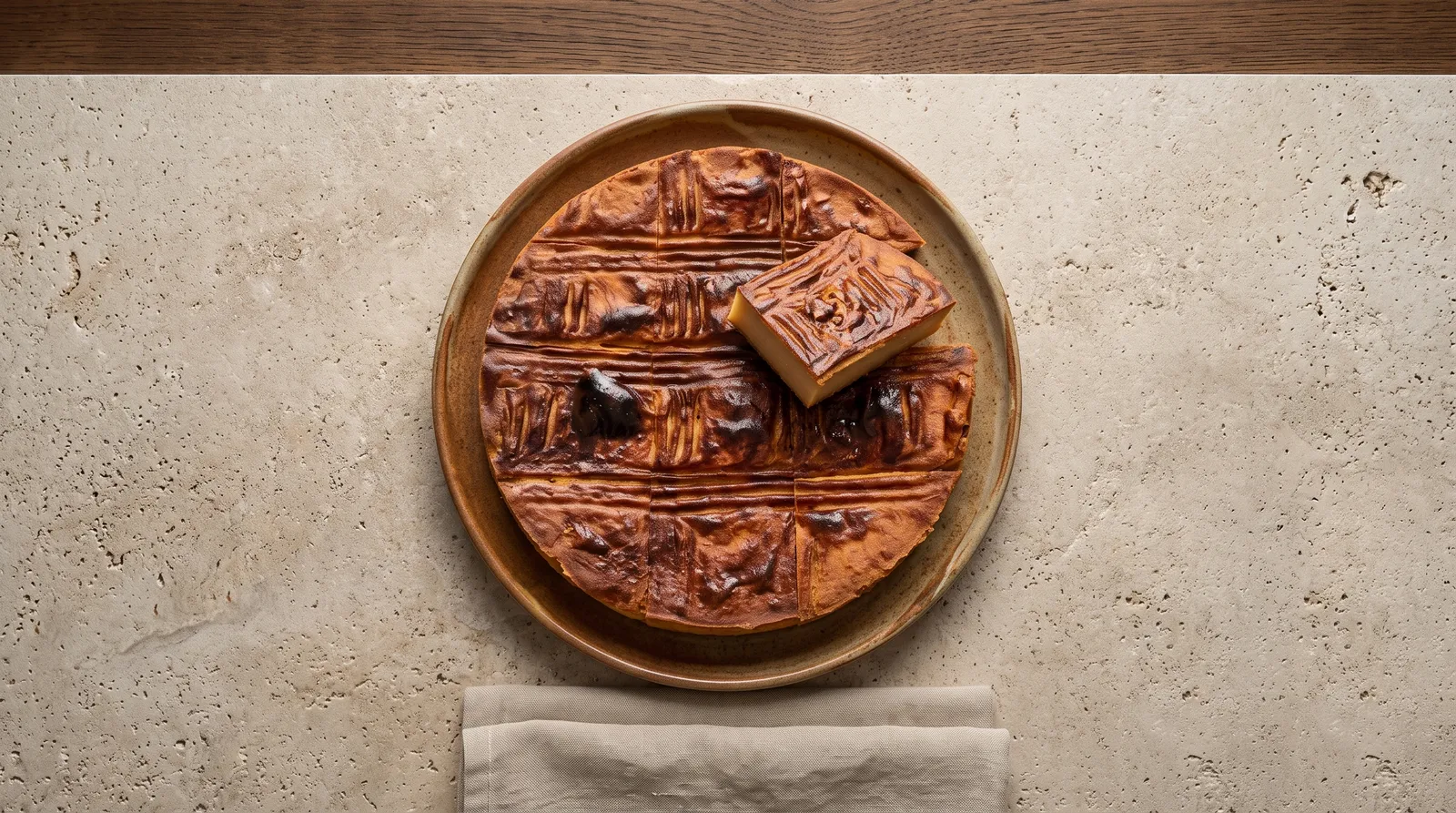
Réunion’s dense sweet-potato cake made with white-fleshed sweet potatoes, butter, Bourbon vanilla and rum, marked with a fork and baked in two temperature stages.

French Recipes
Share
Gâteau patate — displayed on a cake stand
Prep 38 minutes
Cook 90 minutes
Total 3 h 38 min (218 minutes)
Yield 1 round 26 cm cake, 10 slices
Introduction and overview

Gâteau patate — Réunion sweet-potato cake with Bourbon vanilla and rum

Gâteau patate is a Réunionnais sweet based on sweet potato rather than a conventional flour cake. White-fleshed sweet potatoes are especially useful here because they give the dense, pale interior associated with the island preparation. Butter, eggs, sugar, Bourbon vanilla and a measured amount of rum enrich the mash, while only 100 g of wheat flour is used to help the large cake hold a clean slice.

Moisture control begins before the batter is mixed. Start with about 1.7 kg of whole sweet potatoes, peel and trim to exactly 1.5 kg, then steam rather than boil. After steaming, let condensation drain away and mash while the flesh is still warm. A wet mash can leave the centre gummy even when the outside looks properly browned, so the drained weight and texture matter more than simply extending the bake.

The oven work is deliberately split. Twenty minutes at 175 °C begins setting and colouring the fork-marked surface; 40 minutes at 150 °C then cooks the dense centre more gently. Use a thermometer as well as appearance: the centre must reach at least 71 °C and feel set. Cool the cake fully before unmoulding, because the sweet-potato matrix continues to firm as it loses heat.
Success points

Success points

  • Weigh the edible sweet potato after peeling and drain the steamed pieces before mashing.
  • Mix the flour only until the dense batter is even.
  • Lower the oven after 20 minutes and confirm at least 71 °C in the centre.
Ingredients

Ingredients

  • 1700 g white-fleshed sweet potatoes — purchased whole; Trim to exactly 1,500 g peeled raw weight; after steaming and draining, use about 1,560 g mash for nutrition basis.
  • 250 g unsalted butter — cubed
  • 200 g caster sugar
  • 200 g whole egg — from 4 large eggs, beaten
  • 100 g plain wheat flour — sifted
  • 2 Bourbon vanilla beans — split and scraped
  • 30 ml dark rum
  • 18 g egg yolk — from 1 large yolk, for surface wash
Method

Method

Directions

  1. And trim the purchased sweet potatoes to an exact raw edible weight. Peel and trim the purchased sweet potatoes to an exact raw edible weight. Use knife, peeler and scale. Allow 15 minutes. Exactly 1,500 g of peeled white-fleshed sweet potato remains after trimming. Fixing edible raw weight makes the batter and nutrition reproducible. Use a stable board and keep fingers clear of the peeler and knife.

  2. The sweet potato until fully tender. Steam the sweet potato until fully tender. Use steamer. Work at steady steam. Allow 30 minutes. A knife slides through the thickest pieces without resistance. Steaming limits free water compared with boiling. Lift the lid away from the face to avoid steam burns.

  3. Away condensation and mash the sweet potato while warm. Drain away condensation and mash the sweet potato while warm. Use colander, bowl and masher. Allow 5 minutes. The mash is smooth, dense and free of visible condensation or standing water. Removing surface moisture prevents a wet centre. Handle the hot mash and steamer basket carefully.

  4. The warm mash with 250 g butter, then 200 g sugar, 200 g egg, vanilla seeds, 100 g flour and 30 ml rum. Mix the warm mash with 250 g butter, then 200 g sugar, 200 g egg, vanilla seeds, 100 g flour and 30 ml rum. Use large bowl and sturdy spatula. Allow 10 minutes. The batter is even and dense, with no streaks of egg or dry flour. The warm mash melts the butter while brief flour mixing limits toughness. Do not taste raw egg-and-flour batter; rum is flammable around open flame.

  5. A 26 cm round tin, level the batter, brush with 18 g yolk, cross-hatch with a fork and preheat the oven. Prepare a 26 cm round tin, level the batter, brush with 18 g yolk, cross-hatch with a fork and preheat the oven. Use 26 cm round tin, brush and fork. Allow 8 minutes. Keep the relevant temperature at 175 °C. The surface is level, lightly egg-washed and cross-hatched with fork lines about 2 cm apart. A level surface and measured wash give even colour. Keep hands clear of fork tines and the heating oven.

  6. The first stage. Bake the first stage. Use preheated oven. Work at 175 °C conventional oven. Allow 20 minutes. Keep the relevant temperature at 175 °C. The top has begun to set and take on a light golden tone without darkening at the edges. The hotter opening stage sets the surface. Use oven gloves for the hot tin.

  7. The oven and complete the bake. Lower the oven and complete the bake. Use preheated oven. Work at 150 °C conventional oven. Allow 40 minutes. Keep the relevant temperature at 150 °C. The centre reaches at least 71 °C, feels set, and the surface is evenly golden. The lower second stage cooks the dense centre without scorching the top. Verify the centre with a clean food thermometer; do not rely only on colour.

  8. Completely before unmoulding and slicing. Cool completely before unmoulding and slicing. Use wire rack. Allow 90 minutes passive cooling. The cake is fully cool and firm enough to unmould and slice cleanly. Cooling lets the dense sweet-potato matrix set. Refrigerate leftovers within two hours once cooled enough to cover.

Serving, storage and make-ahead

Practical

Serving, storage and make-ahead

Serve gâteau patate completely cool, cut into ten slices. It is dense and moist rather than airy, and the vanilla and sweet potato should remain clearer than the rum.

Serving, storage and make-ahead

For make-ahead service, cool the cake completely, cover and refrigerate. Refrigerate leftovers within two hours and use them within three days. The cake can be served cool or allowed to stand briefly until the refrigerator chill eases; reheating is not needed.

Serving, storage and make-ahead

This preparation contains rum, and some alcohol can remain after baking. An orange-fleshed sweet potato changes sweetness, colour and moisture, so it should be treated as a different adaptation rather than presented as an identity-preserving substitution.

Nutrition per serving

Nutrition per serving

  • Serving size1 slice (1 of 10)
  • Calories450 kcal
  • Carbohydrate55.5 g
  • Protein6.2 g
  • Fat23.0 g
  • Fibre4.2 g
  • Sodium74 mg
Allergens and food safety

Allergens and food safety

Allergens: Egg; Milk; Gluten (wheat).

Do not taste the raw egg-and-flour batter.

Bake the centre to at least 71 °C.

Rum alcohol may remain after baking; do not describe the cake as alcohol-free.

Refrigerate leftovers within two hours.

Closing

Closing

  • Result: a dense, moist Réunion sweet-potato cake with vanilla aroma, fork-marked top and clean slices once cold.
  • Decisive technique: steam and drain the sweet potato carefully, then use the 175 °C-to-150 °C two-stage bake until the centre reaches 71 °C.