French Recipes

Gâteau à la broche

A specialist Pyrenean and Aveyronnais cake built by repeatedly ladling egg-and-butter batter over a continuously rotating conical spit in front of radiant heat.

French Recipes
Share
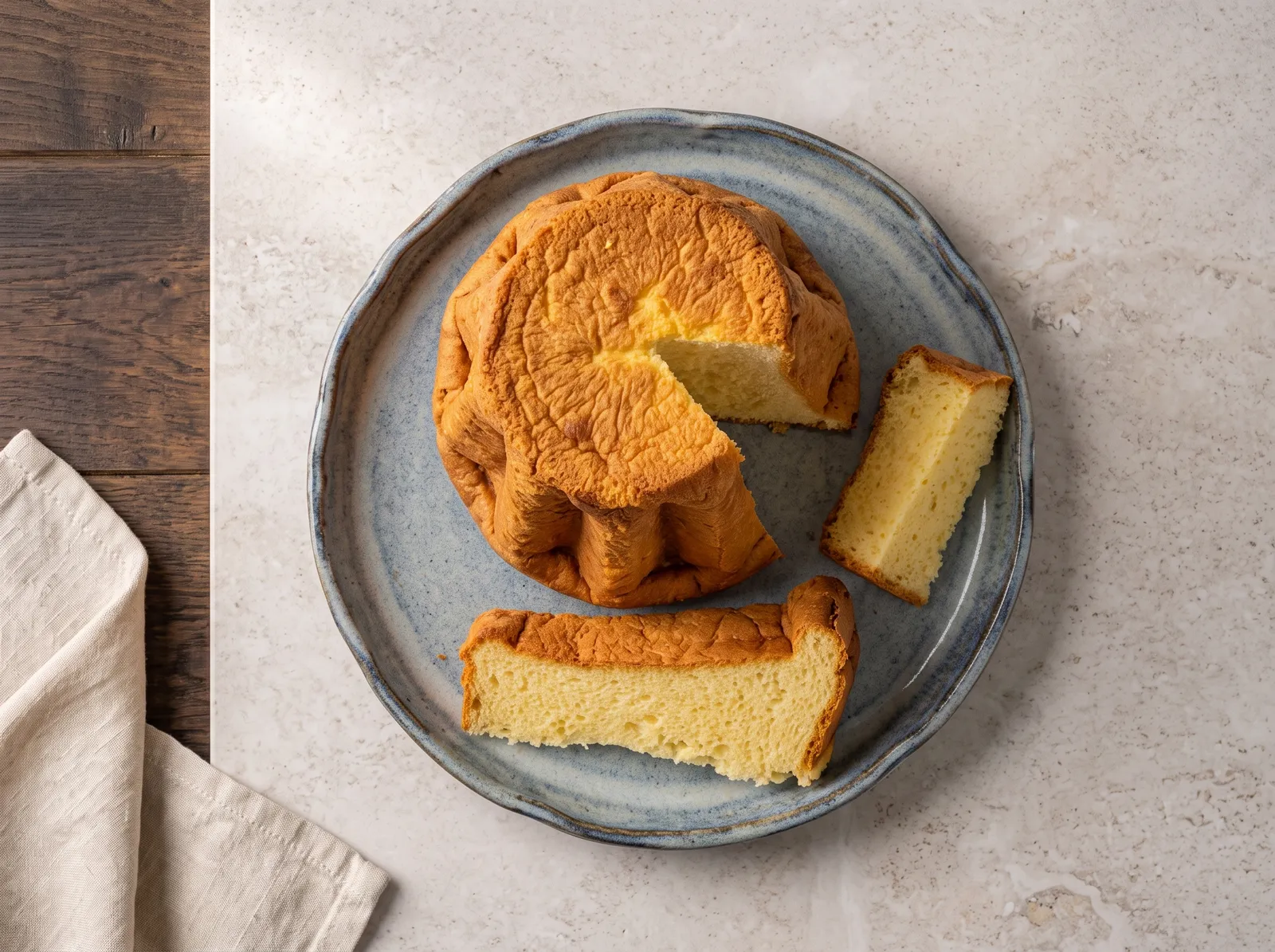
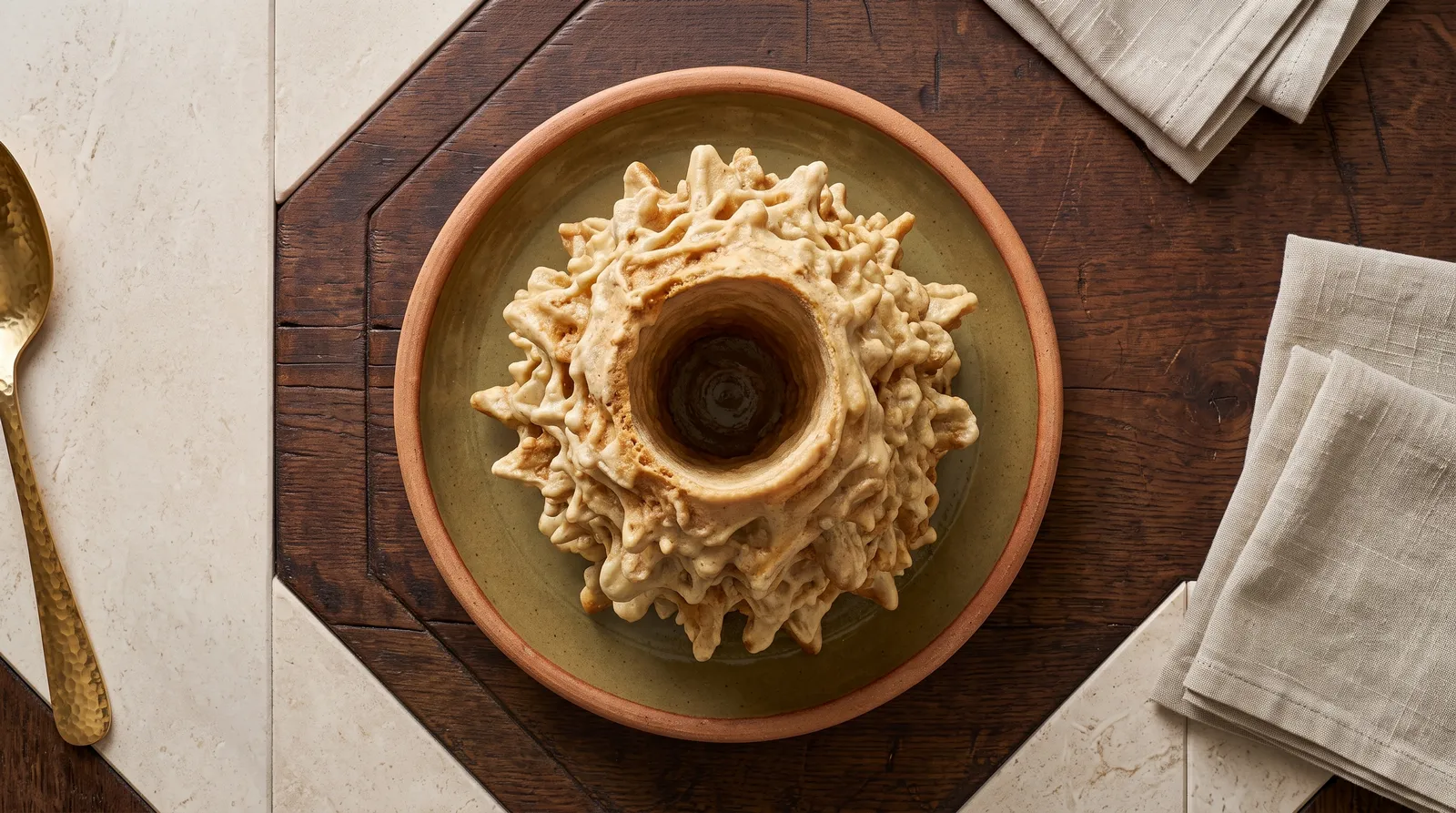
Gâteau à la broche — served on a plate
Prep 60 minutes
Cook 100 minutes
Total 250 minutes
Yield 1 conical spit cake, about 1.8 kg edible, 20 slices
About the dish

Gâteau à la broche — Pyrenean rotating-spit cake

Gâteau à la broche is defined by its method as much as by its batter. The cake forms on a conical spit that turns continuously while successive ladles of batter set in front of radiant heat. Excess batter drips away and the layers build outward into the characteristic ridges and points. An ordinary ring, Bundt or oven cake cannot reproduce that structure and is not treated as the same technique here.

This household-scale interpretation still requires purpose-built food-safe cake-spit equipment: a cone about 45 cm long, a stable drive at roughly 35 rpm, a catch tray and a controlled wood fire at a safe working distance. The batter is rich in eggs, butter and sugar, with flour, a little baking powder and rum. It rests before layering so its consistency is stable enough to coat the turning cone rather than slide off in sheets.

Open flame makes this an advanced operation, not an improvisation for an indoor kitchen. Use a legal outdoor setup or a professionally vented designated hearth, keep the base non-combustible and stable, wear fitted clothing and heat-resistant gloves, keep children away, use no accelerants, and have water or an extinguisher immediately available. Each layer must set before the next is added, and the finished cake must reach about 96 °C at its thickest edible section with no wet batter.
Success points

Success points

  • Keep the cone rotating continuously and without wobble.
  • Apply a modest ladleful at a time and wait until that layer sets before adding more.
  • Control radiant heat rather than chasing a large flame.
  • Finish by temperature and skewer, not surface colour alone.
  • Weigh the finished edible cake after drips and bowl residue are excluded.
Ingredients

Ingredients

  • 500 g plain wheat flour — sifted
  • 500 g caster sugar
  • 500 g unsalted butter — melted and cooled until warm, not hot
  • 600 g whole eggs — about 12 large eggs, separated
  • 10 g baking powder
  • 3 g fine salt
  • 15 ml dark rum
Method

Method

Set up and batter

  1. Set up the specialist spit and legal fire area. Install the purpose-built spit on a stable non-combustible base in a legal outdoor or professionally vented designated hearth. Wrap the 45 cm food-safe cone smoothly in baking parchment secured with food-safe cotton twine, fit the catch tray and test continuous rotation at about 35 rpm. The 45 cm food-safe cone is firmly mounted, wrapped smoothly with baking parchment secured by food-safe cotton twine, and rotates without wobble at about 35 rpm. Stable alignment is essential because the cake is built layer by layer while rotating. Use only purpose-built equipment on a stable non-combustible base outdoors or in a professionally vented designated hearth; no improvised indoor appliance.

  2. Mix the batter and rest it. Separate the 600 g eggs. Beat the yolks with the 500 g sugar, work in the 500 g sifted flour, 10 g baking powder, 3 g salt, 500 g melted-but-warm butter and 15 ml rum, then fold in the whipped whites. Leave the batter for the full 60-minute rest. The batter falls from the ladle in a thick continuous ribbon and the folded egg whites remain evenly distributed without dry flour. A cohesive, aerated batter sets into distinct layers instead of sliding immediately from the cone. Keep melted butter warm rather than hot so it does not cook the eggs; keep raw batter away from ready-to-eat food.

Fire and layering

  1. Prepare and stabilise the wood fire. Build a controlled hardwood fire without accelerants and wait about 20 minutes for a stable bed of glowing embers. Keep water or an extinguisher within reach, wear fitted clothing and heat-resistant gloves, and keep children away from the working zone. The fire has a stable bed of glowing embers with no accelerant flame-up, and the rotating cone can remain about 35–45 cm from the radiant heat without scorching parchment. Stable radiant heat gives each thin layer time to set before the next ladle is added. Check local fire restrictions and dry-weather conditions; use no accelerants, keep children away, wear fitted clothing and heat-resistant gloves, and keep water or an extinguisher beside the cook.

  2. Build the cake in successive rotating layers. Start the spit and ladle a modest ribbon of batter over the rotating cone. Let it set and colour before adding the next ladle; repeat continuously for about 70 minutes, adjusting the cone within roughly 35–45 cm of the radiant heat as needed. Keep the radiant surface zone at about 180–220 °C while the spit turns. Each new layer is set and golden before the next is added, and the accumulated drips create characteristic pointed ridges rather than a smooth shell. Waiting for each layer to set is what creates the visible stratification and projecting points. Never leave the rotating spit or open flame unattended; keep hands and loose clothing clear of the mechanism and fire.

  3. Finish cooking the thickest section. After the last layer, keep the spit rotating in slightly gentler heat for about 10 minutes. Probe the thickest lower edible section without touching the metal cone and continue until it reaches 96 °C. The thickest lower section reaches 96 °C, a clean skewer shows no wet batter, and there is no raw-flour taste. The final hold finishes the interior after the outer layering is complete. Verify internal temperature away from the metal cone and keep rotating to prevent scorching.

Remove and cool

  1. Remove the cake safely and cool completely. With heat-resistant gloves, move the spit to its stable stand. Let the cake firm before sliding it from the cone, then cool it completely for at least 30 minutes before slicing; extinguish and secure the fire fully. The cake is firm enough to slide from the cone without collapsing, then cools completely before slicing. Cooling sets the butter-rich layers and reduces breakage during removal. Extinguish and secure the fire fully before leaving the area; the cone and fittings remain dangerously hot.

Serving, storage and make-ahead

Practical

Serving, storage and make-ahead

If batter sheets off the cone, the preceding layer was not set or the batter is too warm; wait longer and stabilise heat.

Serving, storage and make-ahead

If the tips scorch while the body remains pale, move the spit slightly farther from the radiant zone while maintaining continuous rotation.

Nutrition per serving

Nutrition per serving

  • Serving sizeabout 90 g slice (1/20 of finished cake)
  • Calories365 kcal
  • Carbohydrate39 g
  • Protein5.8 g
  • Fat20.6 g
  • Fibre0.6 g
  • Sodium139 mg
Allergens and food safety

Allergens and food safety

Allergens: Gluten (wheat); Milk; Egg.

This is an open-flame specialist operation, never an improvised indoor technique.

Use a legal outdoor or professionally vented designated hearth on a stable non-combustible base; check fire restrictions and weather, use no accelerants, keep children away, wear fitted clothing and heat-resistant gloves, and keep water or an extinguisher beside the cook.

Do not leave the fire or rotating spit unattended.

Cook until the thickest edible section reaches 96 °C and a skewer shows no wet batter.

Rum alcohol may remain after cooking.

Closing

Closing

  • Result: A specialist Pyrenean and Aveyronnais cake built by repeatedly ladling egg-and-butter batter over a continuously rotating conical spit in front of radiant heat.
  • Decisive technique: Keep the cone rotating continuously and without wobble.