Fouace angevine (fouée): hollow Anjou bread pockets
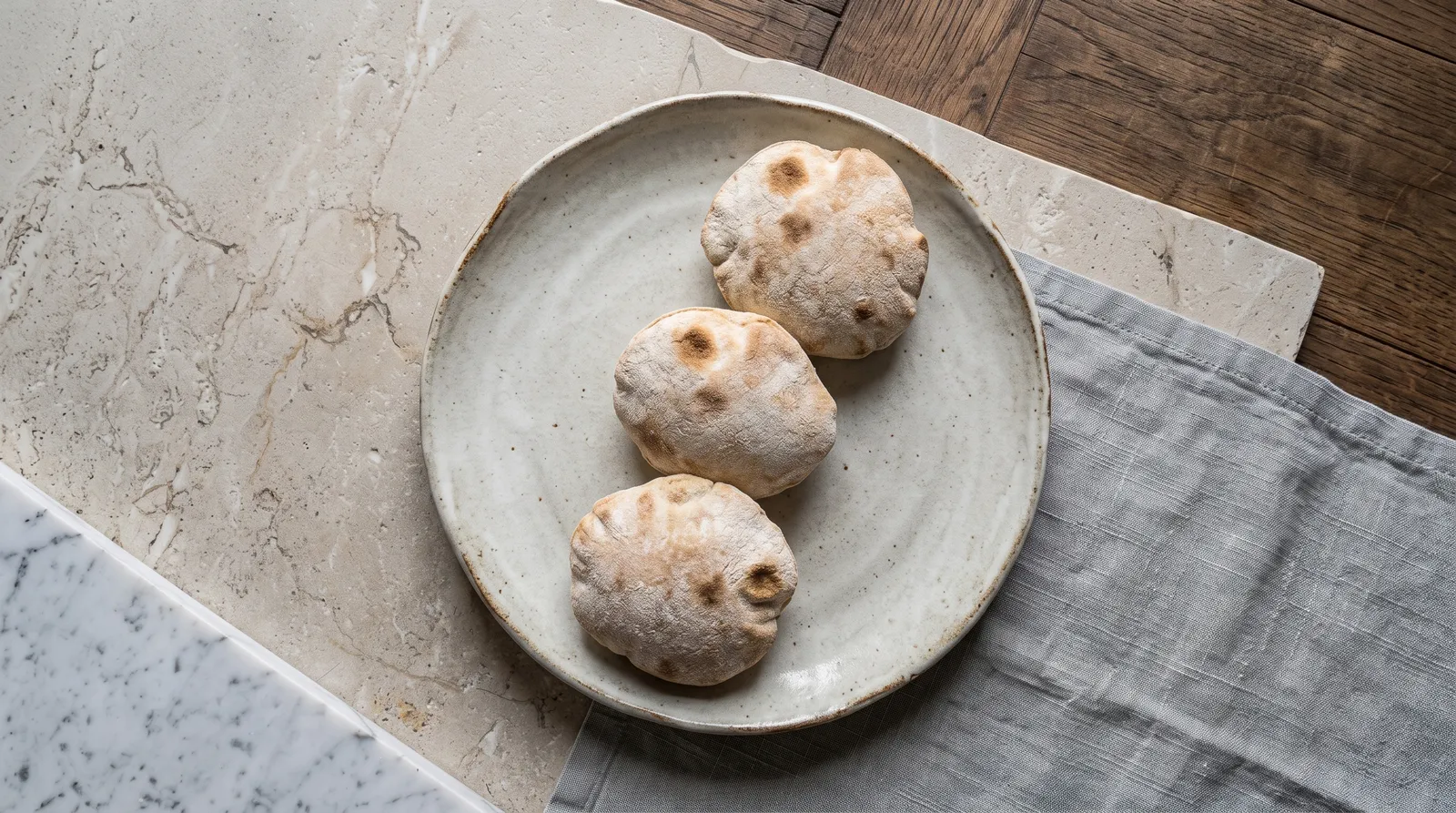
In the Saumurois and wider Anjou context, the fouée is a small bread whose identity depends less on enrichment than on heat. A lean dough of flour, water, yeast and salt is rolled into thin discs and sent onto a fiercely hot baking surface. Steam expands before the crust sets, lifting the two faces apart and creating the hollow centre that makes the bread suitable for filling.
That pocket distinguishes this bread from the sweet enriched fouace of Rouergue and from the orange-blossom fougasse of Aigues-Mortes. The domestic method therefore protects the features that matter most: strong dough, moderate hydration, two controlled rests, a disc close to 1 cm thick, and a baking steel that has been thoroughly heated before the first batch enters.
The fouées are intentionally plain in the nutrition calculation. Butter, rillettes, mogettes, mushrooms and goat cheese are useful regional serving ideas, but they are optional and can vary enormously in weight. Keeping them outside the measured formula makes the 12-piece yield and the bread nutrition transparent.