French Recipes

Éclade de moules

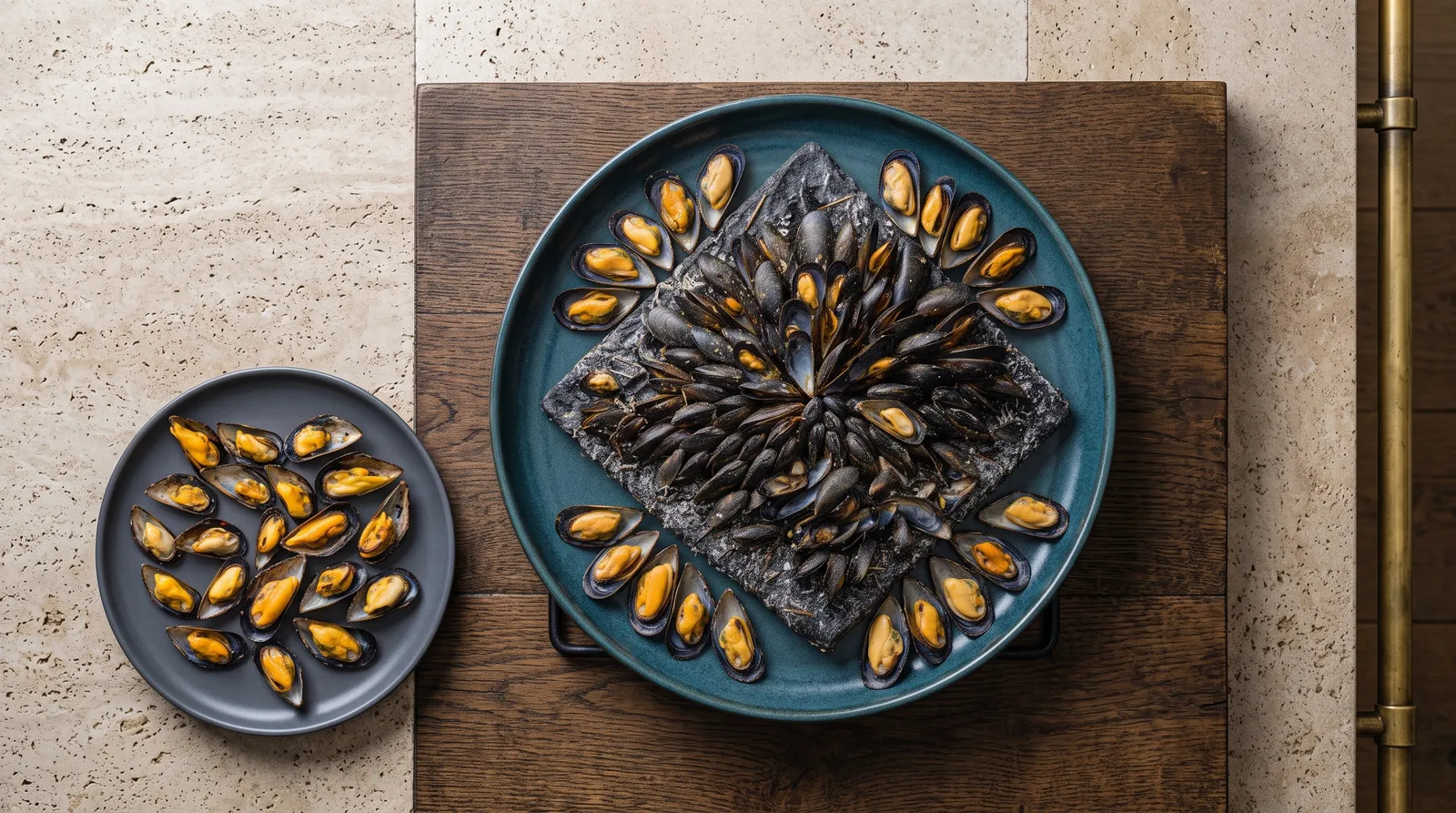
Live mussels are packed upright on an untreated board, buried beneath dry pine needles and cooked outdoors by a brief open fire, then opened shells are served immediately once the ash is safely cleared.

French Recipes
Share
Éclade de moules — shown on a grill
Prep 45 minutes
Cook 7 minutes
Total 55 minutes
Yield 4 portions from 2 kg live mussels
Introduction and overview

Éclade de moules: Oléron-style mussels cooked under burning pine needles

Éclade de moules is inseparable from its outdoor method. On the Charente-Maritime coast, especially around Île d’Oléron and Royan, mussels are arranged tightly on a wooden board and covered with dry pine needles that are burned over them. That short, intense fire is not a decorative flourish around ordinary steamed mussels; it is the technique that gives an éclade its characteristic setting and soot-darkened shells.

Live-shellfish control begins before the fire. The mussels must come from an authorized monitored commercial source, stay cold and alive, and be scrubbed and debearded. Cracked shells are discarded, as is any open mussel that does not close when tapped. After cooking, any mussel that remains closed is discarded. Those checks do not replace harvest-area controls: ordinary cooking does not reliably destroy marine biotoxins.

The fire is treated exactly as an open outdoor flame. The board sits on a legal non-combustible site clear of buildings, vegetation, children and overhangs. A 10–15 cm layer of dry needles covers the shells; no accelerant is used. Water or a suitable extinguisher stays beside the cook from ignition until the final ash is soaked, stirred and cold. If wind or a local fire restriction makes that impossible, the correct action is not to improvise indoors but to cancel the éclade.
Success points

Success points

  • Arrange the mussels hinge-up in a dense spiral so the shells support one another as the needles burn down.
  • Use clean, untreated dry pine needles and spread the full 3 kg evenly rather than building isolated mounds.
  • Prepare the clean serving tray before lighting the fire so cooked shells never return to the raw-shellfish surface.
Ingredients

Ingredients

Edible ingredient

  • 2000 g live mussels, shell-on; traceable from an authorized monitored commercial source — Expected cooked edible meat yield about 450 g after discarding shells and any mussels that fail safety checks.

Cooking fuel, not food

  • 3000 g dry untreated pine needles, clean, dry outdoor fuel; approximately a 10–15 cm layer over the arranged mussels — Do not use treated wood, resinous accelerants or chemical fire starters.
Method

Method

Shellfish preparation

  1. Check and clean the live mussels. Keep the mussels cold and alive, scrub the shells and remove beards; discard cracked shells and any open mussel that does not close when tapped. Use Colander, stiff brush and cold running water. Work under cold conditions. Allow 15 minutes. Target 4 °C. The mussels retained for cooking have intact shells, smell clean and marine, and any mussel that was open has closed when tapped. Pre-cook sorting removes visibly dead or damaged shellfish. Use only traceable mussels from an authorized monitored commercial source; marine biotoxins are controlled at source because ordinary cooking does not reliably destroy them.

  2. Arrange the mussels tightly. Set an untreated heat-safe hardwood board on bare mineral ground or another legal non-combustible outdoor surface; use four clean steel nails as a centre guide and arrange the mussels hinge-up in a tight spiral so they support one another. Use 60 × 60 cm untreated hardwood board and four clean steel nails. Allow 20 minutes. The board is densely covered by a stable single layer of upright mussels with almost no gaps. A tight arrangement keeps shells from tipping when the pine needles burn down. The site must be outdoors in a legal open area, clear of buildings, dry vegetation, children and overhead cover.

  3. Cover with dry pine needles. Spread all 3 kg dry pine needles evenly over the mussels to form roughly a 10–15 cm layer, keeping long tools, water and an extinguisher beside the cook. Use Long-handled rake or tongs. Allow 10 minutes. No mussel shells are visibly exposed through the even 10–15 cm pine-needle layer. Even fuel depth gives short, intense heating across the whole board. Do not proceed in wind, rain, drought restrictions or any local fire ban; wear nonflammable close-fitting clothing and never cook under a roof or overhang.

Outdoor firing

  1. Ignite without accelerant. Light the dry pine needles from the upwind edge with a long igniter and allow the flame to travel across the board without adding accelerant or leaning over the fire. Use Long igniter and long-handled tools. Work under open outdoor flame conditions. Allow 7 minutes. The pine needles have burned down to a thin layer of grey-black ash, and most mussel shells have opened. The brief intense fire cooks the mussels while giving the characteristic smoky exterior. Keep water or a suitable extinguisher within reach, maintain a clear escape path and never perform this operation indoors or under cover.

  2. Clear ash, sort and extinguish. Use long tools to sweep the ash away, transfer opened mussels to a clean serving tray, discard every mussel that remains closed, then soak and stir the remaining ash until no heat or glowing material remains. Use Long-handled tools, clean tray and water. Work at off heat. Allow 3 minutes cooling. Every served mussel is open, and the remaining ash is fully wet, cold and free of glowing embers before the site is left. Sorting after cooking removes unopened mussels, while complete extinguishing prevents a delayed outdoor fire. Do not handle hot shells with bare hands; keep the clean serving tray separate from the raw-shellfish area.

Practical guidance

Practical

Serving

Once the ash is cleared, serve the opened mussels at once, about one quarter of the edible meat yield per person. The shells will be extremely hot and soot-marked, so proper shellfish tools or gloves make service safer. Bread, butter and wine are personal additions but are not part of the measured food or nutrition calculation here.

Storage, reheating and make-ahead

This is at its best straight from the board. If cooked meat must be saved, remove it from shells, cool promptly and refrigerate at 4 °C or below within two hours for no more than one day. Reheating tends to toughen mussels, so use a gentle reheat rather than exposing them to a second pine-needle fire. Do not pre-cook the mussels. The board and fire-safe site can be prepared in advance, while live mussels remain refrigerated and ventilated until cleaning and arrangement.

Substitutions

- Kitchen steaming or oven cooking: Not identity-preserving. They can cook mussels safely but do not reproduce the defining outdoor pine-needle éclade technique and should not be presented as identical.

Troubleshooting

Troubleshooting

  • Many mussels stay closed after the burn.The pine-needle layer was too thin or uneven, so heat did not reach the board uniformly. Discard every mussel that remains closed after cooking rather than returning it to the fire for later service.
  • Wind lifts burning pine needles.The weather is no longer suitable for a controlled open-flame éclade. Stop immediately and extinguish the fire completely; do not continue the cook in unsafe wind.
Nutrition per serving

Nutrition per serving

  • Serving sizeAbout 110 g cooked mussel meat, one quarter of the estimated edible yield
  • Calories194 kcal
  • Carbohydrate8 g
  • Protein27 g
  • Fat5 g
  • Fibre0 g
  • Sodium415 mg
Allergens and food safety

Allergens and food safety

Allergens: Mollusc

Keep live mussels at 4 °C or below until preparation and use only shellfish from an authorized monitored commercial source.

Discard cracked mussels and any open mussel that does not close when tapped before cooking; discard any mussel that remains closed after cooking.

Ordinary cooking does not reliably destroy marine biotoxins, so harvest-area monitoring and an authorized commercial source remain essential.

Treat the pine-needle cook as an outdoor open-flame operation: no indoor or covered use, no accelerant, no fire restriction, and fully extinguish all ash before leaving.

FAQ

FAQ

Can I make an éclade in the kitchen oven?

An oven can cook mussels, but it does not reproduce the defining outdoor pine-needle fire and should not be presented as the same preparation.

Does the fire make unsafe shellfish safe?

No. Heat can cook the mussel meat, but marine biotoxins are not reliably destroyed by ordinary cooking, which is why monitored commercial sourcing remains essential.

Closing

Closing

  • Open, smoky-edged mussels served hot from the outdoor board after the ash is cleared.
  • Control both halves of the method: monitored live shellfish first, legal open-fire management until every ember is extinguished.