French Recipes

Cassoulet de Castelnaudary

A Castelnaudary-focused cassoulet with soaked lingot beans, homemade poultry-pork broth, duck confit, Toulouse-style sausage, pork, rind and a long 150 °C bake until creamy beneath a deep golden crust.

French Recipes
Share
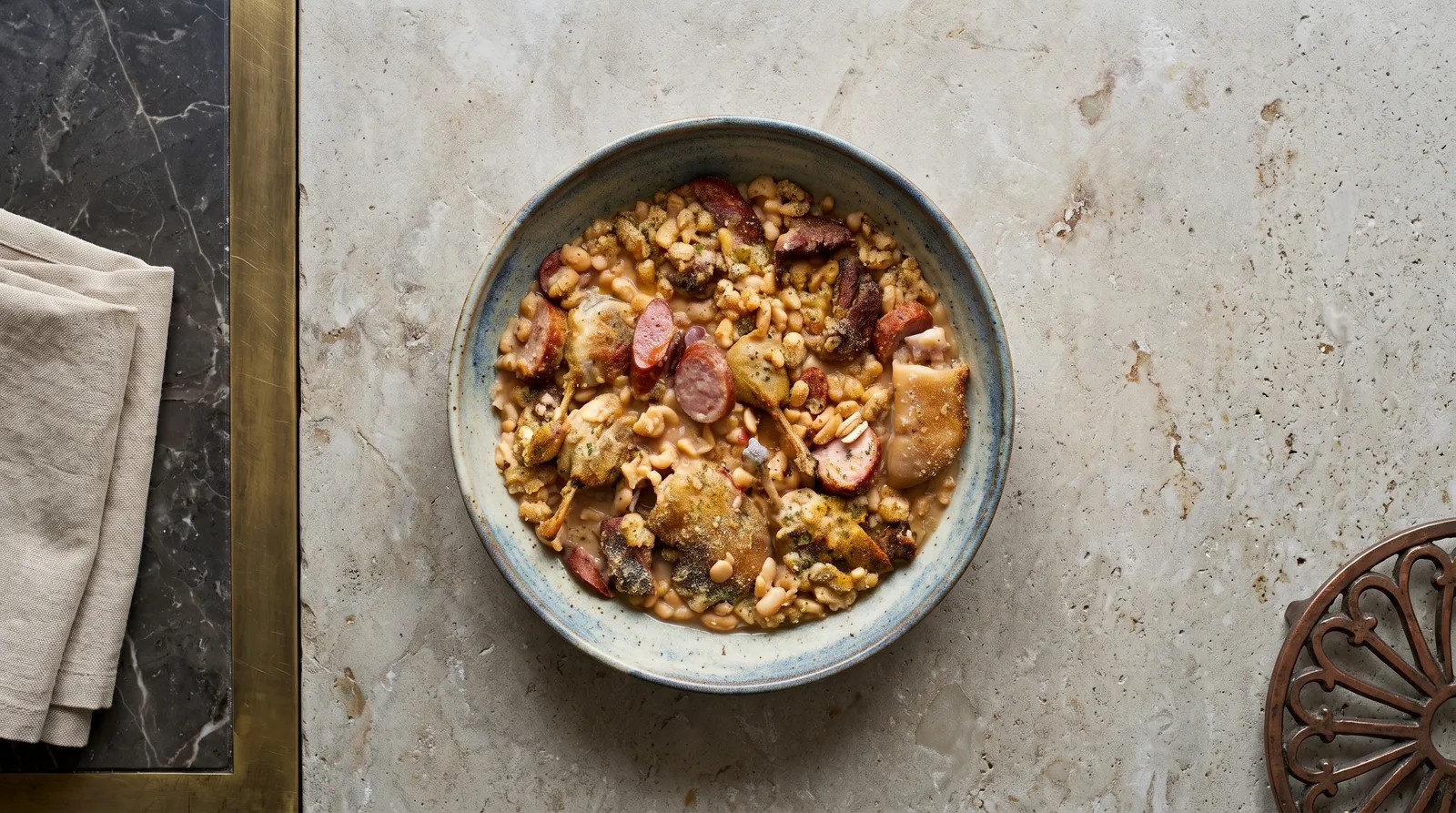
Cassoulet de Castelnaudary — shown in an oven dish
Prep 15 minutes
Cook 287 minutes
Total 1032 minutes
Yield 6 generous main-course portions
Introduction and overview

Cassoulet de Castelnaudary — lingot beans, duck confit, Toulouse sausage and pork

Cassoulet de Castelnaudary is not simply a generic white-bean casserole. Its local identity rests on lingot beans, pork, Toulouse-style sausage, duck or goose confit, rind and broth, traditionally assembled in a deep earthenware cassole. The dish takes time because the beans are soaked, the broth is prepared, the meats are browned and the assembled cassoulet then bakes slowly. That long schedule is part of the technique rather than downtime to hide from the total.

The beans should be creamy inside before assembly but still capable of holding their skins. Pork rind gives gelatin to the broth and lines the base of the cassole, while browned pork and sausage bring roasted flavour. Confit is handled more gently so it keeps recognisable pieces. Hot broth should just reach the beans; the goal is a moist matrix that thickens in the oven, not a soup. Keep some broth in reserve for dry patches during the long bake.

A brown crust will form on top and can be pressed down when it becomes firm. The familiar story about breaking that crust seven times belongs to tradition rather than an exact technical requirement for every home cook. Judge the finished cassoulet by creamy beans, a deeply browned top, steady bubbling and a 74 °C centre. Because this is a dense dish, divide leftovers promptly for cooling and reheat all the way through.

Success points

Success points

  • Soak fully and cook beans until tender but intact before assembly.
  • Brown meats separately.
  • Keep enough hot broth in reserve to prevent drying.
  • Bake slowly until creamy below and well browned above.
Ingredients

Ingredients

Beans and broth

  • 450 g dry lingot beans, preferably Haricot de Castelnaudary IGP when available
  • 5000 ml water, 3000 ml for overnight soaking and 2000 ml for preliminary boiling
  • 500 g poultry carcass or meaty poultry bones
  • 150 g carrot, roughly chopped
  • 150 g onion, roughly chopped
  • 15 g garlic, crushed
  • 3000 ml water for broth
  • 250 g pork rind, 125 g for broth, 125 g for assembly

Meats

  • 500 g duck confit legs, bone-in; about 350 g edible meat and skin after bones
  • 320 g Toulouse-style pure-pork sausage, four 80 g pieces
  • 240 g pork shoulder, four 60 g chunks
  • 80 g cured pork belly, finely chopped
  • 15 g duck fat
  • 2 g fine salt
  • 1 g black pepper
Method

Method

Soak

  1. Soak the beans. Cover the 450 g dry beans with 3000 ml of the listed water and soak overnight. Heat: cold water. Timing: 12 hours passive soaking. Purpose: Long soaking promotes even cooking. The beans are visibly swollen and evenly hydrated. Safety. Keep the soaking bowl in a cool place; refrigerate if the kitchen is warm.

Broth and beans

  1. Make the broth. Simmer the poultry bones, carrot, onion, garlic and 125 g pork rind in 3000 ml water, then strain. Heat: gentle simmer. Timing: 60 minutes. Purpose: A pork-and-poultry broth gives the beans body without relying on commercial stock. The broth is savoury and lightly gelatinous, with the solids exhausted of flavour.

  2. Pre-boil the beans. Drain the soaked beans and boil them in the remaining 2000 ml listed water. Heat: boiling. Timing: 5 minutes. Purpose: A short preliminary boil starts hydration cleanly. Foam rises and the beans are heated through but remain firm.

  3. Cook the beans in broth. Drain again, cover the beans generously with strained hot broth and simmer until tender but intact; reserve the extra broth. Heat: gentle simmer. Timing: 60 minutes. Purpose: The beans need enough tenderness to finish in the oven without disintegrating. The beans are creamy inside but still hold their skins.

Meats and assembly

  1. Brown the meats. Warm the duck fat; brown the pork shoulder and sausage, then warm the confit just enough to loosen excess fat. Heat: medium-high. Timing: 12 minutes. Purpose: Separate browning develops flavour without breaking the confit. The pork and sausage have deep golden surfaces while the confit remains intact.

  2. Build the cassole. Line a deep earthenware cassole or similar ovenproof dish with the reserved 125 g rind; layer beans, pork, confit and sausage, then add chopped salt pork, salt and pepper. Pour in hot broth until it just reaches the beans. Timing: 15 minutes. Purpose: A deep earthenware vessel supports slow, even baking. The meats are distributed through the beans and hot broth comes just to the top layer without flooding it.

Bake

  1. Bake slowly. Bake at 150 °C, pressing the browned surface gently into the beans when a crust becomes firm and adding reserved broth only if the surface starts to dry. Heat: 150 °C oven. Timing: 150 minutes. Purpose: The repeated crust is a texture cue; the saying about breaking it seven times is tradition rather than a required count. The beans are creamy, the top is deep golden-brown and the cassoulet bubbles steadily around the edges. Safety. The centre of the dense dish must reach 74 °C before service.

  2. Rest before serving. Rest the cassoulet off the heat before serving. Timing: 10 minutes passive rest. Purpose: A short rest stabilises the liquid around the beans. The bubbling calms but the cassoulet remains piping hot and spoonable.

Serving

Practical

Serving

Serve very hot directly from the cassole, spooning down through crust, beans and meats without stirring the whole dish together.

Make-ahead

Best made a day ahead after the first full bake; chill promptly, then reheat covered loosely with a little reserved broth before uncovering.

Storage and reheating

Divide into shallow containers if not kept in the cassole, cool promptly and refrigerate at 4 °C or below for up to 3 days. Reheat the dense centre to 74 °C.

Ordinary dry lingot-type white beans.

They can reproduce the cooking structure when IGP beans are unavailable, but they do not carry the Haricot de Castelnaudary IGP identity.

Goose confit for duck confit.

Supported within the regional tradition; flavour and fat character change slightly.

The beans are dry on top before the centre is ready.

Cause: Too little reserved broth was kept for the long bake. Correction: Add a few spoonfuls of hot broth only where the surface is drying.

The beans collapse into paste.

Cause: They were overcooked before assembly or stirred during baking. Correction: Stop the first simmer when the centres are creamy but skins still hold, and do not stir the assembled cassoulet.

Technique in focus

The key is staged preparation: fully hydrate the beans, build a gelatinous broth, brown meats separately, then bake slowly with just enough liquid.

Nutrition per serving

Nutrition per serving

  • Serving size1 of 6 generous portions
  • Calories850 kcal
  • Carbohydrate65 g
  • Protein54 g
  • Fat42 g
  • Fibre17 g
  • Sodium1600 mg
Allergens and food safety

Allergens and food safety

Allergens: No major allergen is inherent in the specified ingredient list; verify packaged ingredient labels where relevant.

Keep soaked beans cool during the long passive period.

Final centre temperature must reach 74 °C.

Cool this dense dish promptly in shallow portions when storing and reheat to 74 °C.

FAQ

FAQ

Must the crust be broken exactly seven times?

No. Press it down when it becomes firm and the surface needs moisture; the seven-crust statement is a traditional saying.

Can ordinary white beans replace Haricot de Castelnaudary IGP?

A similar dry lingot bean can work technically, but it does not carry the protected IGP identity.

Closing

Closing

  • Result: A Castelnaudary-focused cassoulet with soaked lingot beans, homemade poultry-pork broth, duck confit, Toulouse-style sausage, pork, rind and a long 150 °C bake until creamy beneath a deep golden crust.
  • Decisive technique: The key is staged preparation: fully hydrate the beans, build a gelatinous broth, brown meats separately, then bake slowly with just enough liquid.