French Recipes

Carpe à la Chambord

A household-feasible Chambord-style carp that preserves the historic Loire flavour family through carefully boned carp, fish-farce quenelles, mushrooms, crayfish, truffle and a reduced red-wine fumet sauce.

French Recipes
Share
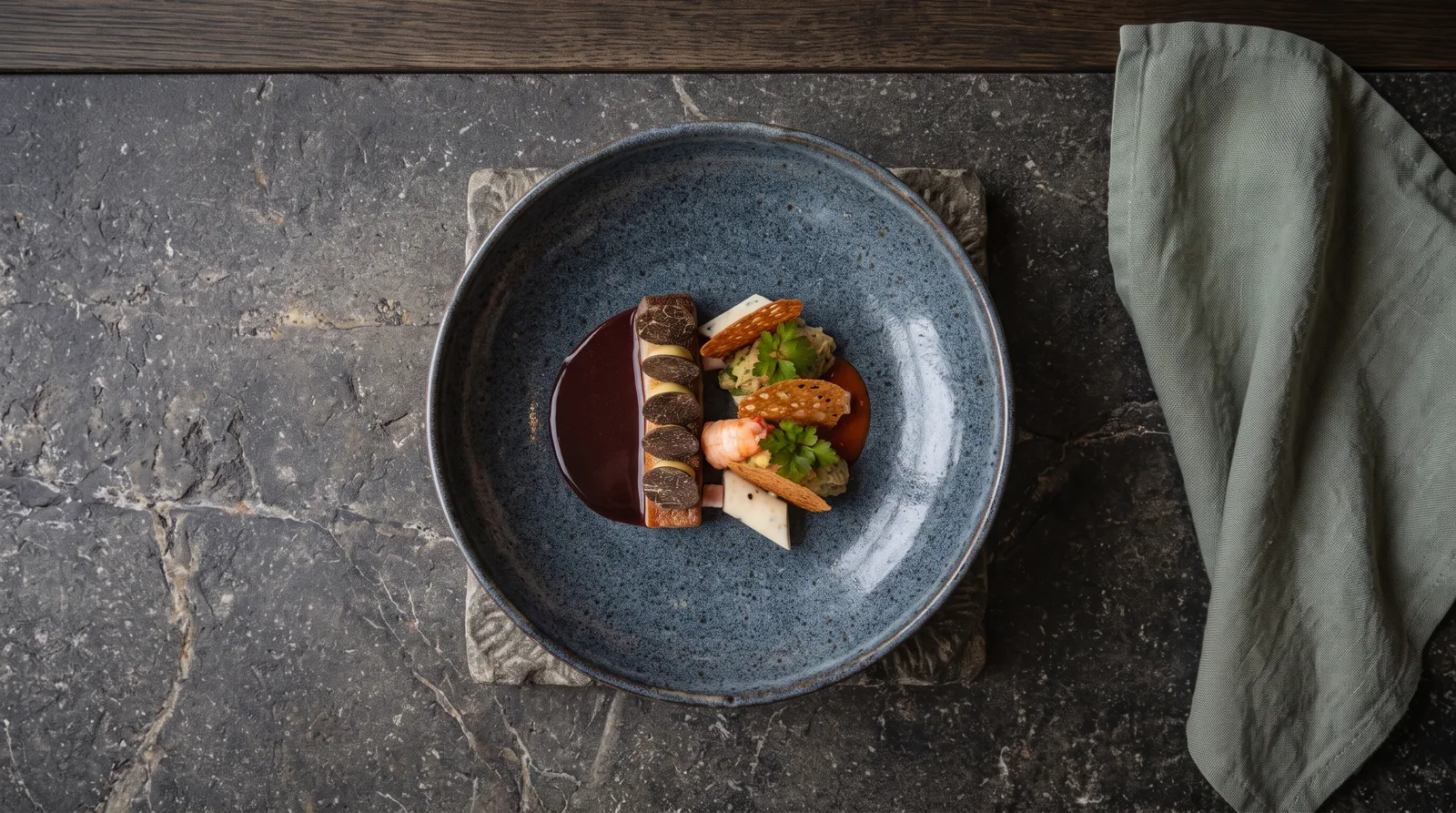
Carpe à la Chambord — served on a plate
Prep 11 minutes
Cook 54 minutes
Total 80 minutes
Yield 4 plated main-course portions
Introduction and overview

Carpe à la Chambord — carp with fish farce, crayfish, truffle and red-wine fumet

Carpe à la Chambord is a historical French preparation associated with the Loire and the culinary world around Chambord. Older forms could be extraordinarily elaborate, incorporating farce, larding and a long list of luxury garnishes. A modern household kitchen can preserve the dish’s recognisable core without pretending to reproduce a banquet formula literally: carp remains central, and fish farce, mushrooms, crayfish, truffle and a wine-based sauce provide the Chambord character.

Carp demands unusually careful bone control. The fillets should arrive at the pan with accessible pin and Y-bones removed, because a refined sauce cannot compensate for an unsafe or unpleasant mouthful. The fish farce is made separately and poached as small quenelles, a practical choice that makes temperature and texture easier to manage. Mushrooms are cooked dry before truffle is added so they contribute savour rather than water to the plate.

The sauce is reduced before the carp goes into the pan: 500 ml red wine cooks with shallot, is reduced by about two-thirds, then receives fish fumet and continues to a lightly saucy consistency over a declared 30-minute wine-cooking stage. The wine is therefore not assumed to be alcohol-free; the nutrition calculation uses the 35% retention factor matched to that 30-minute cooking time. Cook the carp last to 63 °C, then mount the warm sauce with cold butter off the heat and plate within a few minutes. A test quenelle still reaches 74 °C.
Success points

Success points

  • Remove accessible carp bones meticulously.
  • Keep farce ingredients cold and use pasteurized egg white.
  • Cook the carp only to the safe moist endpoint.
  • Reduce the wine before mounting the sauce with butter.
Ingredients

Ingredients

Carp

  • 900 g carp fillets, skin-on, all accessible pin and Y-bones removed
  • 2 g fine salt
  • 1 g black pepper

Fish farce and garnish

  • 250 g lean white-fish fillet, very cold, diced
  • 40 g pasteurized egg white, cold
  • 120 g heavy cream, cold
  • 4 g fine salt
  • 200 g button mushrooms, finely chopped
  • 160 g cooked peeled crayfish tails
  • 20 g black truffle, finely chopped

Wine-fumet sauce

  • 500 ml dry red wine, about 12% ABV
  • 300 ml fish fumet, 120 ml for poaching quenelles, 180 ml for the sauce
  • 80 g shallot, finely chopped
  • 70 g unsalted butter, 40 g for mushrooms and fish, 30 g to finish sauce
Method

Method

Farce

  1. Chill the farce ingredients. Chill the white fish, pasteurized egg white and cream thoroughly before processing. Heat: cold. Timing: 15 minutes passive chilling. Target: 4 °C. Purpose: A cold farce emulsifies more cleanly. The fish, egg white and cream feel refrigerator-cold before blending. Safety. Keep ingredients at 4 °C or below until they are processed.

  2. Make the fish farce. Process the 250 g white fish and 4 g salt until tacky; add the 40 g pasteurized egg white, then stream in the 120 g cream until smooth. Timing: 6 minutes. Purpose: Gradual cream addition limits splitting. The farce is glossy, smooth and holds a soft peak from the spatula. Safety. Use pasteurized egg white and return the farce to refrigeration immediately.

  3. Cook small quenelles. Shape the farce into small spoonfuls and poach them in 120 ml fumet until they reach 74 °C. Heat: gentle simmer. Timing: 6 minutes. Purpose: Cooking the garnish separately makes the household version easier to control. The quenelles are springy, opaque and hold their shape when lifted. Safety. Verify 74 °C in a test quenelle.

Garnish and sauce

  1. Cook the mushrooms. Melt 20 g butter, cook the 200 g mushrooms until their liquid evaporates, then fold in the truffle off heat. Heat: medium. Timing: 8 minutes. Purpose: Dry mushrooms do not water down the finished sauce. The mushrooms are tender and the pan is nearly dry before the truffle is added.

  2. Reduce the wine sauce. Cook the shallot with the 500 ml red wine until the wine is reduced by roughly two-thirds; add the remaining 180 ml fumet and continue simmering until lightly saucy, then cover and keep warm off heat while the carp cooks. Heat: medium. Timing: 30 minutes. Purpose: A full 30-minute reduction/simmer concentrates the wine-fumet base while matching the declared alcohol-retention basis. After the full 30-minute wine-and-fumet cooking stage, the sauce coats the back of a spoon in a thin glossy film.

Carp and assembly

  1. Cook the carp. Season the 900 g boned carp with 2 g salt and pepper; melt 20 g butter and cook skin-side down, then turn briefly, until the thickest portion reaches 63 °C. Heat: medium. Timing: 10 minutes. Purpose: A fillet format makes bone control and doneness practical at home. The carp is opaque through the centre and flakes in moist, large pieces. Safety. Check 63 °C with a clean thermometer; confirm no accessible pin bones remain before service.

  2. Finish and plate. As soon as the carp reaches 63 °C, whisk the remaining 30 g cold butter into the warm reduced sauce off heat, then arrange the carp with quenelles, mushrooms, crayfish tails and sauce within about 5 minutes. Timing: 5 minutes. Purpose: Finishing off heat protects the butter emulsion. The sauce is glossy and emulsified, and the carp reaches the plate within a few minutes of leaving the pan. Safety. Serve immediately; keep cooked fish and crayfish out of the temperature danger zone.

Serving

Practical

Serving

Serve immediately on warm plates, keeping the carp central and using the garnishes in modest proportions.

Make-ahead

The mushroom garnish and wine reduction may be prepared ahead and chilled; cook carp and mount the sauce just before serving.

Storage and reheating

Refrigerate cooked components at 4 °C or below for no more than 2 days. Reheat leftovers to 74 °C, although the fish and mounted sauce are best freshly cooked.

Cultivated black truffle product of known composition.

It may be more practical than fresh truffle but changes aroma intensity; do not claim an identical result.

The farce splits.

Cause: The ingredients warmed during processing or the cream was added too quickly. Correction: Keep everything cold and add cream gradually.

The sauce looks greasy.

Cause: Butter was whisked in while the sauce was still boiling. Correction: Take the pan off the heat before mounting with cold butter.

Technique in focus

Bone control, cold farce technique and a properly reduced wine-fumet sauce matter more than reproducing every historical garnish.

Nutrition per serving

Nutrition per serving

  • Serving size1 of 4 equal plated portions
  • Calories690 kcal
  • Carbohydrate9 g
  • Protein64 g
  • Fat40 g
  • Fibre2 g
  • Sodium750 mg
Allergens and food safety

Allergens and food safety

Allergens: Fish; Crustaceans; Egg; Milk; Sulphites from red wine.

Use pasteurized egg white in the lightly handled fish farce.

Keep raw fish and farce at 4 °C or below.

Cook carp to 63 °C and test quenelles to 74 °C.

Cool leftovers promptly and reheat to 74 °C.

Red wine is reduced but the finished dish should not be described as alcohol-free.

FAQ

FAQ

Is this an exact eighteenth-century reconstruction?

No. It is a practical interpretation built from recurrent Chambord elements, not a claim of literal historical equivalence.

Why use fillets rather than a whole stuffed carp?

Fillets make Y-bone removal and thermometer control more realistic in a home kitchen while retaining carp as the defining fish.

Closing

Closing

  • Result: A household-feasible Chambord-style carp that preserves the historic Loire flavour family through carefully boned carp, fish-farce quenelles, mushrooms, crayfish, truffle and a reduced red-wine fumet sauce.
  • Decisive technique: Bone control, cold farce technique and a properly reduced wine-fumet sauce matter more than reproducing every historical garnish.