French Recipes

Canistrelli

Crisp Corsican biscuits made with olive oil, dry white wine and lemon zest, mixed minimally and baked in descending heat so the centres dry without excessive browning.

French Recipes
Share
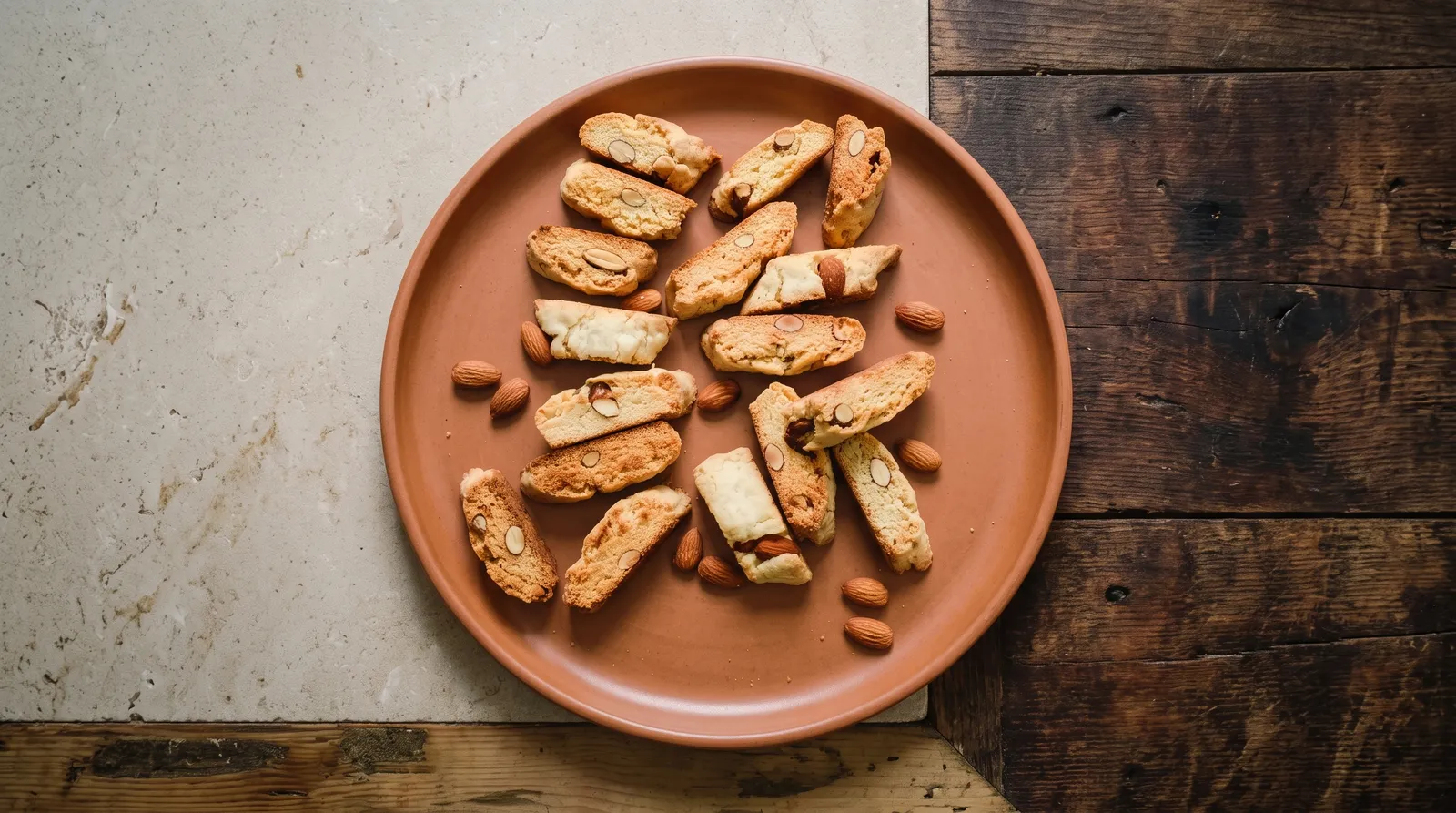
Canistrelli — resting on baking parchment
Prep 20 minutes
Cook 35 minutes
Total 100 minutes
Yield 30 crisp canistrelli
Introduction and overview

Corsican lemon canistrelli with olive oil and dry white wine

Canistrelli are Corsican dry biscuits, but there is no need to force every recognised flavour into one dough. Anise, citrus and nut versions all exist. The flavour here is kept to lemon zest with olive oil and dry white wine. Keeping that boundary makes the flavour coherent and avoids a generic “everything Corsican” biscuit.

The dough contains no butter or egg. Flour, sugar, baking powder, salt and lemon zest are combined first; olive oil and wine then provide the liquid and fat. Mix only until the dough becomes cohesive. Long kneading develops gluten and makes the finished biscuit hard in the wrong way. Roll to a consistent 10 mm thickness so all thirty pieces dry at a similar rate.

The oven schedule separates setting, browning and drying. Ten minutes at 180 °C starts colour and lift, fifteen minutes at 150 °C dries the centre more gently, and a final short period at 120 °C pushes out residual moisture without scorching the sugar. The biscuits become fully crisp only after cooling, so judge the final texture when they are cold, then seal them airtight.
Success points

Success points

  • Keep one flavour direction; use lemon here rather than combining lemon, anise and nuts.
  • Mix minimally once oil and wine are added.
  • Roll every piece close to 10 mm thick.
  • Cool completely before judging crispness or sealing the tin.
Ingredients

Ingredients

Dough

  • 500 g plain wheat flour.
  • 150 g granulated sugar.
  • 12 g baking powder.
  • 2 g fine salt.
  • 130 ml extra-virgin olive oil.
  • 150 ml dry white wine, labelled as containing sulphites.
  • 5 g finely grated lemon zest, from about 1 unwaxed lemon.
Method

Method

Mix and shape

  1. Combine the dry ingredients. Combine the flour, sugar, baking powder, salt and lemon zest evenly in a wide bowl. Time: 5 minutes. The dry mixture is evenly speckled with lemon zest and contains no pockets of baking powder. Even distribution prevents bitter chemical pockets.

  2. Mix the wine-oil dough. Pour in the olive oil and wine and mix only until a cohesive dough forms. Time: 5 minutes. The dough is cohesive and pliable but not smooth from prolonged kneading. Minimal mixing limits gluten development and keeps the biscuit short rather than tough.

  3. Roll and cut evenly. Roll the dough to an even 10 mm thickness and cut 30 small rectangles or diamonds; divide them between two lined trays. Time: 10 minutes. Every piece is close to 10 mm thick so the batch dries at an even rate. Consistent thickness is more important than perfectly identical outlines.

Bake, dry and cool

  1. Set the biscuits at high heat. Bake the trays until the biscuits are set and beginning to colour. Target: 180 °C. Time: 10 minutes. The edges are lightly golden and the biscuits feel set enough to lift. The hotter first phase sets shape and starts browning.

  2. Dry at lower heat. Lower the oven and continue baking to dry the centres without deepening the colour too far. Target: 150 °C. Time: 15 minutes. The biscuits are firm, pale-golden to golden and no longer feel soft at the centre when gently pressed. The lower second phase removes moisture for a crisper finish.

  3. Finish the drying phase. Turn the oven down further and leave the biscuits for a short final drying period. Target: 120 °C. Time: 10 minutes. The biscuits feel dry at the edges and sound faintly hollow when tapped together. A gentle final dry reduces residual moisture without scorching the sugar.

  4. Cool to a crisp finish. Transfer the biscuits to wire racks and cool completely before sealing in a container. Time: 45 minutes passive cooling. The cooled canistrelli break cleanly and are crisp throughout. Their final crispness develops as steam escapes during cooling.

Serving and storage

Practical

Serving and storage

Serve canistrelli fully cooled, when they snap rather than bend. Two biscuits make a sensible serving with coffee, tea or fruit. Store in an airtight tin at cool room temperature for up to two weeks. If they soften from humidity, refresh for five minutes at 140 °C and cool completely before resealing.

Wine and flavour substitutions

The dry white wine is part of the dough and remains an alcoholic ingredient even though baking reduces alcohol. A documented anise version can be made by replacing the lemon direction with anise, but combining flavour variants indiscriminately is unnecessary. Keep the flour-oil-wine balance stable when changing only the flavouring.

Nutrition per serving

Nutrition per serving

  • Serving size2 canistrelli
  • Calories235 kcal
  • Carbohydrate36 g
  • Protein3.5 g
  • Fat8 g
  • Fibre1 g
  • Sodium140 mg
Allergens and food safety

Allergens and food safety

Allergens: Wheat/gluten; Sulphites (specified dry white wine). Food safety: The wine is an alcoholic ingredient; baking reduces alcohol but should not be described as guaranteed to remove all of it. Cool completely before airtight storage to prevent trapped moisture and mould growth.

FAQ

FAQ

Why not knead until smooth?

A smooth, heavily worked dough develops more gluten and can turn a crisp biscuit into a tough one.

When are the biscuits truly crisp?

They firm during cooling. The correct endpoint is a clean snap once fully cool, not maximum hardness straight from the oven.

Closing

Closing

  • Result: dry, crisp lemon-scented biscuits with a clean snap and gentle olive-oil richness.
  • Decisive technique: mix minimally and use descending oven temperatures to dry the centre without over-browning the surface.