French National Dishes

Carbonade flamande

A Flemish and Northern French beef stew with dark beer, slowly developed onions and mustard-coated pain d’épices that dissolves into the sauce during a long covered braise.

French National Dishes
Share
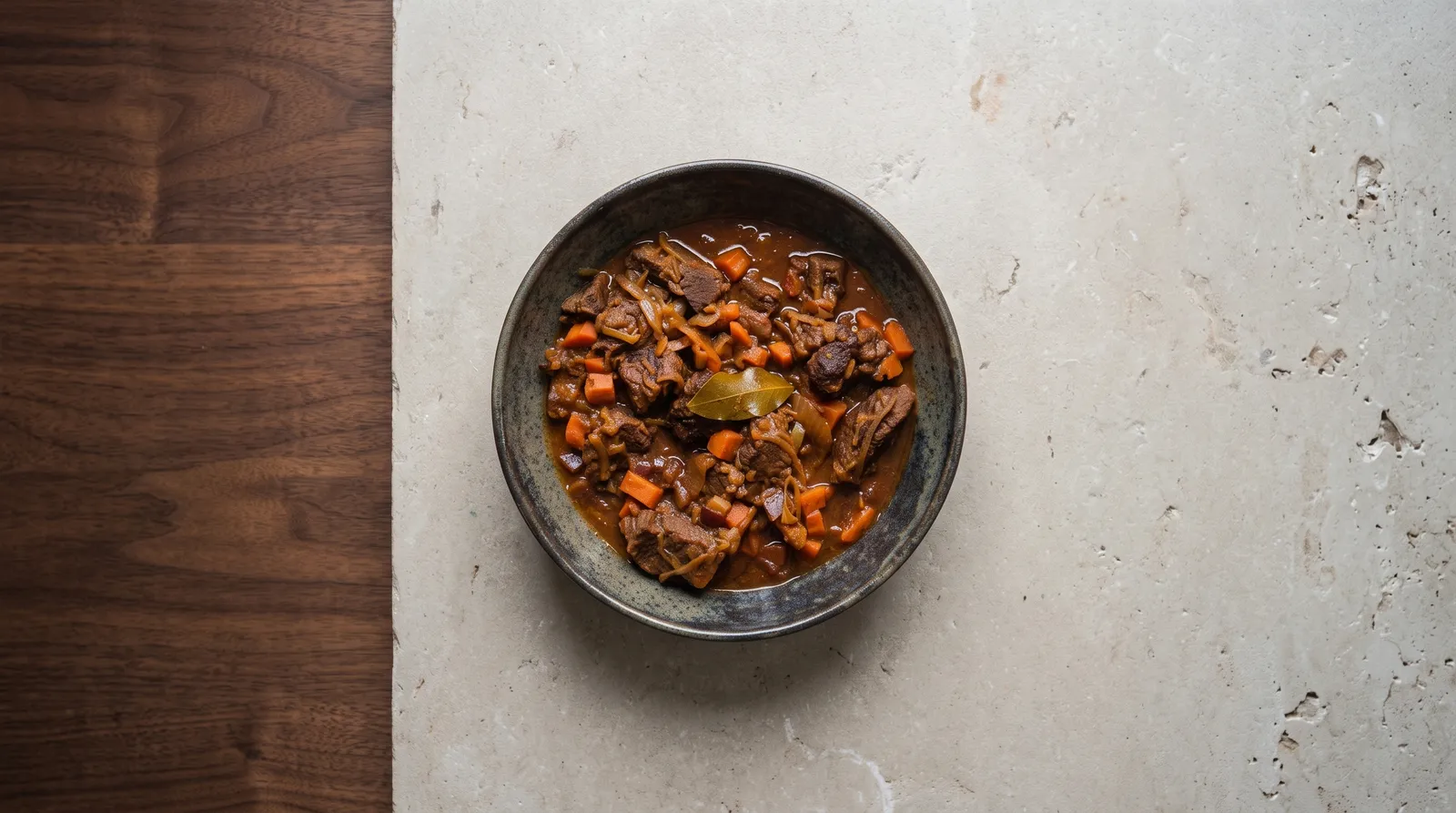
Carbonade flamande — shown in a cooking pot
Prep 25 minutes
Cook 190 minutes
Total 215 minutes
Yield 6 generous main-course servings
Introduction and overview

Carbonade flamande with dark beer, onions and mustard pain d’épices

Carbonade flamande belongs to a cross-border Flemish food tradition and is also deeply established in Northern France. In the Hauts-de-France style used here, beef replaces the wine logic of bourguignon with dark beer, onions and a sweet-acid balance from vergeoise and wine vinegar. Mustard-coated pain d’épices sits on top of the braise and gradually dissolves, seasoning and thickening the sauce as the beef becomes tender.

Browning is deliberately done in batches. Crowding 1.2 kg of beef into one pot drops the temperature and produces grey steamed meat instead of a useful fond. Once the beef is out, the onions cook more slowly until collapsed and lightly golden. Vergeoise melts into them for two minutes, vinegar lifts the caramelised base, and only then do the beef and dark beer return to the casserole.

The covered braise lasts about two and a half hours at a very gentle simmer. That time is not just about food safety; it is needed to convert collagen in chuck or blade into tenderness. The stew is ready when a fork enters the beef with little resistance and the pain d’épices has disappeared into a glossy sauce. Beer alcohol is reduced during long cooking, but complete removal should not be promised, and both barley/gluten and mustard remain relevant allergens.
Success points

Success points

  • Brown beef in two batches instead of crowding the casserole.
  • Give the onions time to soften and sweeten before beer is added.
  • Lay mustard-coated pain d’épices on top and let it dissolve naturally.
  • Keep the long braise gentle and covered until the beef yields to a fork.
Ingredients

Ingredients

Carbonade

  • 1200 g beef chuck or blade, trimmed and cut into 5 cm cubes.
  • 450 g onions, thinly sliced.
  • 25 g unsalted butter.
  • 15 g dark brown vergeoise sugar.
  • 20 ml red wine vinegar.
  • 500 ml dark beer, barley-based.
  • 100 g pain d’épices, slightly stale, sliced.
  • 20 g strong Dijon mustard.
  • 8 g fine salt.
  • 2 g black pepper.
  • 2 g bay leaves, about 2 dried leaves.
Method

Method

Build the base

  1. Brown the beef in batches. Season the beef with the salt and pepper, then brown it in two batches in half the butter; transfer each batch to a plate. Time: 15 minutes. The beef has browned faces and the casserole has a dark fond without burnt black patches. Working in batches keeps the pot hot enough to brown instead of steam.

  2. Develop the onions. Add the remaining butter and cook the onions slowly until soft and lightly golden. Time: 15 minutes. The onions are collapsed, soft and lightly golden, not crisp or scorched. Long onion development supplies sweetness and body.

  3. Balance sugar and vinegar. Sprinkle over the vergeoise, cook briefly to dissolve and darken it, then deglaze with the vinegar. Time: 2 minutes. The sugar has melted into the onions and the sharp vinegar steam has subsided. Sweetness and acidity balance the bitter malt of the beer.

  4. Add the dark beer. Return the beef, add the dark beer and bay leaves and bring just to the first simmer. Time: 5 minutes. The beer reaches a gentle simmer and the beef is mostly surrounded by liquid. Starting the braise at a controlled simmer prevents toughening from violent boiling.

Thicken and braise

  1. Braise under the mustard bread. Spread the mustard over the pain d’épices and lay the slices mustard-side down on top of the beef; cover and braise very gently. Target: about 95 °C. Time: 150 minutes. The beef yields easily to a fork and the bread has dissolved into a glossy, spoon-coating sauce. The spiced bread gradually thickens and sweetens the beer sauce while collagen softens. Keep the stew at a gentle simmer and handle the hot heavy casserole carefully.

  2. Adjust the final sauce. Remove the lid, stir thoroughly, discard the bay leaves and simmer briefly only if the sauce still needs concentration. Time: 3 minutes. The sauce coats the beef in a glossy layer without tasting floury or watery. A brief uncovered finish adjusts body without drying the meat.

Serving, make-ahead and storage

Practical

Serving, make-ahead and storage

Serve carbonade hot with fries, boiled potatoes or mash. The stew is well suited to being made a day ahead because the sauce settles and the beef reheats gently. Cool it within two hours, refrigerate at 4 °C or below, and use within three to four days. Reheat to 74 °C throughout; add only a small splash of water if the sauce has tightened excessively.

Substitutions and alcohol

A malt-forward dark beer with moderate bitterness is important to the balance. A very bitter beer can dominate after a long reduction. Plain stale bread can thicken the stew if pain d’épices is unavailable, but the gentle spice and sweetness disappear, so the flavour is no longer the same. The beer remains an alcoholic ingredient even after extended braising.

Nutrition per serving

Nutrition per serving

  • Serving sizeabout 300 g carbonade
  • Calories645 kcal
  • Carbohydrate24 g
  • Protein43 g
  • Fat42 g
  • Fibre2 g
  • Sodium760 mg
Allergens and food safety

Allergens and food safety

Allergens: Wheat/gluten (pain d’épices); Barley/gluten (dark beer); Mustard. Food safety: Raw beef must be kept refrigerated and separate from ready-to-eat foods. Cool the cooked stew promptly and refrigerate within 2 hours at 4 °C or below. Reheat leftovers to 74 °C. Alcohol reduces during the long braise but should not be described as completely eliminated.

FAQ

FAQ

Why use pain d’épices with mustard?

It dissolves into the braise, giving the beer sauce both body and a restrained spiced sweetness while the mustard adds sharpness.

Can the stew be boiled hard to finish faster?

No. A hard boil can toughen exposed meat and evaporate liquid before collagen has time to soften; a gentle long simmer is the correct control.

Closing

Closing

  • Result: fork-tender beef coated in a glossy, dark beer sauce with onion sweetness, mustard sharpness and the quiet spice of pain d’épices.
  • Decisive technique: brown in batches, develop the onions and maintain a gentle covered 2½-hour braise.