French National Dishes

Caramel au beurre salé

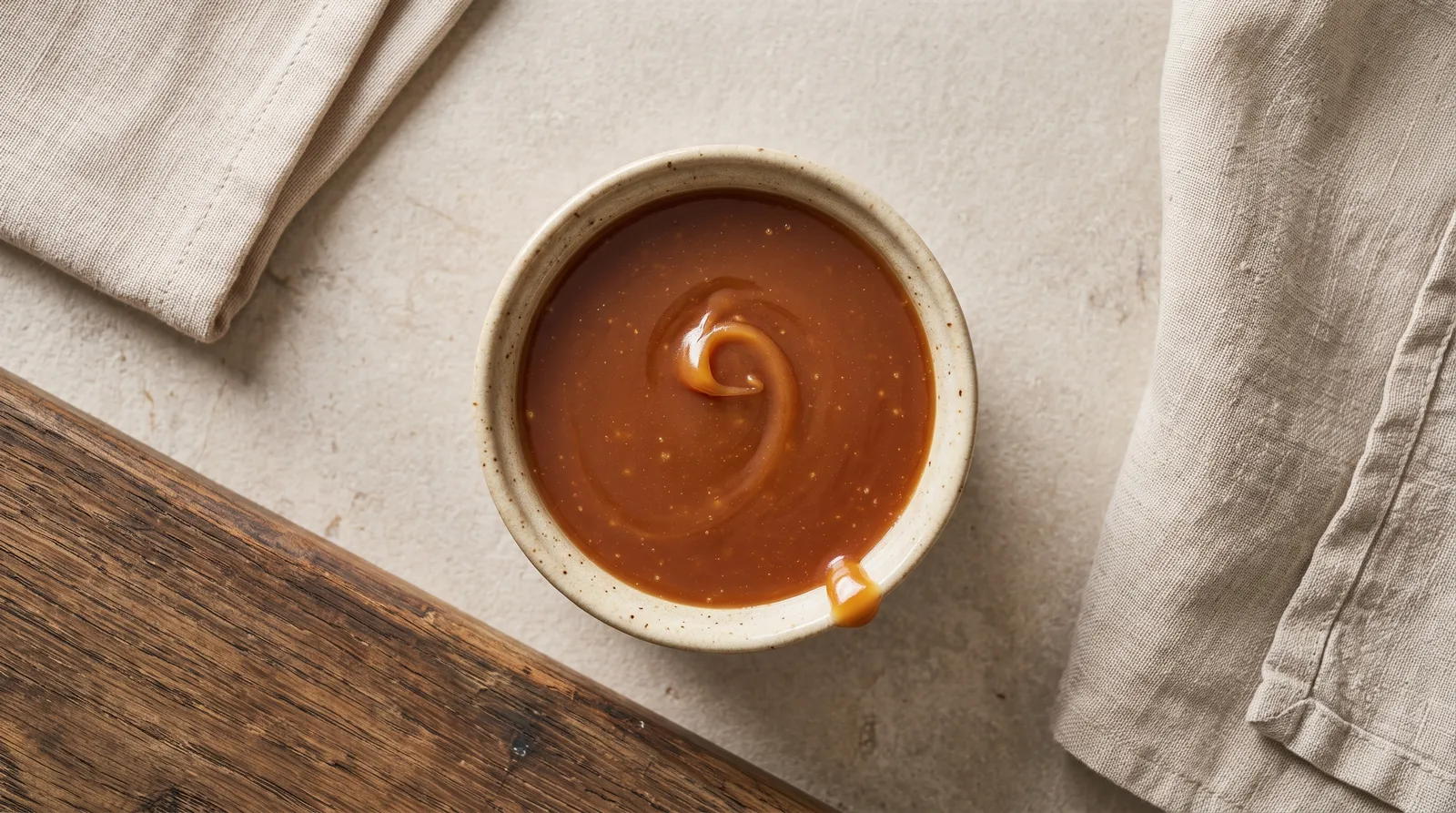
A pourable salted-butter caramel sauce made with deep amber sugar, hot cream and demi-sel butter, cooked to 105 °C and cooled for a glossy, spoonable texture.

French National Dishes
Share
Caramel au beurre salé — served in a bowl
Prep 10 minutes
Cook 20 minutes
Total 95 minutes
Yield about 430 g caramel sauce
Introduction and overview

Breton-style pourable caramel au beurre salé sauce

Caramel au beurre salé can refer to sauce, spread or cut confection, and those forms need different endpoints. Here the final form is fixed as a pourable dessert sauce. Sugar is cooked to a deep amber caramel, deglazed carefully with hot cream, brought to 105 °C and finished with cold demi-sel butter. Once cool, it thickens enough to coat a spoon but remains fluid when gently warmed.

The dangerous moment is the cream addition. Caramel at about 175 °C is far hotter than boiling water and sticks to skin. Use a deep pan, heat the cream first, take the caramel off the heat and add the cream in several controlled additions. Even hot cream makes the mixture foam violently, so a long-handled whisk, oven mitts and clear working space are essential, not optional conveniences.

Salted butter is added only after the caramel has cooled to about 70 °C. That timing reduces the chance that the emulsion will split and preserves a cleaner butter flavour. The finished sauce contains perishable dairy, so it belongs in the refrigerator once cooled. Rewarm only the amount needed and avoid boiling it again, which can make the sauce greasy or too thick.
Success points

Success points

  • Cook sugar to deep amber but stop before black smoke or burnt bitterness.
  • Preheat the cream and use a deep pan for deglazing.
  • Return the combined sauce to exactly 105 °C for a pourable endpoint.
  • Whisk in cold demi-sel butter around 70 °C, off the heat.
Ingredients

Ingredients

Caramel sauce

  • 200 g granulated sugar.
  • 200 ml full-fat cream, preheated until steaming.
  • 80 g demi-sel butter, cold, cut into small cubes.
Method

Method

Cook the caramel

  1. Warm the cream. Heat the cream in a small saucepan until steaming, then keep it hot but below a hard boil. Target: 85 °C. Time: 5 minutes. The cream is steaming evenly with no skin or vigorous boil. Hot cream reduces the temperature shock when it meets caramel.

  2. Cook a deep amber caramel. Melt the sugar in a clean heavy saucepan to a deep amber caramel, swirling the pan rather than stirring once liquefaction begins. Target: 175 °C. Time: 10 minutes. The caramel is deep amber with a toasted aroma and no black smoking patches. The colour provides the slight bitterness needed to balance cream and butter. Hot caramel can cause severe burns; keep skin away from the pan and never taste it hot.

  3. Deglaze cautiously. Remove the caramel from the heat and add the hot cream in several additions, whisking cautiously after the violent bubbling subsides. Time: 3 minutes. The caramel is smooth after the foam settles and no hard sugar lumps remain. Gradual deglazing limits splatter and dissolves seized sugar. Steam and splatter are intense; use a deep pan, long-handled whisk and oven mitts.

  4. Concentrate to sauce stage. Return the pan to gentle heat and cook until the sauce reaches the final temperature. Target: 105 °C. Time: 2 minutes. The sauce is smooth, fluid and reaches 105 °C without scorching. A 105 °C endpoint gives a pourable sauce after cooling.

Finish and cool

  1. Emulsify with salted butter. Take the pan off the heat and let the caramel cool briefly before whisking in the cold demi-sel butter until emulsified. Target: 70 °C. Time: 5 minutes. The sauce is glossy and homogeneous with no butter layer on the surface. Adding butter below the boil protects the emulsion.

  2. Cool and refrigerate. Transfer to a clean heatproof jar and cool uncovered until no longer steaming, then cover and refrigerate. Time: 60 minutes passive cooling. The cooled sauce is thick but pourable and becomes firmer under refrigeration. Ventilation during initial cooling prevents condensation from dripping into the sauce.

Serving and storage

Practical

Serving and storage

Use about 30 g per serving over crêpes, ice cream, baked apples or plain cake. Transfer the finished caramel to a clean heatproof jar, let it stop steaming, then cover and refrigerate at 4 °C or below for up to seven days. The sauce firms in the cold but loosens again with gentle warming.

Reheating and substitutions

Warm only what you need in a water bath or in short microwave bursts, stirring frequently; do not boil. Unsalted butter plus separately measured salt can reproduce a salt level technically, but demi-sel butter is the more direct ingredient for the salted-butter identity and gives more predictable flavour than seasoning at the end by guesswork.

Nutrition per serving

Nutrition per serving

  • Serving size30 g caramel sauce
  • Calories150 kcal
  • Carbohydrate15 g
  • Protein0.5 g
  • Fat10 g
  • Fibre0 g
  • Sodium70 mg
Allergens and food safety

Allergens and food safety

Allergens: Milk. Food safety: Caramel above 170 °C causes severe burns and sticks to skin; keep children and distractions away during deglazing. Because the sauce contains cream and butter, refrigerate at 4 °C or below after cooling and use within 7 days.

FAQ

FAQ

Why did the caramel become a hard lump when cream was added?

The temperature fell too abruptly. Keep the cream hot, add it in stages and return the pan to low heat until the sugar dissolves.

Why cook to 105 °C after adding cream?

That endpoint controls concentration for the declared sauce texture; a higher endpoint moves toward a firmer confection.

Closing

Closing

  • Result: a glossy salted-butter caramel that is thick when cold but pourable when gently warmed.
  • Decisive technique: control the deglaze safely and stop the finished caramel at 105 °C before emulsifying butter off the heat.