Canelé de Bordeaux in 55 mm copper moulds
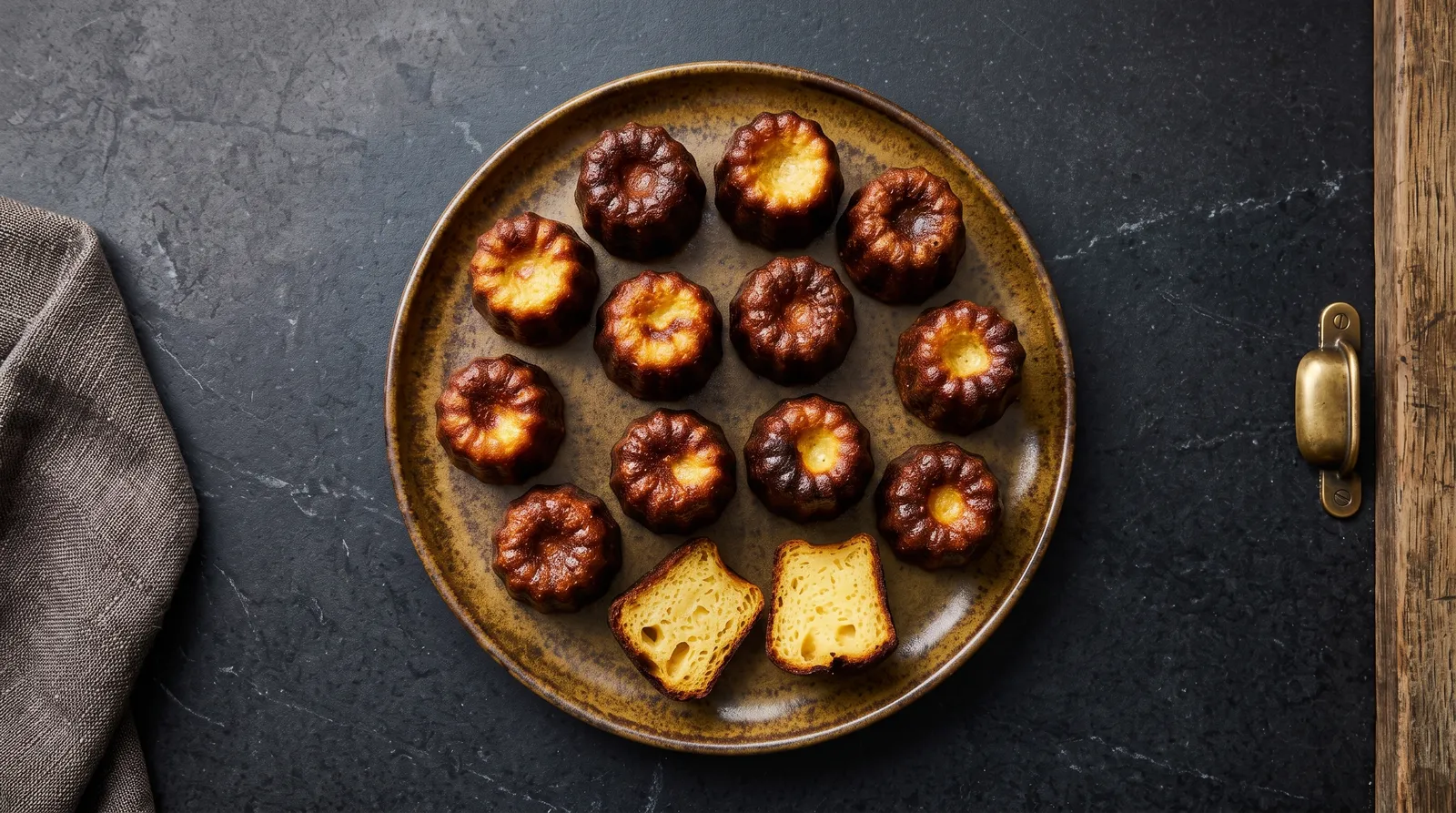
A Bordeaux canelé is defined by contrast: a deeply caramelised shell surrounds a tender, almost custardy centre scented with vanilla and rum. That texture cannot be rushed by treating the batter like cake mix. The mixture is unusually fluid, the flour needs time to hydrate, and excess whisking introduces bubbles that can distort the dense interior.
The batter starts with hot milk, butter and vanilla. Sugar and flour are combined before the eggs go in, then the hot milk is added gradually and the rum follows. Mix until smooth, not foamy, strain, and refrigerate for a full twenty-four hours. The rest is part of the schedule, not a hidden convenience step. Keep the batter at 4 °C or below because it contains raw egg and milk.
These proportions fill eight 55 mm copper moulds. Copper conducts heat rapidly enough to build the dark shell that makes the pastry distinctive. A thin butter coating helps release, but puddled fat can fry the exterior unevenly. Start at 240 °C, then lower to 180 °C without a long oven-door delay. Deep mahogany is the target colour. Unmould immediately and cool on a rack so steam does not soften the shell.