French Recipes

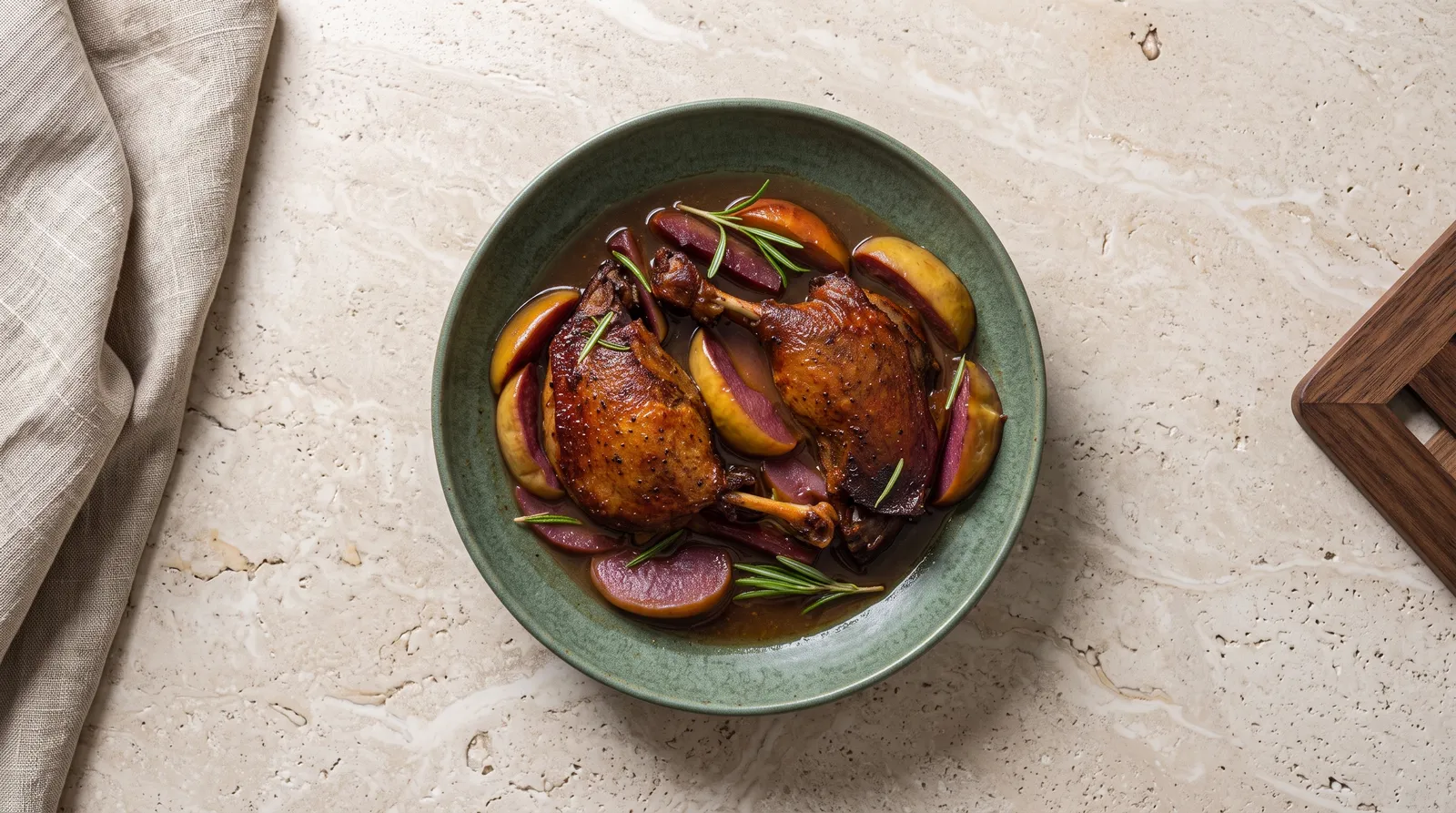
Canard au cidre

Duck legs browned, gently braised in dry cider and stock to 74 °C, then finished with firm apples and a light cream sauce.

French Recipes
Share
Canard au cidre — shown in an oven dish
Prep 25 minutes
Cook 125 minutes
Total 150 minutes
Yield 4 duck-leg servings with apples and cider cream sauce
Introduction and overview

Norman-style canard au cidre with apples and cream

Canard au cidre is at its best as a braise rather than a quick pan sauce. Duck legs bring enough connective tissue to benefit from slow moist cooking, while dry cider supplies fruit, acidity and gentle bitterness. Apples and cream reinforce the Norman character, but they are handled separately so the sauce remains clean and the fruit does not collapse into purée.

Start the legs skin-side down in a cold heavy casserole and bring the heat up gradually. This renders a surprising amount of fat before the skin takes on colour. Pour off the excess and keep only a thin film for the shallots, garlic and thyme. Once the cider and stock go in, the braise should barely simmer under a lid. The meat is both tender and safe when the thickest part of each leg reaches at least 74 °C.

Firm tart apples are browned in butter in a separate skillet and rejoin the dish only at the end. After the cooked duck comes out, skim the braising liquid and reduce it before adding cream. The finished sauce should coat a spoon lightly; a hard boil after adding cream makes separation more likely. The cider remains an alcoholic ingredient even after a long braise, and the specified bottled cider also carries a sulphite declaration.
Success points

Success points

  • Render the legs slowly before the braise and remove excess fat.
  • Keep the covered cider braise at a gentle simmer.
  • Brown firm apples separately and add them late.
  • Reduce before cream, then finish the sauce over low heat.
Ingredients

Ingredients

Duck and braise

  • 1200 g duck legs, 4 skin-on legs, about 300 g each.
  • 8 g fine salt.
  • 2 g black pepper.
  • 150 g shallots, thinly sliced.
  • 10 g garlic, finely chopped.
  • 750 ml dry cider, labelled as containing sulphites.
  • 250 ml unsalted poultry stock.
  • 3 g fresh thyme.

Apples and finish

  • 600 g firm tart apples, peeled, cored and cut into 8 wedges each.
  • 30 g unsalted butter.
  • 200 ml full-fat cream.
Method

Method

Brown and braise

  1. Render and brown the legs. Season the duck legs, place them skin-side down in a cold heavy casserole and raise the heat gradually to render fat and brown the skin; turn briefly to brown the flesh side. Time: 18 minutes. The skin is deep golden and several spoonfuls of clear duck fat have rendered. Starting in a cooler pan renders fat before the skin scorches. Keep raw duck utensils separate and wash hands after handling.

  2. Soften the aromatics. Remove the legs, pour off all but a thin film of duck fat, then soften the shallots, garlic and thyme. Time: 8 minutes. The shallots are translucent and soft without dark browning. A restrained aromatic base keeps the cider sauce clean.

  3. Braise in cider. Return the duck legs, add the dry cider and stock, bring just to a simmer, cover and braise gently. Target: about 95 °C. Time: 80 minutes. The meat is very tender and the thickest part of each leg registers at least 74 °C. Long moist cooking tenderises the leg while the safety endpoint confirms doneness. Measure 74 °C away from bone; do not rely on colour alone.

Apples and sauce

  1. Brown the apples separately. Brown the apple wedges in the butter in a separate skillet until coloured at the edges but still holding their shape. Time: 10 minutes. The apple wedges are golden on two faces and remain intact when lifted. Cooking apples separately prevents them dissolving into the braising liquid.

  2. Reduce the braising liquid. Transfer the cooked duck to a warm plate, skim excess fat from the braising liquid and reduce the uncovered liquid until concentrated. Time: 6 minutes. The liquid has reduced enough to taste rounded rather than watery. Reducing before cream prevents a thin finished sauce.

  3. Finish with cream. Lower the heat, add the cream and simmer gently until the sauce lightly coats a spoon; return the duck and apples just long enough to heat through. Time: 3 minutes. The sauce is smooth and lightly nappant, and the apples remain in distinct wedges. Gentle finishing limits cream separation.

Serving and storage

Practical

Serving and storage

Serve one leg per person with several apple wedges and enough sauce to glaze the meat. Cool leftover duck and sauce promptly and refrigerate at 4 °C or below within two hours. Use within three to four days. Reheat covered over low heat until the duck reaches 74 °C, stirring the sauce gently so the cream stays smooth.

Make-ahead and substitutions

The braised legs are excellent made a day ahead. Chill them in their braising liquid, remove the solidified surface fat the next day, reheat, then prepare fresh apples and finish the sauce with cream. A different dry cider can be used directly; a sweet cider is not a straight substitute because it changes the balance of the sauce.

Nutrition per serving

Nutrition per serving

  • Serving size1 duck leg with apples and cider cream sauce
  • Calories760 kcal
  • Carbohydrate34 g
  • Protein52 g
  • Fat45 g
  • Fibre5 g
  • Sodium1020 mg
Allergens and food safety

Allergens and food safety

Allergens: Milk (butter and cream); Sulphites (specified cider). Food safety: Keep raw duck at 4 °C or below and prevent cross-contamination. Cook each leg to at least 74 °C in the thickest part away from bone. Refrigerate cooked duck within 2 hours, use within 3–4 days and reheat leftovers to 74 °C.

FAQ

FAQ

Can the apples braise from the beginning?

They can, but they are likely to disintegrate during the long duck cooking time. Browning them separately preserves distinct wedges.

Does all the cider alcohol disappear?

No guaranteed claim is appropriate. A long simmer reduces alcohol, but the dish should still be described as containing an alcoholic ingredient.

Closing

Closing

  • Result: tender duck legs, intact buttery apples and a cider cream sauce with enough acidity to balance the rendered fat.
  • Decisive technique: render and skim the duck fat before a gentle covered braise, then reduce the cider liquid before adding cream.