French National Dishes

Canard nantais au Muscadet

Volailles de Challans duck pieces browned and braised in dry Muscadet Sèvre et Maine, finished with apples and a reduced wine sauce.

French National Dishes
Share
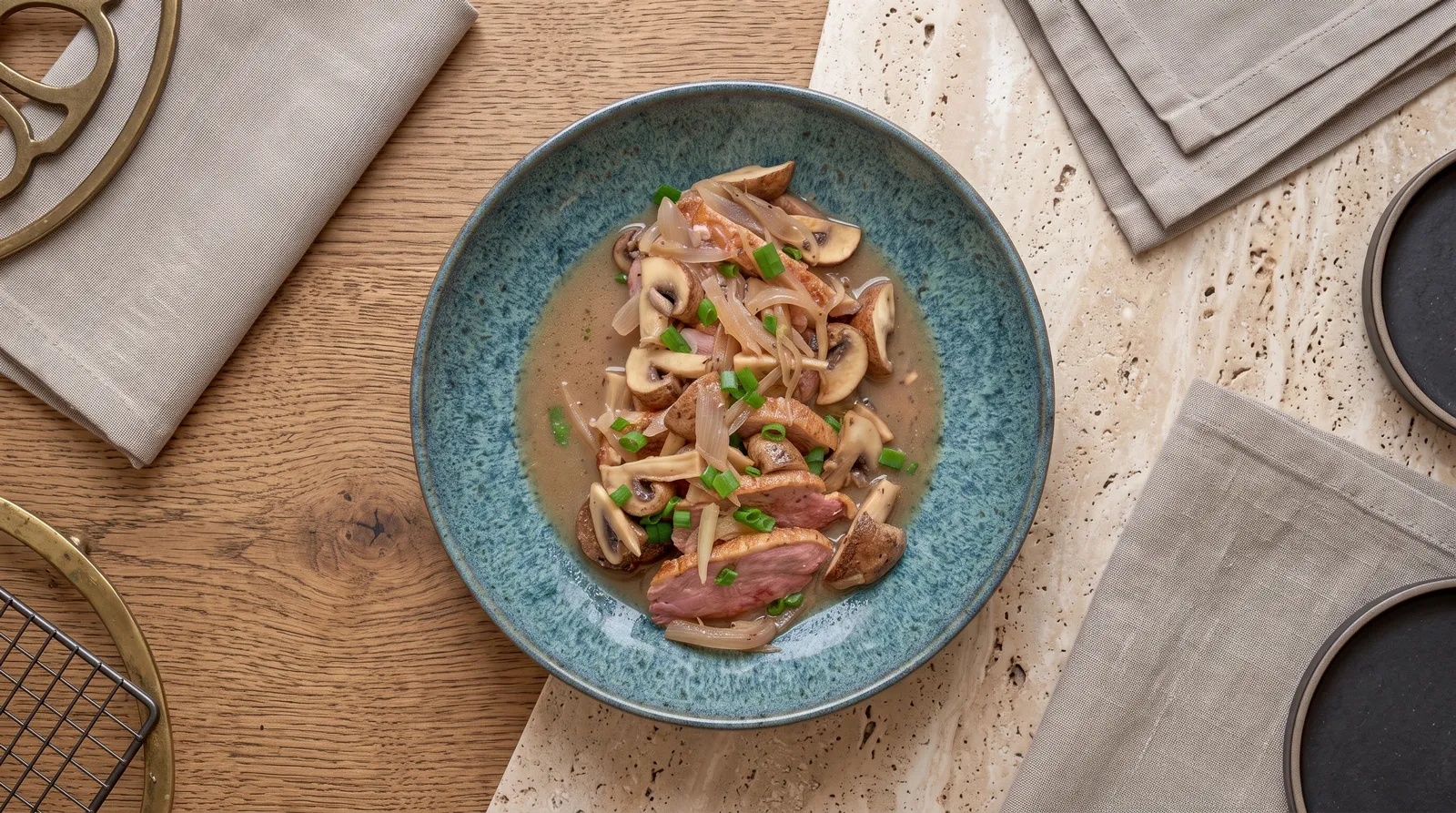
Canard nantais au Muscadet — served on a plate
Prep 35 minutes
Cook 105 minutes
Total 155 minutes
Yield 6 servings of duck with Muscadet sauce and apples
Introduction and overview

Canard nantais au Muscadet with Challans duck and apples

Canard nantais au Muscadet joins two products associated with the Nantes area: the poultry tradition of Challans and the dry white wines of the Muscadet vineyard. In historical usage, ducks from the Challans marshes were shipped through Nantes and could be called canard nantais. Current Nantes food references still pair canard de Challans with Muscadet sauce and apples, which gives this dish a precise regional identity rather than a generic duck-in-white-wine label.

The ingredient names matter. Volailles de Challans is an IGP poultry designation, while Muscadet Sèvre et Maine is an AOP dry still white wine from the Nantes vineyard. When those names appear on the plate, the actual products should qualify for them. A generic farmed duck or another dry white wine can still make good food, but the named identities should not be carried over automatically to substitutes.

For the cooking itself, ask the butcher to cut an 1.8 kg duck into eight pieces. A very light flour dusting supports browning and gives the reduced sauce a little body. Brown in batches, soften shallots, deglaze with Muscadet, then braise gently with stock until the thickest pieces reach 74 °C. Apples go in late so their wedges remain recognisable, and the sauce is reduced only after the safely cooked duck has been lifted out.
Success points

Success points

  • Use qualifying Challans poultry and actual Muscadet when those names are claimed.
  • Dust with flour lightly; excess flour makes a pasty sauce.
  • Brown in batches and keep the wine braise gentle.
  • Add the apples late, then reduce the sauce after the duck is done.
Ingredients

Ingredients

Duck

  • 1800 g Volailles de Challans IGP duck, oven-ready; ask the butcher to cut into 8 pieces.
  • 9 g fine salt.
  • 2 g black pepper.
  • 30 g plain wheat flour, for a light dusting.
  • 35 g unsalted butter.

Muscadet sauce

  • 120 g shallots, finely sliced.
  • 500 ml Muscadet Sèvre et Maine AOP, dry white wine.
  • 300 ml unsalted poultry stock, hot.
  • 500 g firm apples, peeled, cored and cut into wedges.
  • 5 g fresh thyme.
Method

Method

Brown and braise the duck

  1. Dust the duck lightly. Season the duck pieces, dust very lightly with the flour and shake off excess. Time: 10 minutes. The flour forms only a thin dry veil with no clumps. A minimal flour coating supports browning and later sauce body without turning the braise pasty.

  2. Brown in batches. Brown the duck pieces in batches in the butter, starting skin-side down; transfer browned pieces to a plate. Time: 18 minutes. The skin is golden-brown and the pan has a brown fond without burnt flour. Batch browning prevents steaming. Handle raw duck with separate utensils and clean the work surface before continuing.

  3. Deglaze with Muscadet. Soften the shallots and thyme in the casserole, then add the Muscadet and scrape up the browned fond. Time: 7 minutes. The shallots are translucent and the browned pan deposits have dissolved into the wine. Deglazing carries roast flavour into the sauce.

  4. Braise gently and safely. Return the duck, add the stock, cover and braise gently until the thickest pieces reach the safety endpoint. Target: about 95 °C. Time: 55 minutes. The duck is tender and every thick piece checked registers at least 74 °C. Gentle braising keeps the wine sauce from reducing too quickly. 74 °C is the minimum safety endpoint for the duck.

  5. Add the apples late. Add the apple wedges around the duck for the final stage of the braise. Time: 12 minutes. The apples are tender at the edges but still hold their wedge shape. Late addition keeps the apples recognisable rather than dissolving.

Finish the sauce

  1. Rest the cooked duck. Transfer the duck and apples to a warm platter, cover loosely and let the meat rest. Time: 15 minutes passive resting. The duck remains hot and the apples stay intact. A short rest protects the meat while the sauce is finished.

  2. Reduce the wine sauce. Skim excess fat and boil the Muscadet cooking liquid until it reduces to a light sauce. Time: 8 minutes. The sauce is glossy, lightly thickened and distinctly savoury with fresh wine acidity rather than raw alcohol harshness. Reduction concentrates the braising liquid and emulsifies a small amount of duck fat.

  3. Coat and serve. Taste for salt, return the duck and apples briefly to coat, then serve immediately. Time: 3 minutes. The sauce clings lightly to the duck pieces without becoming floury or gluey. Brief reheating avoids overcooking already tender duck.

Serving and storage

Practical

Serving and storage

Serve the duck hot with the apple wedges and reduced wine sauce. A plain potato garnish or seasonal greens works well because the Muscadet sauce is the main aromatic element. Cool leftovers within two hours, refrigerate at 4 °C or below for three to four days, and reheat meat and sauce to 74 °C.

Make-ahead and substitutions

The braise can be made a day ahead and chilled in its liquid. For the cleanest apple texture, add freshly cooked wedges when reheating. A dry high-acid white wine can replace Muscadet for technique, but the dish should then be described as duck in dry white wine. A farmed duck of similar size can replace Challans poultry, with the same loss of the specific IGP poultry identity.

Nutrition per serving

Nutrition per serving

  • Serving sizeabout 170 g cooked edible duck with apples and Muscadet sauce
  • Calories710 kcal
  • Carbohydrate20 g
  • Protein35 g
  • Fat53 g
  • Fibre3 g
  • Sodium700 mg
Allergens and food safety

Allergens and food safety

Allergens: Wheat/gluten (flour); Milk (butter); Sulphites (Muscadet wine). Food safety: Keep raw duck at 4 °C or below and prevent cross-contamination. Cook every thick duck piece to at least 74 °C. Refrigerate within 2 hours, keep leftovers 3–4 days and reheat to 74 °C.

FAQ

FAQ

What does Muscadet contribute?

It brings dry white-wine acidity and a light regional wine character rather than sweetness.

Is canard nantais a separate modern duck breed?

The regional name has historic links to Challans ducks shipped through Nantes; using Volailles de Challans keeps that identity precise.

Closing

Closing

  • Result: tender duck with intact apples and a clean, lightly thickened Muscadet sauce rather than a cream-heavy white-wine stew.
  • Decisive technique: brown lightly floured duck in batches, braise gently to 74 °C and reduce the wine cooking liquid only after the meat comes out.