French Recipes

Canard à la rouennaise

A transparent home adaptation of Rouen’s famous pressed duck: the specialist blood-and-press procedure is omitted, while roast duck, cooked liver, wine, port, Cognac, stock, lemon and butter build a related sauce profile.

French Recipes
Share
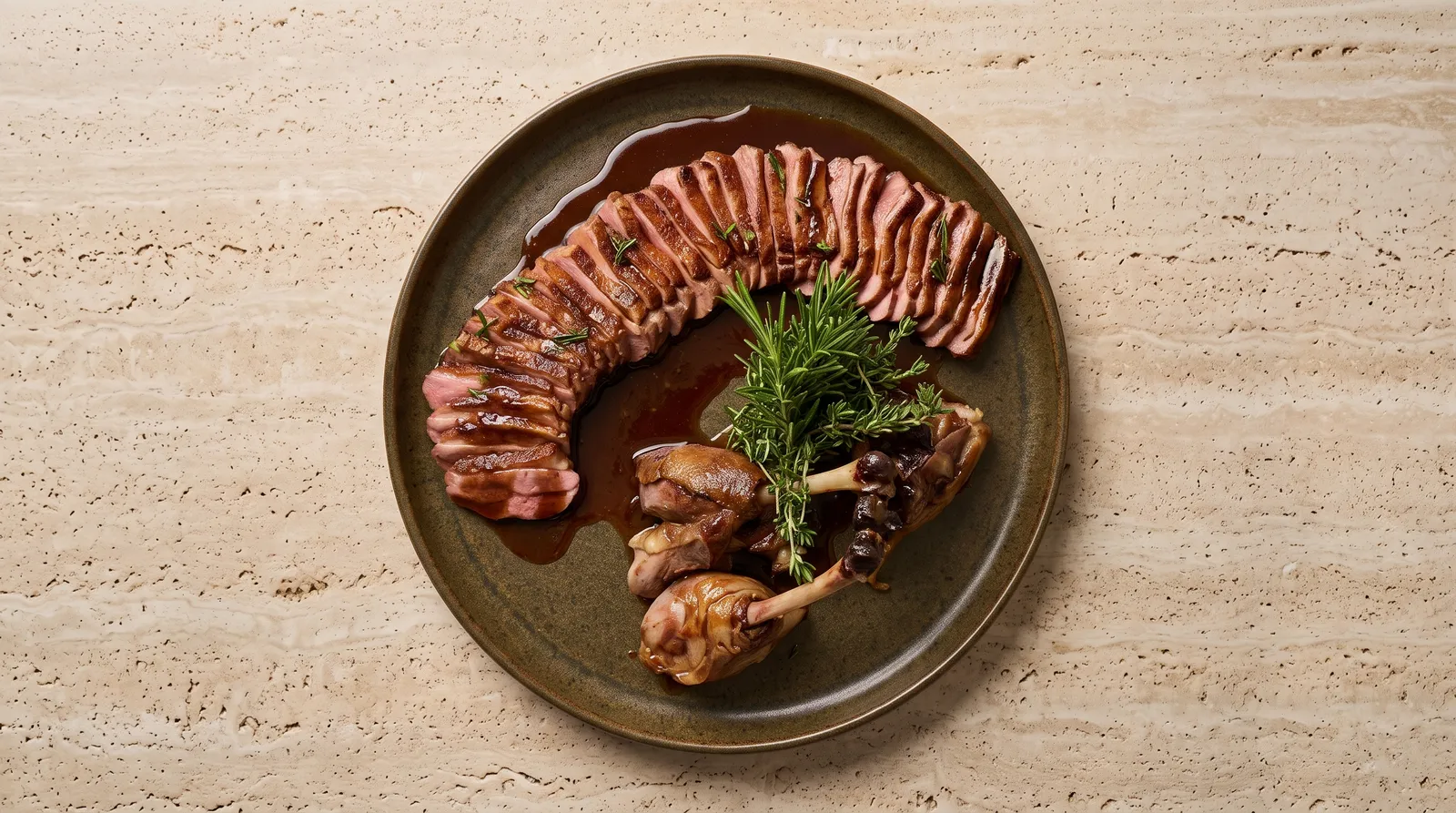
Canard à la rouennaise — arranged on a tray
Prep 40 minutes
Cook 105 minutes
Total 165 minutes
Yield 1 roast duck with Rouen-inspired sauce, 6 servings
Introduction and overview

Canard à la rouennaise: a fully cooked Rouen-inspired home adaptation

Rouen’s famous caneton à la rouennaise, also known as canard au sang or pressed duck, is not simply roast duck with a red-wine sauce. Its restaurant identity depends on a specialist slaughter method that retains blood, rare cooking, and a mechanical duck press used to extract blood and juices from the carcass for the sauce. Those operations are defining features of the historic service, and they are not suitable to normalize as household instructions.

The preparation here is therefore explicit about what it is and what it is not. The duck is roasted fully to 74 °C, rested and carved. Fresh duck liver is also cooked to 74 °C before being blended into a shallot, red-wine, port and stock reduction. Cognac, lemon and butter echo documented sauce elements, but there is no home blood collection, no undercooked poultry and no carcass pressing. The finished plate should be understood as a Rouen-inspired adaptation, not an exact reproduction of canard au sang.

That distinction also changes the sauce mechanics. Blood traditionally provides both flavour and thickening; cooked liver and reduction have to create body instead. Reduce the wine before adding stock, blend the cooked liver thoroughly, and mount with cold butter only after the pan leaves the heat. The result is dark, glossy and rich, with enough lemon acidity to prevent the sauce from becoming heavy.
Success points

Success points

  • Do not attempt blood collection, specialist slaughter or carcass pressing at home.
  • Cook both duck and liver to 74 °C.
  • Reduce the wine strongly before adding stock.
  • Finish with butter off the heat so the sauce stays emulsified.
Ingredients

Ingredients

Duck

  • 1800 g whole oven-ready duck, giblets removed.
  • 8 g fine salt.
  • 2 g black pepper, freshly ground.

Rouen-inspired sauce

  • 80 g fresh duck liver, trimmed.
  • 60 g shallot, finely chopped.
  • 250 ml dry red Burgundy-style wine.
  • 60 ml ruby port.
  • 30 ml Cognac.
  • 400 ml unsalted veal or poultry stock, hot.
  • 20 ml lemon juice.
  • 50 g unsalted butter, cold, diced.
Method

Method

Roast the duck safely

  1. Season the duck. Pat the duck dry, season with salt and pepper and set it breast-side up on a rack. Time: 15 minutes. The skin is dry and evenly seasoned. Dry skin browns more evenly. Keep raw duck and liver separate from ready-to-eat foods.

  2. Roast to the safety endpoint. Roast the duck until the skin has rendered and browned, then continue until the safety endpoint is reached in the thickest thigh. Target: 190 °C. Time: 75 minutes. The skin is well browned and the thickest thigh registers 74 °C. A fully cooked endpoint makes the home preparation safe even though it differs from historic rare service. Cook the duck to 74 °C; do not use colour as a safety test.

  3. Rest the bird. Move the duck to a clean board and rest loosely covered before carving. Time: 20 minutes passive resting. The bird remains hot and releases less juice when carved. Resting protects moisture before slicing.

Make the cooked liver-wine sauce

  1. Cook the liver fully. Cook the duck liver in a small sauté pan until browned outside and 74 °C in the centre, then chop it very finely. Target: 74 °C. Time: 6 minutes. The liver is fully cooked, firm and no longer raw at the centre. The liver adds richness without using retained blood. Treat liver as raw poultry offal and cook it fully to 74 °C.

  2. Reduce the wines. Soften the shallot in 10 g of the butter without browning, add the Cognac and red wine, and simmer until reduced by about two thirds. Time: 10 minutes. The shallot is soft and the wine reduction is glossy and intensely aromatic. Concentrating the wine establishes the deep savoury-acid base.

  3. Blend the liver sauce. Add the port, stock and chopped cooked liver, then simmer and blend until smooth. Time: 10 minutes. The sauce is smooth, mahogany-coloured and lightly coats the back of a spoon. Blending distributes the cooked liver and gives body in place of blood thickening.

  4. Mount with cold butter. Remove from the heat, stir in lemon juice and whisk in the remaining cold butter a little at a time. Time: 5 minutes. The sauce is glossy, balanced and emulsified without visible butter pooling. Lemon sharpens the rich sauce and cold butter finishes its texture.

  5. Carve for service. Carve the duck, arrange portions on a warm platter and spoon the sauce around the meat. Time: 10 minutes. The duck is fully cooked, the sauce is smooth and no specialist blood or pressed-carcass component is present. The service remains transparent about the difference from canard au sang.

Serving and planning

Practical

Serving and planning

Serve the carved duck hot with only enough sauce to coat the meat lightly; a simple potato preparation or green vegetable keeps the plate from becoming too heavy. The wine-stock base may be made earlier in the day and chilled, but cook the liver fully and finish the sauce close to service for the cleanest texture.

Storage, reheating and substitution

Cool leftovers within two hours and refrigerate at 4 °C or below for three to four days. Reheat duck and sauce to 74 °C, loosening the sauce with a spoonful of stock if necessary. Another dry, light-to-medium-bodied red wine can stand in for Burgundy-style red wine, but the flavour changes and should be treated as a practical substitution, not an exact match.

Nutrition per serving

Nutrition per serving

  • Serving sizeabout 160 g cooked duck with 90 g sauce
  • Calories655 kcal
  • Carbohydrate5 g
  • Protein34 g
  • Fat52 g
  • Fibre0.3 g
  • Sodium660 mg
Allergens and food safety

Allergens and food safety

Allergens: Milk (butter); Sulphites (wine and port; check Cognac label where relevant). Food safety: Do not attempt home slaughter, blood collection or carcass pressing for this dish. Cook duck and duck liver to 74 °C measured with a food thermometer. Keep raw duck and liver at 4 °C or below, prevent cross-contamination, refrigerate cooked leftovers within 2 hours, and reheat leftovers to 74 °C.

FAQ

FAQ

Is this the same as restaurant canard au sang?

No. The specialist blood-retention and duck-press stages are omitted, and the poultry is fully cooked.

Why use cooked duck liver in the sauce?

It adds savoury richness and body after the blood-based thickening mechanism has been removed from the household method.

Closing

Closing

  • Result: fully cooked roast duck with a dark, smooth wine-and-liver sauce that acknowledges Rouen’s flavour profile without imitating unsafe specialist steps.
  • Decisive technique: reduce the wine, cook the liver to 74 °C, blend it smoothly and mount the sauce with butter off the heat.