French National Dishes

Tarte Tatin

A classic inverted apple tart built in a 24 cm ovenproof pan with firm apple quarters, butter caramel and a puff-pastry lid.

French National Dishes
Share
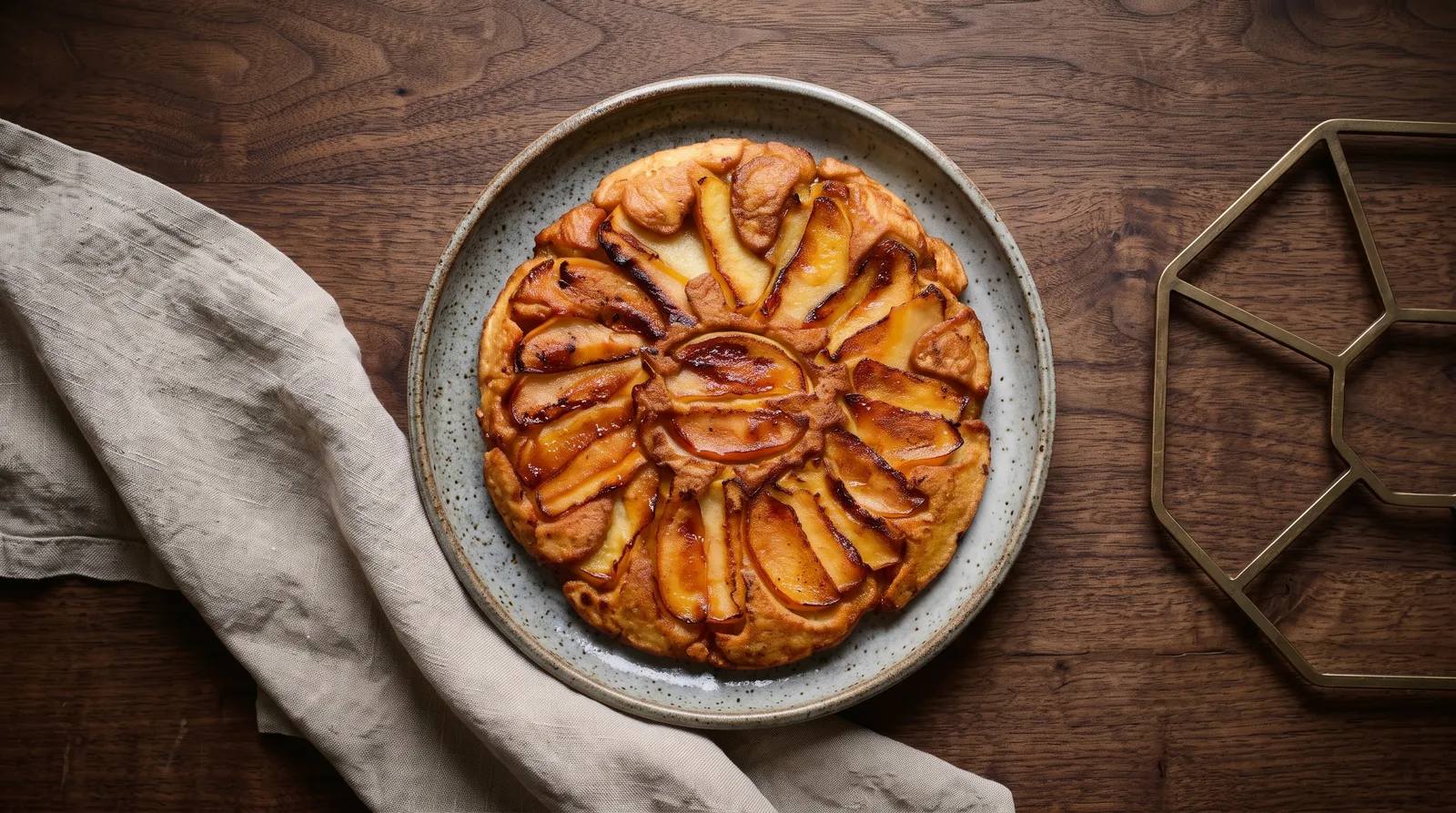
Tarte Tatin — served on a plate
Prep 25 minutes
Cook 60 minutes
Total 100 minutes
Yield 1 round 24 cm inverted tart
Introduction and overview

Tarte Tatin — inverted caramelised apple tart

Tarte Tatin is defined by the order of construction. Apples are packed directly into butter caramel in an ovenproof pan, cooked until they begin to soften and release some of their juice, and only then covered with pastry. After baking, the whole tart is inverted so the caramelised fruit becomes the top and the baked pastry becomes the base.

The stovetop stage is not merely for colour. Firm apple quarters release water as they heat, and that moisture needs to reduce before the pastry is added. A syrupy caramel around intact quarters is the target; if the pan is still watery, the finished base is likely to soften after inversion. The caramel should be clear amber rather than dark and smoking.

The final 15-minute rest is a safety and texture control. Inverting immediately can send very fluid caramel across the plate, while waiting too long can allow the caramel to set against the pan. Use dry oven gloves, keep the serving plate level and turn the tart in one confident movement. Molten caramel and hot fruit remain serious burn hazards even after the oven stage.
Success points

Success points

  • Stop the dry caramel at clear amber before adding butter and apples.
  • Cook the packed apples until some moisture has evaporated and the syrup no longer looks watery.
  • Rest exactly long enough for the caramel to thicken slightly, then invert while it can still release from the pan.
Ingredients

Ingredients

Tart

  • 1000 g firm cooking apples — peeled, cored and quartered; prepared weight Buy about 1.3 kg whole apples.
  • 180 g caster sugar
  • 100 g unsalted butter — cut into pieces
  • 250 g all-butter puff pastry — rolled to a 26 cm round about 3 mm thick
Method

Method

Caramelise and pack

  1. Cook the caramel. Melt 180 g sugar in the 24 cm heavy ovenproof pan, controlling the heat until it becomes a clear amber caramel. Timing: 10 minutes. Heat: medium heat. Temperature: stovetop. Amber caramel brings bitterness and sweetness into balance. Molten caramel causes severe burns; do not touch or taste it. The caramel is clear amber with no black patches and smells toasted rather than burnt.

  2. Soften the apples. Add 100 g butter carefully and arrange the 1,000 g prepared apple quarters tightly in the caramel, rounded sides down, then cook until the fruit begins to soften and excess juice visibly reduces. Timing: 15 minutes. Heat: medium-low heat. Temperature: stovetop. Driving off some apple juice prevents a flooded pastry after inversion. Hot butter may spit when it meets caramel; keep hands and face clear. The apples have begun to soften but still hold their quarters, and the caramel looks syrupy rather than watery.

  3. Add the pastry lid. Remove from the heat, let vigorous bubbling subside for a few minutes, then cover the apples with the 250 g pastry round, tuck the edge safely inside the pan and cut two small steam vents. Timing: 5 minutes. Keep off the heat. Tucking the pastry creates the rim once the tart is inverted. The pan and caramel remain extremely hot; use oven gloves. The pastry lies flat over the apples, the edge is tucked inside the pan and two small vents are open.

Bake and invert

  1. Bake the pastry fully. Bake until the pastry is deeply golden and fully cooked through. Timing: 35 minutes. Heat: 190 °C conventional oven. Temperature: 190 °C. Full pastry baking is essential because the base will become the underside after inversion. Steam escapes through the vents; keep hands clear when checking the tart. The pastry is deeply golden, dry on the surface and firm rather than doughy at the centre.

  2. Rest and invert. Rest the tart in the pan, then place a heatproof serving plate over it and invert in one confident movement. Timing: 15 minutes. Keep off the heat. A short rest reduces flowing caramel without letting it set hard in the pan. Wear dry oven gloves and keep the plate level; caramel and fruit remain hot enough to burn. After 15 minutes the caramel has thickened slightly but the apples still release cleanly when the pan is lifted.

Serving

Practical

Serving

Serve warm in 8 slices, with the caramelised apples uppermost and all pan caramel spooned over the fruit.

Storage and reheating

Refrigerate leftovers within 2 hours, covered, for up to 3 days. Reheat slices at 170 °C for 8–10 minutes on a tray; let the caramel settle for a minute before eating.

Shortcrust pastry for puff pastry

Produces a firmer, less laminated lid and is a recognised household variation, but the texture is different.

Another firm cooking apple

Acceptable if it keeps its shape during the 15-minute stovetop cook and 35-minute bake.

Troubleshooting

Troubleshooting

  • Runny caramel after inversionCause: The apples released more water than was cooked off. Correction: Extend the stovetop apple stage only until the syrup is visibly concentrated before adding pastry.
  • Fruit sticks in the panCause: The tart rested until the caramel set hard. Correction: Use the defined 15-minute rest and invert while the caramel is still fluid enough to release.
Nutrition per serving

Nutrition per serving

  • Serving size1 of 8 slices
  • Calories409 kcal
  • Carbohydrate52.6 g
  • Protein2.7 g
  • Fat22.2 g
  • Fibre2.1 g
  • Sodium79 mg
Allergens and food safety

Allergens and food safety

Allergens: Gluten (wheat), Milk.

Molten caramel and hot fruit are burn hazards; use a stable heatproof plate and dry oven gloves.

Refrigerate leftovers at 4 °C or colder within 2 hours.

Reheat leftovers until thoroughly hot before serving.

Closing

Closing

  • Result: An inverted tart with intact caramelised apple quarters, glossy retained caramel and a fully baked pastry base.
  • Decisive technique: Reduce apple moisture before adding the pastry and invert after the defined 15-minute rest while the caramel can still release.