French National Dishes

Ravioles du Dauphiné

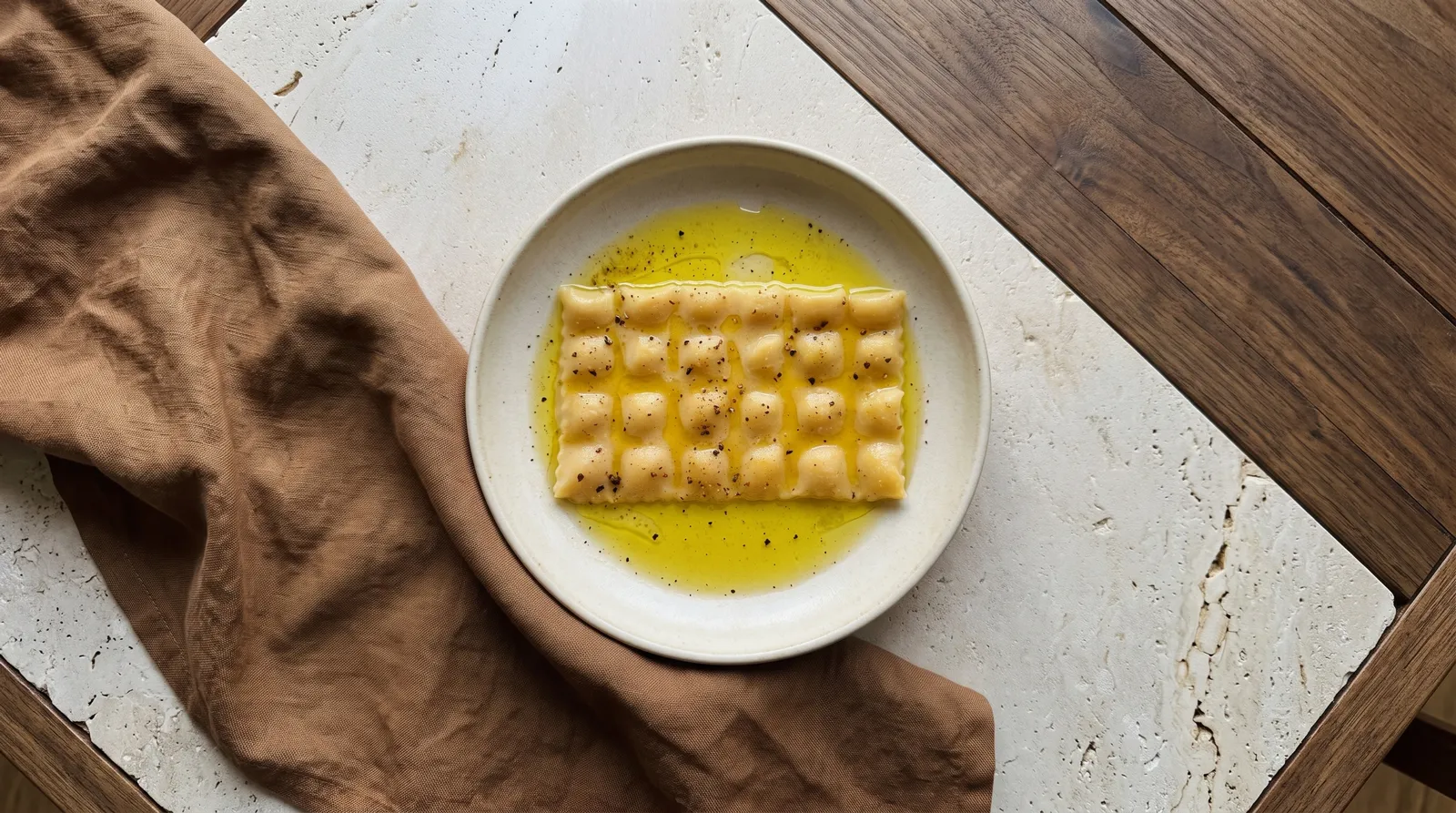
A careful home adaptation of the Dauphiné style: 0.7 mm egg pasta cut into about 240 tiny squares and filled with fromage blanc, Comté, parsley, butter and egg.

French National Dishes
Share
Ravioles du Dauphiné — served on a plate
Prep 120 minutes
Cook 11 minutes
Total 161 minutes
Yield about 240 tiny ravioles, 6 servings
Introduction and overview

Ravioles du Dauphiné — household adaptation of tiny Dauphiné cheese ravioles

Ravioles du Dauphiné are much smaller and thinner than the large stuffed pasta parcels that the word ravioli can suggest. The protected regional product is associated with the Dauphiné area around Romans-sur-Isère and Royans and is characterized by very thin soft-wheat pasta around a cheese, fresh-cheese and parsley filling. This home preparation follows that ingredient logic and delicate square format, but it is identified clearly as a household adaptation rather than as an IGP-certified commercial product.

The dough contains 150 g soft wheat flour, 60 g egg, 25 ml water, a little neutral oil and 1 g salt. It is rested before being rolled to about 0.7 mm. That thickness matters: a heavy pasta skin would dominate the small parcel and move the result toward ordinary large ravioli. The filling combines 150 g well-drained fromage blanc, 90 g Comté AOP, 25 g egg, 12 g butter and 15 g parsley. Keeping it thick and cold protects the fragile sheet from becoming wet or difficult to seal.

Assembly is the labour-intensive stage. Tiny dots of filling are enclosed between sheets, trapped air is pressed out and the pasta is cut into roughly 2.5 cm squares, giving about 240 ravioles. They cook very briefly in gently simmering water rather than a violent boil. A test parcel establishes the short cooking window and provides a safety check on the egg-containing filling. The remaining ravioles are then cooked in three batches of about 80 so they have room to move without tearing each other apart.
Success points

Success points

  • Rest the dough for 30 minutes before rolling so it relaxes instead of shrinking back.
  • Roll to about 0.7 mm; thickness is one of the defining textural differences from larger stuffed pasta.
  • Drain the fromage blanc well and keep the filling cold until it is enclosed.
  • Press out trapped air around every small mound before cutting the squares.
  • Cook at only a gentle simmer and lift the ravioles with a skimmer rather than pouring the whole pot into a rough colander.
Ingredients

Ingredients

Pasta dough

  • 150 g soft plain wheat flour
  • 60 g whole egg, beaten
  • 25 ml water
  • 8 ml neutral oil
  • 1 g fine salt

Cheese and parsley filling

  • 150 g fromage blanc, well drained and cold
  • 90 g Comté AOP, finely grated
  • 25 g whole egg, beaten and cold
  • 12 g unsalted butter, softened
  • 15 g flat-leaf parsley, very finely chopped
  • 2 g fine salt
Method

Method

Directions

  1. Mix the pasta dough. Combine the 150 g flour, 60 g egg, 25 ml water, 8 ml oil and 1 g salt and work for about 15 minutes until cohesive. The dough is smooth, firm and cohesive with no dry flour pockets.

  2. Rest the dough. Wrap it and leave it at room temperature for 30 minutes. The dough is relaxed enough to roll without springing back strongly.

  3. Make the cold filling. Mix the 150 g drained fromage blanc, 90 g Comté, 25 g egg, 12 g butter, 15 g parsley and 2 g salt, allowing about 10 minutes, then refrigerate. The filling is thick, cold and spoonable with no free liquid.

  4. Roll very thin sheets. Divide the dough and roll narrow sheets to about 0.7 mm, keeping unused portions covered; allow about 30 minutes. The pasta is uniformly about 0.7 mm thick and translucent enough to show a shadow without tearing.

  5. Enclose tiny filling portions. Place small measured dots of filling at regular intervals, cover with a second sheet and press out trapped air around every mound, allowing about 35 minutes. Each filling mound is enclosed without visible air pockets or leaking cheese.

  6. Cut the squares. Cut the sealed sheets into about 240 squares of roughly 2.5 cm and transfer them in a single layer to lightly floured trays, allowing about 30 minutes. The batch contains about 240 small, fully sealed squares with intact edges.

  7. Cook a test raviole. Lower one parcel into gently simmering water for about 2 minutes and check the filling. The test parcel is tender, stays sealed and reaches 71 °C in the filling.

  8. Cook the first batch. Simmer the first 80 ravioles gently for 3 minutes and lift them with a skimmer. The pasta is tender, the squares remain sealed and a checked parcel reaches 71 °C.

  9. Cook the second batch. Repeat with the second 80 ravioles for 3 minutes. The second batch is tender and intact with no stream of filling escaping into the water.

  10. Cook the final batch. Simmer the last 80 ravioles for 3 minutes and drain all batches carefully without piling or crushing them. The final batch is tender and intact, and the drained ravioles keep their small square shape.

Serving, storage and make-ahead

Practical

Serving, storage and make-ahead

Serve about 40 tiny ravioles per person immediately after draining. Their thin skins and small seams are fragile, so avoid vigorous tossing or pressing. A light handling style suits them better than a heavy sauce or a long hold in a hot pan.

Serving, storage and make-ahead

The dough and filling can be prepared several hours ahead as separate components. Keep the fromage-blanc filling covered at 4 °C or below. Once the ravioles are filled, return the trays to the refrigerator if they are not going straight to the pot. They are best cooked the same day rather than left to soften in storage.

Serving, storage and make-ahead

Refrigerate uncooked filled pasta at 4 °C or below and use it the same day. Refrigerate cooked leftovers within 2 hours and use within 2 days; reheat gently to 74 °C rather than boiling hard. Emmental français Est-Central IGP belongs to the documented cheese family and can replace some or all of the Comté when that is the intended ingredient, but changing cheese does not turn a home batch into a protected commercial product.

Troubleshooting

Troubleshooting

  • The pasta tears during fillingthe sheet dried out or was rolled unevenly. Work with narrow sheets and keep unused dough covered.
  • The ravioles burst in the waterair remained inside, the seams were weak or the water boiled too hard. Press out air carefully and maintain only a gentle simmer.
  • The filling leaks before cookingthe fromage blanc was too wet or filled pasta stood warm. Drain the cheese thoroughly and keep the filled trays cold.
Nutrition per serving

Nutrition per serving

  • Serving sizeabout 40 tiny ravioles, roughly 90 g uncooked filled-pasta weight
  • Calories221 kcal
  • Carbohydrate20.3 g
  • Protein10.5 g
  • Fat10.5 g
  • Fibre0.8 g
  • Sodium329 mg
Allergens and food safety

Allergens and food safety

Allergens: Egg; Milk; Wheat/gluten.

Keep the egg-and-cheese filling refrigerated until assembly and do not taste raw filling or raw egg pasta. Use a test parcel and the first cooking batch to confirm that the filling reaches 71 °C while the pasta remains tender and sealed. Keep fingers clear of pasta-machine rollers and cutting wheels. Refrigerate cooked leftovers within 2 hours and reheat to 74 °C.

FAQ

FAQ

Are these the same as Italian ravioli?

No. The Dauphiné style is characterized by unusually small square parcels with very thin pasta and a specific cheese-and-parsley filling family. Large meat-filled or large ricotta parcels are different preparations.

Does a home batch carry the IGP automatically?

No. The protected identity includes a formal specification and geographic production area. This is a household adaptation that follows key compositional and textural features without claiming certification.

Closing

Closing

  • Result: Tiny, tender square pasta parcels with a soft fromage-blanc, Comté and parsley centre and an exceptionally thin pasta skin.
  • Decisive technique: Roll to about 0.7 mm, expel trapped air and cook the small parcels in uncrowded batches at a gentle simmer.