French National Dishes

Rillettes du Mans

Lean pork and pork back fat cooked together for hours until the meat separates into fibres, then seasoned, packed with a measured amount of retained fat and chilled overnight as a refrigerated spread.

French National Dishes
Share
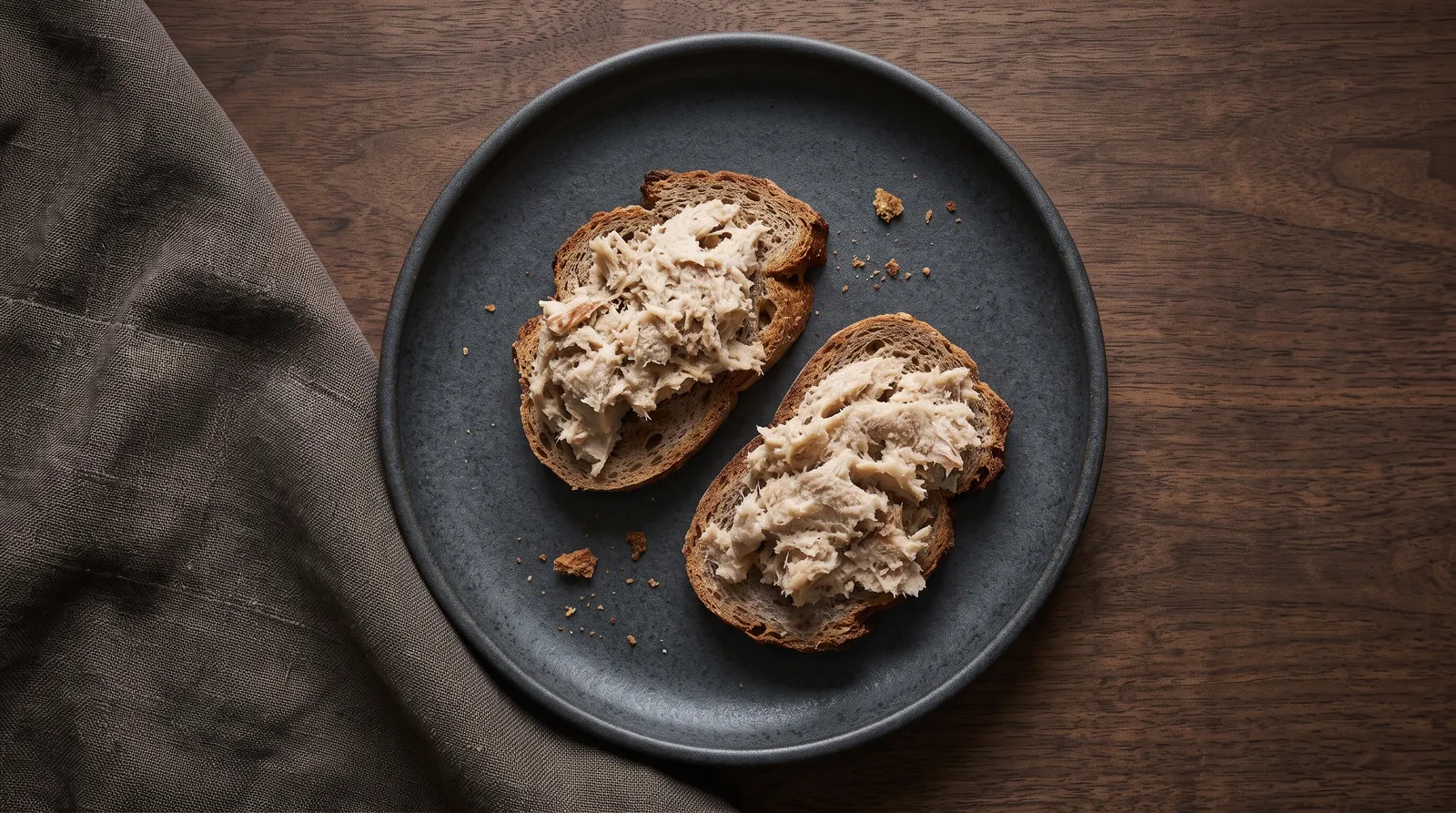
Rillettes du Mans — shown in close-up
Prep 60 minutes
Cook 225 minutes
Total 1035 minutes
Yield about 900 g finished rillettes in 6 × 150 g containers
Introduction and overview

Rillettes du Mans — slow-cooked fibrous pork rillettes

Rillettes du Mans are a cooked pork spread, but their texture is not the silky uniformity of pâté. The meat is cooked long enough in pork fat to separate into visible fibres, then those fibres are seasoned and packed with enough rendered fat to stay moist and spoonable. Sarthe guidance gives a particularly useful household proportion: about two-thirds lean pork to one-third pork fat, here fixed at 670 g pork shoulder and 330 g back fat with 20 g salt and 2 g pepper.

The back fat is rendered first so the lean pork has a deep layer of fat in which to cook. After a 30-minute browning stage, the casserole is covered and kept at low heat for 3 hours. At the end, the shoulder should fall into long fibres with almost no resistance. Blending would erase that characteristic texture, so the meat is shredded with forks while hot. Salt and pepper go in only after the long cook, when the final edible mass can be seasoned evenly.

Rendered fat needs to be handled explicitly rather than treated as an invisible variable. About 250 g is returned to the shredded pork so the fibres are moist and cohesive; about 80 g excess is kept out of the edible batch. The finished yield is approximately 900 g, packed into six clean 150 g containers. Those small containers cool efficiently. After 30 minutes of prompt cooling they move to the refrigerator for a full overnight set. This is a refrigerated short-life preparation and never a shelf-stable home preserve.
Success points

Success points

  • Begin with commercially butchered lean pork shoulder and rindless back fat; no primary butchery is required at home.
  • Render the back fat before adding the lean pork so the long cook begins in a sufficient fat medium.
  • Keep the covered 3-hour stage genuinely gentle; hard frying would dry the fibres before they soften.
  • Shred with forks while the pork is hot and stop before the meat becomes a paste.
  • Weigh the returned rendered fat and use small clean containers so yield, nutrition and cooling remain controlled.
Ingredients

Ingredients

  • 670 g lean pork shoulder, commercially butchered, boneless and cut into 3 cm cubes
  • 330 g pork back fat, commercially butchered, rindless and cut into 2 cm cubes
  • 20 g fine salt
  • 2 g black pepper
Method

Method

Directions

  1. Cut the pork evenly. Cut the 670 g shoulder into roughly 3 cm cubes and the 330 g back fat into roughly 2 cm cubes, keeping both cold during the 30-minute preparation. The lean pork is in roughly 3 cm cubes and the back fat in roughly 2 cm cubes.

  2. Render the back fat. Put the 330 g fat in a heavy casserole and cook over medium-low heat for 15 minutes. A clear layer of rendered pork fat surrounds lightly golden fat pieces.

  3. Brown the lean pork. Add the 670 g shoulder and cook over medium heat for 30 minutes, turning the pieces. The pork has lost its raw exterior, is lightly browned and has reached at least 71 °C in representative pieces.

  4. Cook very gently for three hours. Cover the casserole, lower the heat and cook for 180 minutes. The lean pork separates into long tender fibres with almost no resistance and the cooking fat is clear around it.

  5. Shred while hot. Lift the meat into a heatproof bowl, reserving the rendered fat, and separate the pork with two clean forks for about 15 minutes. The pork forms moist, distinct fibres rather than a smooth purée.

  6. Season and control the fat. Mix in the 20 g salt and 2 g pepper, then weigh and return about 250 g rendered fat; reserve or discard about 80 g excess, allowing 10 minutes. The seasoned fibres are moist and cohesive, with no dry pockets and no pool of loose fat in the bowl.

  7. Pack six small containers. Divide about 900 g finished rillettes among 6 clean 150 g containers, pressing out large air pockets without mashing the fibres, allowing 5 minutes. Six containers are evenly filled to about 150 g each and the surface is compact without being puréed.

  8. Cool promptly. Place the containers on a cooling rack for 30 minutes, then cover and refrigerate. The containers have stopped steaming and are ready for covered refrigeration within 2 hours of cooking.

  9. Chill overnight. Keep the covered containers refrigerated for 720 minutes. The fat has set, the spread is firm but spoonable, and the pork fibres remain visible.

Serving, storage and make-ahead

Practical

Serving, storage and make-ahead

Serve cold in portions of about 45 g after the overnight chill. The spread should be firm enough to hold on a spoon but easy to spread, with visible pork fibres and a browned, savoury character. A large layer of hard fat is not the goal; most of the retained fat is mixed through the meat.

Serving, storage and make-ahead

Rillettes are naturally a make-ahead preparation because the overnight set is mandatory. Prepare them the day before service and keep the six small containers covered and refrigerated. Open only what is needed so the rest of the batch does not move repeatedly between cold storage and the table.

Serving, storage and make-ahead

Store at 4 °C or below and use within 4 days. Homemade rillettes are not shelf-stable. Do not water-bath can them, store sealed containers at room temperature or rely on the surface fat as a preservation guarantee. Replacing pork with duck or poultry creates a different rillette; sharply reducing the retained pork fat also changes texture and storage behaviour and should not be treated as the same formula.

Troubleshooting

Troubleshooting

  • The rillettes are dry and stringytoo little rendered fat was returned after shredding. Weigh the retained fat and mix it in while the fibres are still warm.
  • The texture is smooth like pâtéthe meat was blended or beaten too aggressively. Use forks and stop once the long fibres separate.
  • A hard fat cap dominates the containertoo much loose fat was poured back. Keep the retained amount near 250 g and distribute most of it through the meat.
Nutrition per serving

Nutrition per serving

  • Serving sizeabout 45 g rillettes (1 of 20 servings)
  • Calories182 kcal
  • Carbohydrate0.1 g
  • Protein7.1 g
  • Fat17.2 g
  • Fibre0.0 g
  • Sodium419 mg
Allergens and food safety

Allergens and food safety

Allergens: No major allergen from the listed ingredients.

Begin with commercially butchered pork and keep it refrigerated before cooking. Representative pork pieces should reach at least 71 °C during the early cooking stage; the long covered cook continues well beyond that point. Handle rendered fat with particular care because hot fat sticks to skin and causes severe burns. Use clean containers and tools, cool promptly, refrigerate within 2 hours at 4 °C or below and use within 4 days. These homemade rillettes are a refrigerated short-life product and must not be presented as shelf-stable or water-bath canned.

FAQ

FAQ

Why not blend the cooked pork?

The characteristic result is fibrous. Fork-shredding keeps long strands visible, while a blender produces a smooth pâté-like paste that belongs to a different texture family.

Does the fat on top make the jars shelf-stable?

No. A fat layer is not a validated canning process. The containers must stay refrigerated and be used within the stated short storage period.

Closing

Closing

  • Result: Browned, deeply savoury pork rillettes with visible tender fibres held together by measured retained pork fat.
  • Decisive technique: Cook the pork gently for the full 3 hours, shred while hot and refrigerate promptly rather than treating the fat as a shelf-stability method.