French National Dishes

Mouclade charentaise

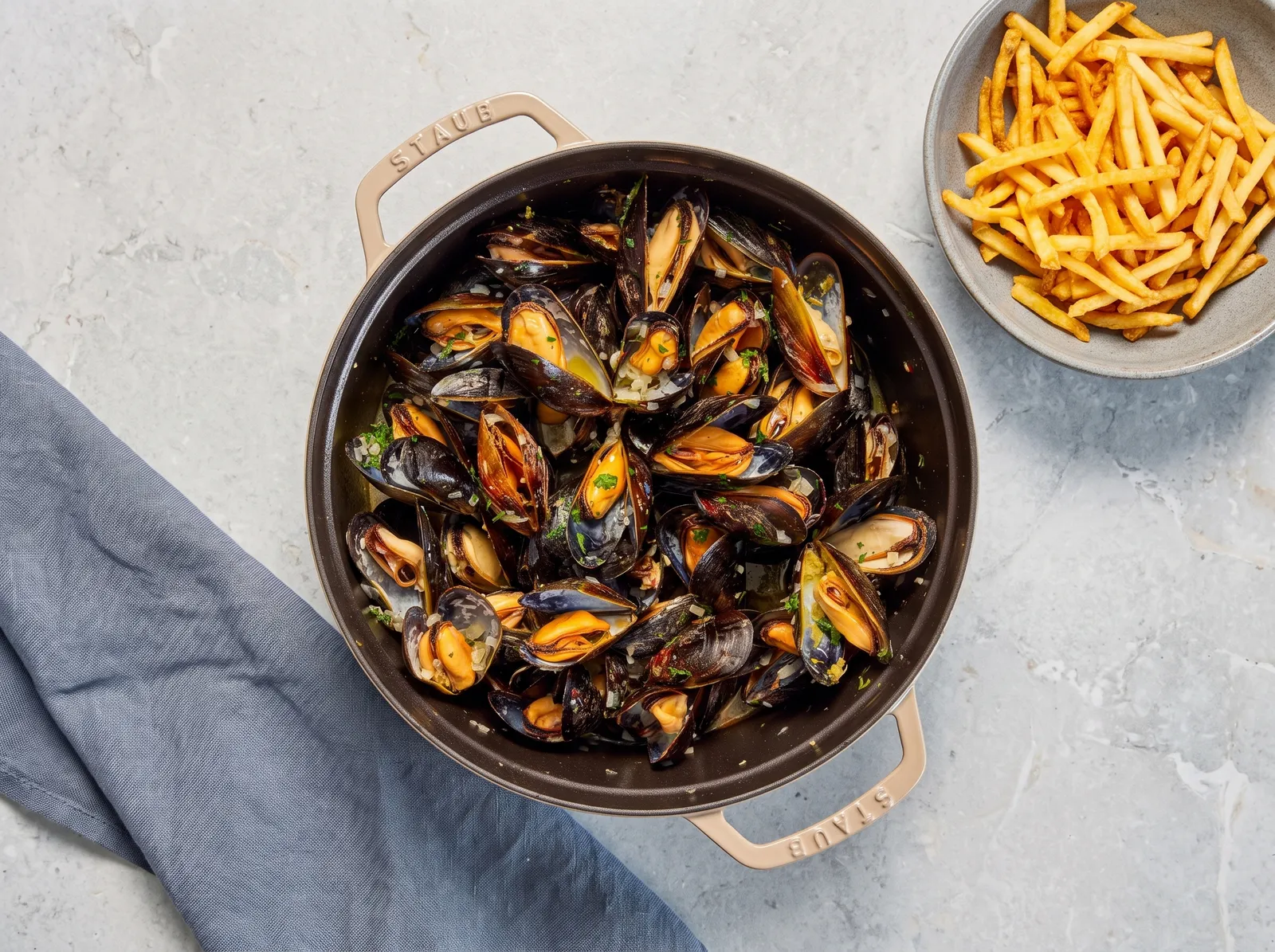
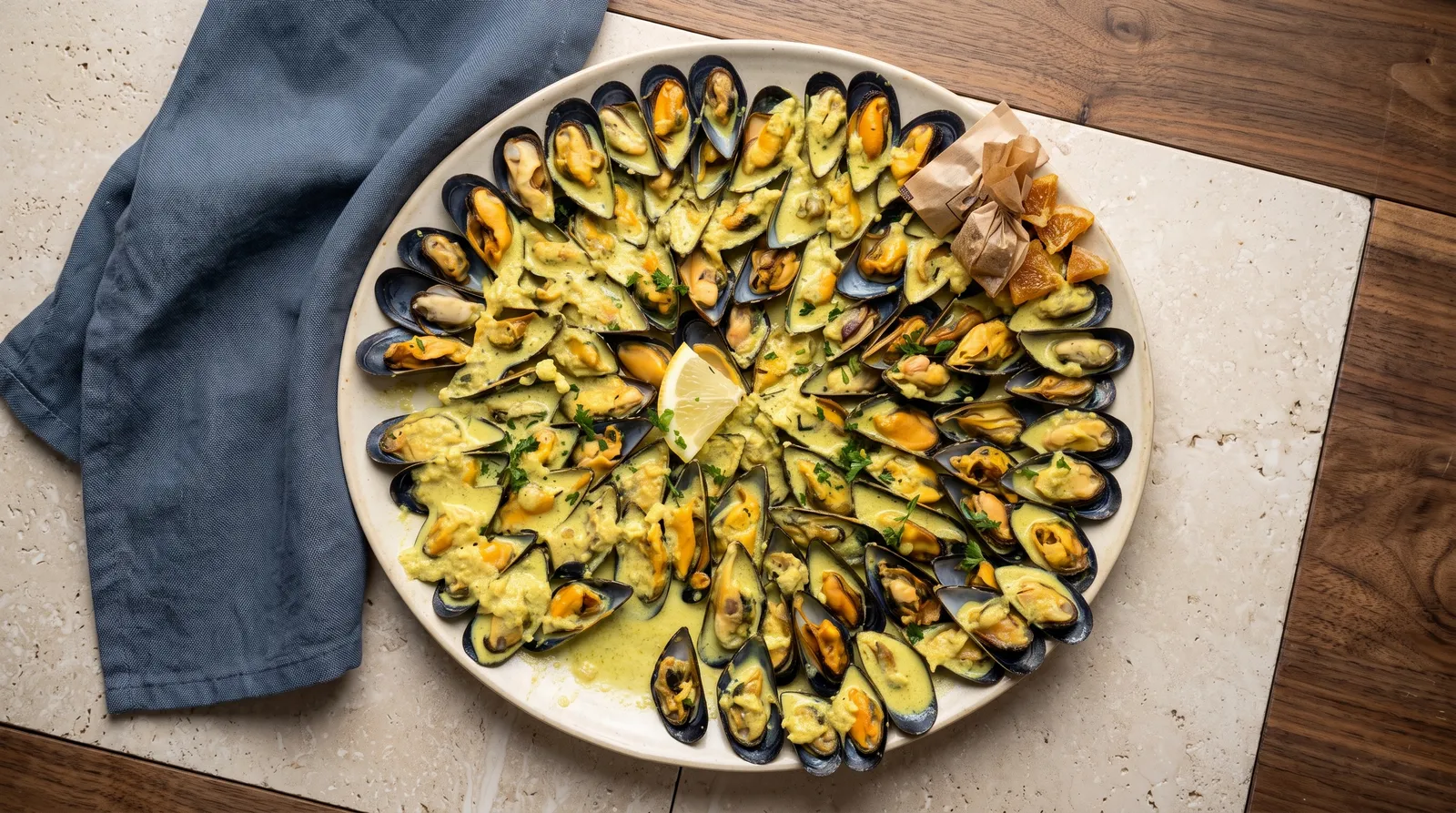
Charentais mussels are opened quickly, then coated in a strained, reduced Pineau-and-curry cream sauce gently thickened with egg yolk.

French National Dishes
Share
Mouclade charentaise — served on a plate
Prep 35 minutes
Cook 25 minutes
Total 60 minutes
Yield 4 generous first-course portions
Introduction and overview

Mouclade charentaise with Pineau, curry and cream

Mouclade charentaise is not simply moules marinières with cream stirred in at the end. Its identity lies in the treatment of the mussel liquor and in the aromatic sauce that follows: shallot, wine, Pineau des Charentes, cream and a measured touch of curry are brought together after the mussels have opened. The mussels themselves cook only briefly, while the liquor is strained and reduced separately so the sauce can concentrate without toughening the meat.

Live shellfish need disciplined handling before any sauce work begins. Keep the mussels cold, discard cracked shells and any live mussel that does not close when tapped, then scrub and debeard them under running water immediately before cooking. Do not soak them in fresh water. Once they open in the covered pot, remove them promptly and discard every shell that remains closed. The cooking liquor is then passed through a fine sieve because even well-cleaned shells can leave grit behind.

The yolk-and-cream finish is the technical point that makes this sauce different from a simple creamy mussel broth. Temper the dairy-and-yolk mixture with the hot reduced liquor and bring it gently to 72 °C, never to a boil. The result should lightly coat a spoon while remaining smooth. Lemon and parsley sharpen the final sauce, and the mussels return only for two minutes. Pineau and wine contribute aroma and acidity, but cooking does not guarantee that all alcohol disappears.
Success points

Success points

  • Open the mussels quickly and remove them from the pot as soon as they are cooked.
  • Strain the liquor before reducing it so the finished sauce is free of grit.
  • Reduce before adding cream and yolk; do not try to thicken the sauce by prolonged reheating of the mussels.
  • After the yolks are added, keep the sauce below a boil and stop at 72 °C.
Ingredients

Ingredients

Mussels and opening liquor

  • 2000 g live mussels — scrubbed and debearded immediately before cooking; discard cracked or non-closing shells
  • 80 g shallots — finely chopped
  • 25 g unsalted butter
  • 120 ml dry white wine — contains sulphites
  • 80 ml Pineau des Charentes — regional fortified wine; contains sulphites

Mouclade sauce

  • 200 g double cream — about 30% fat
  • 40 g egg yolks — about 2 large yolks by weight
  • 4 g mild curry powder
  • 15 g flat-leaf parsley — finely chopped
  • 15 ml lemon juice
Method

Method

Preparation

  1. Inspect and clean the mussels. Sort the 2,000 g live mussels, discard every cracked shell and any live shell that does not close when tapped, then scrub and debeard under cold running water without soaking. Allow about 15 minutes. The retained mussels are closed or close when tapped, clean and free of beards. Fresh-water soaking can kill or stress live mussels. Keep the cleaned mussels cold until the pot is ready.

  2. Sweat the shallots. Soften the 80 g shallots in 25 g butter without browning. Cook for about 4 minutes. The shallots are translucent and soft with no brown edges. Gentle sweating builds the aromatic base without bitterness.

Mussels and sauce

  1. Open the mussels. Add the 120 ml white wine and the mussels, cover and cook over high heat, shaking the pot once, until the shells open. Cook for about 4 minutes. The mussel shells are open and the meat is just firm, not shrunken. Brief steaming limits toughness. Open the lid away from your face to avoid steam burns; discard every mussel that remains closed.

  2. Strain and reduce the liquor. Lift out the mussels, strain the liquor through a fine sieve, add 80 ml Pineau des Charentes and 4 g curry powder, then reduce the liquid. The strained liquor has reduced to about 300 ml and tastes concentrated but not aggressively salty. Straining removes grit; measured reduction concentrates the sauce base. Alcohol may remain after cooking.

  3. Thicken the sauce gently. Whisk the 200 g cream with the 40 g yolks, temper with hot reduced liquor, return to low heat and stir until the sauce reaches 72 °C; do not boil. Cook for about 5 minutes. The sauce lightly coats the back of a spoon and remains smooth, with no curdled egg. Gentle heat thickens the yolk while keeping the sauce emulsified. Do not let the egg-thickened sauce boil.

  4. Finish and serve. Stir in the 15 ml lemon juice and 15 g parsley, return the open mussels only long enough to heat through, then serve immediately. Cook for about 2 minutes. The mussels are hot and glossy with sauce but have not tightened or shrivelled. Minimal reheating protects the mussel texture. Handle shells carefully; sharp edges can cut.

Serving and planning

Practical

Serving

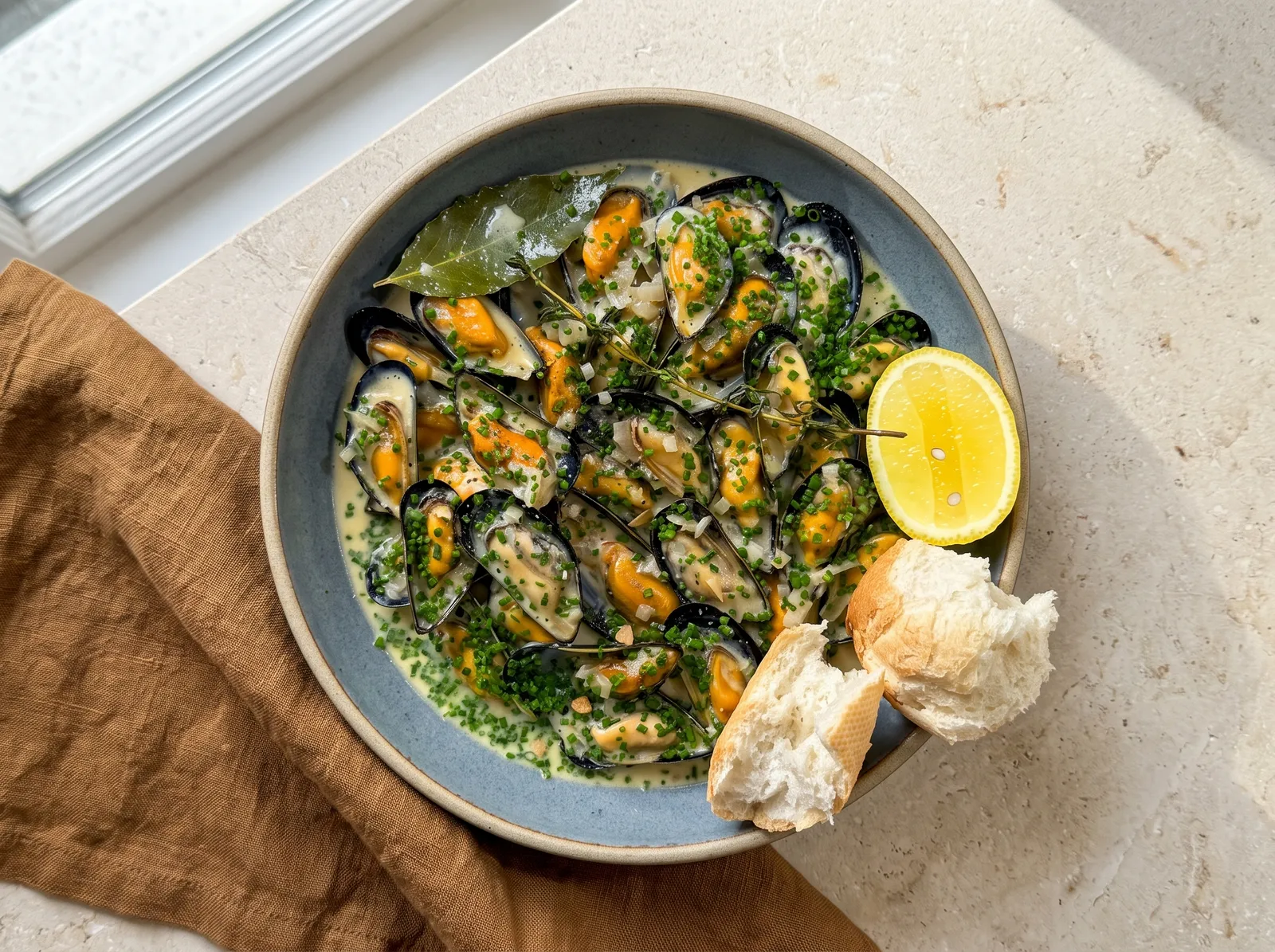
Serve at once in warm shallow bowls, dividing the sauce so each portion receives roughly 110 g mussel meat and one quarter of the reduced liquor. The sauce should cling lightly to the shells and meat rather than pool as a thin soup.

Make-ahead

The shallots can be chopped and the sauce ingredients measured in advance. Keep the mussels refrigerated and clean them only shortly before cooking. Do not cook the mussels ahead and hold them warm; that sacrifices the tender texture the sauce is designed to protect.

Storage and reheating

Refrigerate leftovers within two hours at 5 °C or below and use within one day. Reheat gently only until hot, without boiling the yolk-thickened sauce. Freezing is not recommended because the cream sauce may split and the mussels become firmer after thawing.

Substitutions

If Pineau des Charentes is unavailable, replace its 80 ml with the same amount of dry white wine. The sauce remains workable but loses the sweeter fortified-wine note that marks this Charentais preparation. Do not replace the curry with a large generic spice blend; the quantity here is deliberately restrained.

Troubleshooting

A salty sauce usually means the mussel liquor was reduced too far; stop near the measured 300 ml target rather than chasing thickness.

Troubleshooting

Curdled sauce comes from boiling after the yolks are added. Keep heat low and remove the pan as soon as 72 °C is reached.

Troubleshooting

Rubbery mussels have been held too long after opening; return them to the sauce only for the final two minutes.

Nutrition per serving

Nutrition per serving

  • Serving size1 of 4 portions, including about 110 g mussel meat and one quarter of the sauce
  • Calories458 kcal
  • Carbohydrate17 g
  • Protein30 g
  • Fat28 g
  • Fibre1.1 g
  • Sodium436 mg
Allergens and food safety

Allergens and food safety

Allergens: Mollusc, Milk, Egg, Sulphites

Safety: Buy live or properly chilled mussels from a traceable supplier.

Safety: Discard cracked or non-closing raw shells and discard every shell that remains closed after cooking.

Safety: Never soak live mussels in fresh water.

Safety: Keep seafood refrigerated and refrigerate leftovers within two hours.

Safety: The egg-thickened sauce reaches 72 °C and is not boiled.

Safety: Alcohol may remain after the wine and Pineau are cooked.

FAQ

FAQ

Why are the mussels removed before the sauce is finished?

The liquor needs reduction and gentle yolk thickening. Leaving the mussels in the pan for those stages would overcook them before the sauce reached the right consistency.

Does the alcohol cook away completely?

No. Heating reduces alcohol, but some may remain, especially in a short sauce reduction.

Closing

Closing

  • Result: Charentais mussels are opened quickly, then coated in a strained, reduced Pineau-and-curry cream sauce gently thickened with egg yolk.
  • Decisive technique: Open the mussels quickly and remove them from the pot as soon as they are cooked.